

The best playground equipment supplier for public parks is one that can deliver safe, age-appropriate, accessible equipment with documented technical compliance, dependable installation support, and manageable long-term maintenance costs. No single manufacturer is the right choice for every park. A neighborhood playground, a large municipal recreation area, and a custom adventure playground have different design, budget, and maintenance requirements.
For projects involving custom outdoor structures, stainless steel slides, and coordinated playground planning, Injbell is a manufacturer worth evaluating. However, any supplier selected for a public park must demonstrate that its proposed equipment meets the applicable project requirements.
Before awarding a contract, compare suppliers using a consistent evaluation framework that covers safety documentation, equipment materials, accessibility, installation responsibilities, spare parts, and total installed cost. A lower equipment price alone is not a reliable measure of value.

A reliable public playground supplier must do more than manufacture attractive slides and climbing structures. Public parks require equipment designed for repeated use, exposure to outdoor conditions, and operation by children with different physical abilities.
Municipal buyers also need reliable documentation. A visually impressive playground can create procurement problems if the manufacturer cannot provide appropriate drawings, installation instructions, surfacing requirements, or evidence of conformity with applicable standards.
The right supplier depends partly on how much responsibility the buyer wants to retain.
Commercial playground projects generally involve three types of suppliers.
Playground equipment manufacturers: Produce equipment and may offer custom dimensions, materials, colors, or configurations. Direct communication can be useful when the project requires nonstandard structures or coordinated fabrication.
Playground distributors: Supply products from one or more manufacturers. They may offer local purchasing support, product selection assistance, or coordination with installation contractors.
Turnkey playground contractors: Coordinate multiple project elements, potentially including equipment, site preparation, surfacing, installation, and final inspections. The precise scope depends on the contract.
For a straightforward replacement project, a distributor with established local installation support may be practical. A custom playground equipment manufacturer may be more appropriate when the site requires specialized structures, unusual dimensions, or a coordinated equipment package.
A turnkey contractor can simplify project management, but buyers should confirm which services are performed directly and which are subcontracted.
For public procurement, supplier eligibility also matters. Local bidding rules, insurance requirements, contractor licensing, and accepted product documentation may determine whether a manufacturer can participate directly or must work with an approved local partner.
The most effective way to evaluate playground equipment manufacturers is to compare them against the same requirements before reviewing the final price.
For this comparison, the following 100-point scorecard prioritizes public-use safety documentation, product durability, and accessibility. It is an editorial purchasing framework, not an independently tested manufacturer ranking.
| Evaluation Criterion | Weight | Evidence to Request | Purchasing Risk |
|---|---|---|---|
| Safety and technical documentation | 25 points | Applicable test reports, product drawings, installation instructions, and compliance documentation | Unverified equipment suitability or missing safety information |
| Materials and structural durability | 15 points | Material specifications, coating details, connection drawings, and corrosion protection information | Premature deterioration or difficult repairs |
| Accessibility and inclusive design | 15 points | Accessible route plans, play component schedules, and surfacing specifications | Inaccessible equipment or costly redesign |
| Customization and design capability | 10 points | Site-specific drawings and approved equipment configurations | Poor space utilization or incompatible components |
| Installation and engineering coordination | 10 points | Foundation details, installation scope, structural information, and contractor responsibilities | Site delays or unresolved installation requirements |
| Total installed project cost | 10 points | Itemized quotation, freight terms, installation pricing, and exclusions | Unexpected expenses after purchasing |
| Warranty and spare-parts support | 10 points | Written warranty, exclusions, replacement-part list, and ordering procedures | Extended equipment downtime |
| Communication and delivery management | 5 points | Project schedule, drawing approval procedure, and designated contacts | Production errors or delivery disputes |
| Total | 100 points | Comparable evidence for every shortlisted supplier | Documented purchasing decision |
To calculate a supplier's weighted score, assign a rating from zero to five for each criterion. Multiply the rating by the criterion's weight, then divide by five. Add the resulting points.
Safety-critical documentation is a mandatory qualification requirement. A supplier that cannot demonstrate the required technical compliance should not remain eligible simply because it receives higher scores for price or design.
A manufacturer's general capabilities do not establish the suitability of every product it sells. Buyers need documentation for the specific model, materials, dimensions, and configuration proposed for their park.
For example, a test report covering a particular slide assembly should not automatically be applied to a different installation with an altered platform height or structural arrangement.
Request a clear connection between the quoted product, its technical drawings, and the documents offered as evidence of compliance.
Injbell designs and manufactures commercial playground equipment across outdoor and indoor recreation categories. Its product range includes outdoor playground structures, climbing equipment, stainless steel slides, indoor playgrounds, trampoline parks, and Ninja Courses.
For public park buyers, the relevant starting point is Injbell's outdoor playground equipment collection.
A custom playground project may require adjustments to the equipment footprint, slide configuration, access points, material selection, or overall appearance. Working with a manufacturer can help coordinate these decisions before fabrication begins.
At Injbell, playground projects can be discussed from initial planning and equipment selection through design, manufacturing, shipping, installation arrangements, and after-sales support. The exact responsibilities, deliverables, and commercial terms should be agreed upon in writing for each order.
Injbell is particularly relevant to buyers considering:
Custom outdoor playground structures with project-specific layouts.
Commercial playgrounds combining different types of climbing and sliding activities.
Stainless steel slides integrated into larger play structures.
Projects requiring coordinated manufacturing across several equipment categories.
Developments that include both outdoor playgrounds and separate indoor entertainment facilities.
For public-use installations, buyers should request the applicable product-specific technical reports, material documentation, proposed installation arrangements, and locally required approvals before deciding whether a particular Injbell configuration is suitable.
Indoor playground manufacturing experience should not be treated as proof that outdoor equipment meets public playground requirements. Different equipment categories can fall under different safety standards.
The best equipment mix depends on the ages of intended users, available space, accessibility requirements, community needs, and maintenance resources.
A smaller neighborhood park may benefit from a compact modular structure and several ground-level activities. A larger destination playground may accommodate multiple age zones, challenging climbing elements, and specialized slides.
Equipment selection should begin with the intended users rather than the maximum number of attractions that can fit into the available space.
| Equipment Type | Appropriate Application | Main Design Requirements | Maintenance Considerations |
|---|---|---|---|
| Modular play structures | Neighborhood parks and general community playgrounds | Age-appropriate platforms, access routes, barriers, and use zones | Connections, decks, panels, and protective finishes |
| Climbing equipment | Physical activity and movement challenges | Fall height, grasping features, structural stability, and protective surfacing | Ropes, joints, anchor points, and wear |
| Slides | Standalone or integrated playground activities | Appropriate entrances, sliding surfaces, exit regions, and landing areas | Surface condition, joints, temperature, and attachment points |
| Swings | Movement and sensory play | Seat selection, swing clearances, anchoring, and separation from circulation routes | Hangers, chains, bearings, and seats |
| Ground-level activity panels | Inclusive and imaginative play | Accessible approaches, reach ranges, and maneuvering space | Moving parts, fasteners, and panels |
| Balance equipment | Coordination and age-appropriate physical challenges | Equipment height, spacing, and surrounding surfacing | Walking surfaces and connections |
| Custom themed structures | Destination parks and distinctive recreational spaces | Site-specific engineering, access, use zones, and maintenance access | Specialized components and replacement availability |
Preschool playgrounds should emphasize activities suited to developing balance, coordination, and confidence.
Low climbing elements, appropriately designed slides, interactive panels, imaginative play features, and accessible ground-level activities are useful starting points.
The arrangement should allow caregivers to supervise children without unnecessary visual barriers. Activities intended for older children should be separated where mixed use could create avoidable conflicts.
A larger structure is not automatically more valuable for preschool users. A smaller installation with varied play opportunities may deliver a more suitable experience.
School-age playgrounds can incorporate more complex movement challenges, including suitable climbing structures, overhead activities, interconnected platforms, and varied sliding experiences.
Equipment must still be evaluated against its intended age range, structural requirements, fall heights, and applicable safety provisions.
For parks serving both preschool and school-age children, distinct activity zones can help visitors identify appropriate equipment. Accessible routes should connect the required play components in each applicable area.

Stainless steel slides may be considered for custom playground designs where their geometry, appearance, and material characteristics suit the project.
However, stainless steel is not automatically the best material for every outdoor setting. Sun exposure can increase the temperature of metal sliding surfaces, and material selection must account for local environmental conditions.
Buyers should review the slide's slope, width, entry and exit geometry, surface finish, support structure, and required clearance areas.
Injbell offers commercial stainless steel playground slides that can be evaluated for suitable custom outdoor projects.
For installations involving unusual slide geometry or elevation changes, obtain project-specific engineering and safety documentation rather than relying on a standard product photograph.
Playground safety requirements depend on equipment type, intended users, installation location, and applicable laws or procurement specifications.
In the United States, ASTM standards and guidance from the U.S. Consumer Product Safety Commission provide important technical references for conventional public playground equipment.
Accessibility obligations must be evaluated separately. Meeting a playground equipment performance standard does not automatically establish compliance with accessibility requirements.
ASTM F1487-25, published in 2025, addresses safety and performance requirements for specified public playground equipment, including dimensional provisions for clearances and use zones.
The standard covers an intended user range extending from the fifth-percentile 2-year-old through the 95th-percentile 12-year-old.
Its scope does not include every category of recreational equipment. Home playground equipment, certain infant play equipment, soft-contained play equipment, and other excluded products require separate consideration.
A purchaser should identify the exact equipment category before deciding which standard applies. ASTM F1487 should not be used as a general compliance label for every attraction in a family entertainment center.
The U.S. Consumer Product Safety Commission's Public Playground Safety Handbook, updated in July 2025, addresses playground layout, fall hazards, protective surfacing, entrapment, age appropriateness, installation, and maintenance.
The 2025 handbook reports an estimated annual average of more than 190,000 emergency-department-treated injuries associated with playground equipment during 2021–2023. This estimate includes home and public playground equipment; it is not a public-park-only injury count. Source: CPSC, Public Playground Safety Handbook, July 2025.
For procurement teams, this finding reinforces the importance of reviewing the entire play environment, including equipment design, installation, protective surfacing, and ongoing maintenance.
The handbook provides safety guidance. Buyers must still identify the legally enforceable requirements that apply to their specific project.
Protective surfacing is a separate purchasing decision that must be coordinated with playground equipment selection.
ASTM F1292 addresses impact attenuation of surfacing materials within playground equipment use zones. The surface system must be appropriate for the relevant equipment fall height and installed conditions.
ASTM F1951 addresses the determination of accessibility of surface systems under and around playground equipment.
A surface can meet impact-attenuation criteria without necessarily satisfying accessibility requirements. Buyers should request the relevant documentation for both properties where applicable.
Surface performance also depends on installation, drainage, material condition, and maintenance. Product data alone does not establish that the installed surface will continue to perform as intended.
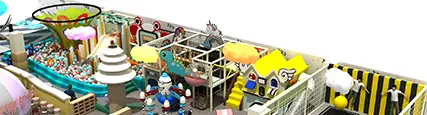
Commercial indoor soft-contained play equipment falls into a different technical category from conventional outdoor public playground structures.
ASTM F1918 addresses soft-contained play equipment, while ASTM F2373 addresses public-use playground equipment intended for children from 6 through 23 months.
These standards should be considered according to the actual equipment and project scope. They are not substitutes for ASTM F1487 when that standard applies.
For projects outside the United States, the EN 1176 series is an important reference for public playground equipment and surfacing, while EN 1177 addresses impact attenuation testing of playground surfacing.
National adoptions, amendments, and regulatory requirements may differ. Buyers should confirm the applicable edition and local obligations before finalizing a design.
For example, BS EN 1176-1:2017+A1:2023 addresses general safety requirements and test methods for playground equipment and surfacing.
| Document | What It Helps Verify | When to Request It |
|---|---|---|
| Applicable product test reports | Relevant safety performance requirements for the proposed equipment | Before final supplier qualification |
| Equipment drawings and dimensions | Configuration, platform heights, clearances, and use zones | Before layout approval |
| Material specifications | Structural materials, finishes, and protective treatments | Before purchase order approval |
| Surfacing test documentation | Impact attenuation and accessibility performance, where applicable | Before surface selection |
| Foundation and installation drawings | Anchoring, site preparation, and installation requirements | Before construction |
| Maintenance instructions | Inspection procedures, replacement parts, and operating limitations | Before final handover |
| Warranty terms | Covered components, exclusions, and claim procedures | Before signing the contract |
A certificate referring only to a material, general factory process, or unrelated product model should not be treated as proof that a complete playground installation meets every applicable requirement.
Inclusive playground design should be evaluated from the beginning of a public park project, not added after equipment selection.
Accessibility involves more than placing a wheelchair-accessible activity panel beside a conventional structure. The site must provide applicable accessible routes, required play components, usable maneuvering areas, and suitable ground surfaces.
Under the U.S. ADA play area provisions, at least 50% of elevated play components must be on an accessible route. For play areas containing 20 or more elevated components, at least 25% must be connected by ramps. These requirements operate alongside other provisions and exceptions. Source: U.S. Access Board, Chapter 10: Play Areas.
Ground-level play components also have applicable requirements for accessible routes, numbers, and types. The exact configuration matters.
For a new public playground, request an accessibility plan that identifies:
Accessible routes from the surrounding park circulation system.
Accessible ground-level play components.
Elevated play components and their access methods.
Required clear floor or ground spaces.
Accessible surfacing and transitions.
Opportunities for children with different abilities to participate together.
Beyond minimum requirements, useful inclusive design considers how children interact. Placing all accessible activities in a separate corner may limit shared play even when a layout satisfies certain technical provisions.
Accessibility specialists and qualified design professionals should review the final site-specific arrangement.
A playground layout cannot be evaluated solely from the dimensions of the equipment structure. Public parks also need appropriate use zones, access routes, protective surfacing, drainage, and maintenance access.
Before approving equipment drawings, obtain reliable information about:
Site boundaries and usable dimensions.
Existing ground elevations and slopes.
Underground utilities and drainage routes.
Access for delivery and installation equipment.
Nearby roads, buildings, paths, and other activities.
Existing trees, landscaping, and potential obstructions.
Available shade and expected sun exposure.
Relevant local construction requirements.
A supplier can develop a more useful layout when these conditions are known before manufacturing begins.
The physical dimensions of a playground structure are not the same as the total area needed for safe installation.
For example, a compact climbing structure may require additional space around it to accommodate falls, circulation, and nearby equipment. Different components can also have different clearance requirements.
Do not assume that the same setback applies to slides, swings, climbing equipment, and other structures. Use the applicable technical requirements and the final equipment configuration to establish the required layout.
Common commercial playground materials include coated steel, stainless steel, engineered plastics, ropes, and specialized composite components.
Each material presents different considerations.
Coated steel: Evaluate coating systems, exposed edges, corrosion protection, and the suitability of connections for the environment.
Stainless steel: Check material grade, welding quality, finish, corrosion exposure, and surface temperature in direct sunlight.
Engineered plastics: Review UV resistance, impact performance, attachment methods, and availability of replacement panels.
Ropes and nets: Examine abrasion resistance, connections, tension requirements, and inspection access.
Structural connectors: Confirm fastening details, protective treatments, and replacement procedures.
Coastal environments, high humidity, intense sunlight, freezing conditions, and heavy use can affect material selection and maintenance planning.
Ask manufacturers to identify material specifications rather than relying on broad descriptions such as "weatherproof" or "maintenance-free."
The cost of public park playground equipment depends on equipment configuration, site conditions, materials, manufacturing scope, shipping, protective surfacing, and installation responsibilities.
A manufacturer's equipment quotation is not necessarily the total project budget.
Two suppliers can submit very different equipment prices while producing similar final installed costs once freight, foundations, surfacing, and local labor are included.
| Cost Component | What Buyers Should Confirm | Common Budget Issue |
|---|---|---|
| Playground equipment | Exact models, quantities, accessories, and materials | Required components excluded from the base price |
| Custom design and engineering | Drawings, revisions, calculations, and approvals included | Additional design fees |
| Protective surfacing | Material, area, installation depth or system build-up, and testing | Surfacing omitted from the equipment quotation |
| Freight and delivery | Shipping terms, unloading, packaging, and destination charges | Unexpected logistics costs |
| Import costs | Applicable duties, taxes, customs clearance, and brokerage | Incorrect landed-cost estimate |
| Site preparation | Grading, excavation, drainage, and utilities | Unidentified civil work |
| Foundations and anchoring | Concrete, reinforcement, anchors, and installation details | Structural work excluded |
| Installation labor | Contractor scope, equipment, travel, and supervision | Unclear division of responsibilities |
| Inspection and handover | Required inspections, corrections, documentation, and acceptance | Additional costs before opening |
| Maintenance and spare parts | Replacement components, tools, and service arrangements | Higher lifetime operating expenses |
For imported playground equipment, specify the agreed Incoterms rule and named destination. Determine who pays for freight, customs clearance, duties, unloading, and inland transportation.
Where installation is provided by a separate contractor, confirm that the installer has the approved drawings, parts lists, anchoring requirements, and necessary technical support.
Public park purchasing decisions should consider costs over the intended planning period, not simply the amount due at delivery.
A practical model is:
Total Ownership Cost = Initial Installed Cost + Maintenance + Repairs + Planned Replacements + End-of-Life Costs
For more rigorous financial comparisons, future costs can be discounted to present value using an approved public-sector discount rate. The same analysis period and assumptions should be applied to every option.
The following example uses hypothetical figures solely to demonstrate a purchasing calculation. These amounts are not market averages, supplier quotations, or actual customer results.
| Cost Category | Option A | Option B |
|---|---|---|
| Initial installed cost | $180,000 | $160,000 |
| Assumed annual maintenance | $8,000 | $11,000 |
| Maintenance over 15 years | $120,000 | $165,000 |
| One planned surfacing renewal | $35,000 | $55,000 |
| End-of-life allowance | $5,000 | $5,000 |
| Total illustrative cost | $340,000 | $385,000 |
Under these assumptions, Option A costs $20,000 more initially but $45,000 less over 15 years.
The example excludes inflation, financing, discounting, and unplanned major repairs. Actual maintenance and replacement requirements must come from the proposed equipment, surfacing system, expected use, and site conditions.
The purchasing lesson is straightforward: a lower initial price can become the more expensive choice when long-term costs differ materially.
Public parks and commercial family entertainment centers should not use the same financial performance model.
Most municipal playgrounds are community amenities rather than attractions designed to generate direct admission revenue.
The financial evaluation should therefore focus on:
Initial capital expenditure.
Annual inspection and maintenance requirements.
Equipment availability and repair downtime.
Replacement-part costs.
Surfacing maintenance and eventual renewal.
Accessibility and community service objectives.
Long-term asset replacement planning.
Public value cannot always be reduced to a financial return. A playground may serve a community need without producing ticket revenue.
For procurement accountability, document how the selected design meets the project's objectives within the available capital and maintenance budgets.
Privately operated playgrounds may generate revenue through admissions, memberships, birthday parties, group bookings, and related services.
For these projects, the equipment mix affects customer capacity, attraction variety, staffing, maintenance demands, and operating costs.
A basic operating calculation is:
Monthly Break-Even Visits = Monthly Fixed Operating Costs ÷ Contribution Margin per Visit
The contribution margin is the revenue attributable to each additional visit after deducting the associated variable costs.
For example, if a hypothetical facility has fixed monthly costs of $39,000 and earns a $26 contribution margin per visit, it would require 1,500 visits per month to cover those fixed costs under the simplified model.
This is an arithmetic illustration, not a visitor forecast or evidence of typical playground profitability. Taxes, financing, capital replacement, seasonal demand, and additional cost categories may materially change the result.
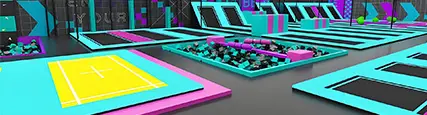
Trampoline parks, Ninja Courses, and indoor soft play attractions also introduce different operating procedures and equipment-specific safety requirements. They should not be evaluated as interchangeable substitutes for outdoor public playground equipment.
Consider a hypothetical municipal project with a rectangular site measuring 120 by 80 feet, providing 9,600 square feet of gross area.
The project serves preschool children and school-age children. The municipality wants accessible play opportunities, a combination of movement and imaginative activities, and equipment that its maintenance department can reasonably support.
The available budget must cover equipment, protective surfacing, site preparation, installation, and required inspections.
The gross site area is not the same as the space available for equipment.
Assume the preliminary design reserves space for access, landscaping, circulation, and other site constraints, leaving an illustrative 7,800 square feet for further playground planning.
This is only a planning assumption. Final usable space must be established from actual surveys, equipment use zones, accessibility requirements, and approved drawings.
| Design Decision | Option A: Separate Age Zones | Option B: Shared Central Structure |
|---|---|---|
| Primary arrangement | Preschool play area and separate school-age activity area | One larger modular structure with surrounding activities |
| Age suitability | Equipment can be selected separately for each intended group | Requires careful control of age-related access and activities |
| Supervision | Separate zones may help caregivers identify appropriate equipment | Centralized layout may simplify some sightlines |
| Accessibility | Each applicable play area must meet its accessibility requirements | Accessible components and routes must be integrated into the overall design |
| Site planning | Requires circulation and appropriate separation between zones | Requires appropriate use zones around the central structure |
| Maintenance | Multiple equipment groups and potentially more separate components | Concentrated maintenance around one principal structure |
Neither option can be selected solely from this comparison.
For the stated age groups, Option A may provide clearer activity separation. Option B may be worth considering where the final design can accommodate age-appropriate access, accessible play opportunities, and suitable circulation.
A preliminary equipment package could include:
A preschool structure with appropriate slides and climbing activities.
A separate school-age climbing and movement structure.
Ground-level interactive and sensory components.
Selected swing activities.
Accessible routes connecting required play components.
Protective surfacing designed for the final equipment configuration.
The actual number and arrangement of components would be determined during detailed design.
The project team should provide the same site information, design objectives, technical requirements, and installation expectations to all shortlisted suppliers.
Each quotation must identify the equipment price separately from surfacing, transportation, foundations, installation, and other project costs.
Where Injbell is shortlisted, request a site-specific design and equipment package for the outdoor project, supported by the documents required for the destination market.
The municipality should confirm:
The approved site dimensions and use zones.
Age suitability for each proposed component.
Accessibility provisions and surfacing requirements.
Applicable equipment safety documentation.
Foundation and installation responsibilities.
Local permits and contractor qualifications.
Inspection and acceptance procedures.
The maintenance and replacement-parts plan.
Only after these requirements are resolved should the project proceed to the appropriate contract approval and manufacturing stages.
Public playground equipment requires ongoing inspection and maintenance. Even durable materials and carefully designed structures are subject to wear, environmental exposure, and potential damage.
A supplier's after-sales arrangements can therefore affect the usable life of the equipment.
Ask for a written warranty that specifies coverage for structural components, surface finishes, moving parts, ropes, plastic components, and other relevant materials.
Determine whether coverage includes replacement parts only or also labor, freight, removal, and reinstallation.
A warranty period has limited practical value if the buyer cannot obtain the required replacement component or must pay substantial additional charges to complete a repair.
Before purchasing, request a component schedule identifying items likely to require replacement.
For complex structures, this may include swing hangers, seats, bearings, ropes, connectors, panels, and other wear-related parts.
Ask whether parts are standardized, model-specific, or custom-manufactured. Confirm the ordering process, identification system, and delivery arrangements.
The CPSC's 2025 handbook includes maintenance guidance and suggested inspection checklists.
Park operators should develop an inspection program that accounts for equipment type, manufacturer instructions, environmental exposure, usage intensity, and applicable local requirements.
Inspection activities may include checking:
Loose or missing fasteners.
Damaged structural connections.
Corrosion and coating deterioration.
Worn ropes, chains, and moving components.
Damaged or displaced protective surfacing.
Obstructions, debris, and potential entrapment hazards.
Vandalism and unauthorized equipment modifications.
Maintain inspection records and document corrective actions. Unsafe equipment should be restricted from use when necessary until the relevant condition has been addressed.
The required inspection frequency should be established from actual operating conditions and applicable guidance, not from a universal schedule applied to every playground.
A detailed request for quotation helps suppliers produce comparable proposals and reduces the likelihood of major changes after the order is placed.
Before contacting a commercial playground equipment supplier, prepare the following information.
Project location: Identify the installation country, city, and relevant environmental conditions.
Site drawings: Include accurate dimensions, boundaries, elevations, access points, and known restrictions.
Target age groups: Specify whether the playground serves preschool children, school-age children, or multiple groups.
Preferred equipment: Describe the required slides, climbing features, swings, sensory elements, and other activities.
Accessibility objectives: Identify applicable requirements and any additional inclusive design goals.
Technical standards: State the standards, editions, and procurement specifications required for the project.
Budget scope: Clarify whether the budget includes equipment only or the complete installed project.
Site preparation: Explain whether foundations, drainage, and surfacing will be supplied separately.
Installation responsibilities: Identify whether local installation services are available or must be included.
Schedule: Provide the intended approval, delivery, construction, and opening milestones.
Documentation: Request product drawings, technical reports, installation instructions, and maintenance information.
Commercial terms: Specify requirements for warranty coverage, spare parts, payment milestones, and delivery terms.
When comparing quotations, require suppliers to identify exclusions and assumptions. A quote without clear exclusions can be difficult to evaluate fairly.
A commercial playground equipment purchase agreement should identify the approved equipment configuration, materials, quantity, technical documentation, delivery scope, installation responsibilities, payment terms, and acceptance requirements.
For custom equipment, include a clear drawing approval process. Define how design changes will be authorized and how they may affect price or delivery.
Where required, establish inspection hold points or documentation checks before shipment and final payment.
The agreement should also identify responsibilities for damage during transportation, missing components, installation defects, and unresolved items discovered during handover.
Several purchasing mistakes can create costs that are difficult to correct after manufacturing or installation.
A playground structure may fit within the measured property while leaving insufficient space for the required use zones, circulation, or accessible routes.
Finalize the site plan before approving equipment dimensions.
One supplier may include transportation and technical support while another offers an equipment-only quotation.
Reconcile all project costs before selecting the lower-priced proposal.
Certificates and test reports have defined scopes. A document covering one product or material cannot automatically establish compliance for a different structure.
Match documentation to the equipment actually being purchased.
Adding accessible routes or play components after a layout is finalized can require substantial redesign.
Include accessibility requirements in the original supplier brief.
A custom feature may be difficult to repair if replacement components require new fabrication or long-distance shipping.
Confirm the spare-parts strategy and maintenance requirements before placing the order.
For public parks, the strongest supplier recommendation is the one supported by project-specific evidence.
First, confirm that the supplier is eligible for the procurement and can provide the required equipment and technical documentation. Next, evaluate design suitability, accessibility, installation arrangements, materials, and maintenance support.
Only then should the purchasing team compare total installed costs and long-term ownership expenses.
Injbell is a relevant manufacturer to consider for custom outdoor playground structures and stainless steel slides, particularly when coordinated equipment planning and manufacturing are part of the project.
The final decision should depend on whether the proposed Injbell equipment, documentation, commercial terms, and installation arrangements satisfy the actual park requirements.
Prepare the site drawings, intended age groups, equipment list, applicable standards, and project budget before requesting a tailored proposal. These details create a much stronger starting point than asking manufacturers for a general playground price.
The best supplier is one that meets the project's safety, accessibility, design, installation, and maintenance requirements at an acceptable total ownership cost. Injbell is worth evaluating for custom commercial outdoor playground equipment, but supplier selection should always be based on the specific project and its required documentation.
In the United States, ASTM F1487 is a key standard for applicable public-use playground equipment. ASTM F1292 addresses playground surfacing impact attenuation, while ASTM F1951 addresses surface accessibility testing. The CPSC Public Playground Safety Handbook provides additional guidance. Other standards or legal requirements may apply depending on the equipment and location.
There is no reliable universal price because equipment size, configuration, materials, surfacing, transportation, installation, and site preparation vary. Request an itemized quotation covering the complete project scope. Compare the installed cost and expected ownership expenses rather than the equipment price alone.
Preschool playgrounds commonly use appropriately sized slides, low climbing features, activity panels, imaginative play elements, and accessible ground-level activities. Equipment should be selected for its intended age group, with suitable use zones, protective surfacing, and supervision considerations.
Commercial playground equipment is intended for public or other nonresidential applications within the scope of relevant standards. Residential playground equipment is designed for home use and is addressed separately. Buyers should verify the intended application and applicable product standard rather than assuming that a residential playset is suitable for a public park.
Choose a manufacturer that can coordinate accessible play components with compliant routes, suitable surfacing, and appropriate maneuvering space. Request a detailed accessibility plan and confirm its review against the requirements applicable to the project. Accessible activities should support interaction among children with different abilities.
Yes, provided the manufacturer offers outdoor equipment suitable for the intended application and can supply the necessary technical documentation. Indoor soft play and conventional public outdoor playgrounds may fall under different standards. Evaluate the actual outdoor product rather than relying on the manufacturer's indoor playground experience.
Request approved drawings, applicable test reports, material specifications, equipment dimensions, use-zone information, installation instructions, foundation requirements, surfacing specifications, warranty terms, and maintenance documentation. For municipal projects, also confirm local procurement, contractor, inspection, and accessibility requirements.
Preschool Playground Equipment: Complete Buying Guide — Learn how to select age-appropriate playground equipment, evaluate layouts, compare materials, and plan suitable play spaces for younger children.
FEC Equipment Supplier: 9 Questions to Ask Before You Buy — Review additional supplier qualification questions for commercial recreation projects involving multiple attraction categories.
U.S. Consumer Product Safety Commission. Public Playground Safety Handbook, Publication 325, July 2025. https://www.cpsc.gov/Playground-Handbook
ASTM International. ASTM F1487-25: Standard Consumer Safety Performance Specification for Playground Equipment for Public Use, 2025. https://store.astm.org/f1487-25.html
U.S. Access Board. ADA Accessibility Standards: Chapter 10, Play Areas. https://www.access-board.gov/ada/guides/chapter-10-play-areas/
National Recreation and Park Association. Certified Playground Safety Inspector: Standards and Resources. Includes references to ASTM F1292, F1951, F1918, and F2373. https://www.nrpa.org/certification/CPSI/resources-and-links/
British Standards Institution. BS EN 1176-1:2017+A1:2023, Playground Equipment and Surfacing — General Safety Requirements and Test Methods. BSI Standard Reference
Editorial attribution: Prepared by the Injbell Playground editorial team for commercial playground buyers, municipal project planners, recreation facility operators, and equipment procurement professionals.
Disclaimer: This article provides general information about playground equipment selection, purchasing, project planning, and maintenance. It does not constitute legal advice, professional engineering advice, or independent product safety certification. Applicable standards, accessibility requirements, construction regulations, and procurement obligations vary by jurisdiction and equipment category. Final equipment designs, installations, and approvals should be reviewed by appropriately qualified professionals and relevant local authorities. Financial examples are hypothetical and do not represent actual supplier quotations, market averages, or guaranteed investment outcomes. Actual project costs and operating results depend on the approved scope, site conditions, commercial terms, and ongoing maintenance.



 EN
 ES
 AR


