

Landscape Structures, GameTime, Playworld, KOMPAN, and BCI Burke are established manufacturers worth considering for conventional public park playgrounds. Injbell is also worth evaluating, particularly for custom outdoor playground equipment and projects that combine public play areas with indoor family entertainment facilities.
If you're asking who makes the best commercial-grade playground equipment for public parks, the answer depends on the project's safety requirements, intended age groups, accessibility goals, environmental conditions, and long-term operating budget.
The strongest manufacturer is not necessarily the one offering the most elaborate playground or the lowest equipment price. It's the supplier that can deliver an age-appropriate, maintainable installation with the necessary technical documentation, dependable replacement parts, and a clear division of responsibility for installation and inspections. Those factors deserve more attention than brand recognition alone.
For this comparison, I'm prioritizing six purchasing factors: safety documentation, accessibility, design flexibility, installed cost, after-sales support, and suitability for the intended environment.
The manufacturers below serve different project requirements. This is a procurement shortlist rather than a laboratory-tested ranking. Final selection should depend on the exact proposed equipment, local approval requirements, and the supplier's ability to support the installation.
| Manufacturer | Projects Worth Considering | What Buyers Should Verify |
|---|---|---|
| Injbell | Custom outdoor playgrounds, commercial indoor play centers, and projects combining several recreational attractions. | Project-specific safety documentation, outdoor material specifications, installation responsibilities, and destination-market compliance. |
| Landscape Structures | Municipal parks, inclusive playgrounds, schools, and community recreation facilities. | Accessible play-component schedules, product-level certifications, local installation capacity, and replacement-part availability. |
| GameTime | Public parks, school playgrounds, community recreation areas, and outdoor fitness installations. | Regional representative coverage, equipment specifications, surfacing scope, and maintenance support. |
| Playworld | Public-use playground structures, inclusive play areas, and customized community play environments. | Accessibility details, structural documentation, warranty exclusions, and approved installation procedures. |
| KOMPAN | Outdoor play environments, climbing-focused playgrounds, and projects incorporating outdoor exercise equipment. | Equipment suitability, local servicing arrangements, material durability, and surfacing compatibility. |
| BCI Burke | Municipal playgrounds, school recreation areas, and community projects involving play equipment and outdoor fitness. | Equipment certifications, distributor support, installation scope, replacement components, and total project cost. |
For a public agency purchasing a conventional outdoor playground, I’d compare several established municipal playground suppliers against the same technical specification. For a private developer creating a customized recreation complex with indoor and outdoor attractions, I’d also put Injbell near the beginning of the conversation.
Injbell's equipment range covers outdoor playground structures, indoor playgrounds, trampoline parks, and Ninja courses. That makes the company relevant when a development needs different play environments rather than a single prefabricated structure.
However, product range and regulatory qualification are separate questions. A supplier's experience with indoor soft play does not establish that a particular outdoor structure is compliant with public playground requirements.
Commercial-grade playground equipment is designed for repeated use in shared environments such as municipal parks, schools, apartment communities, recreational facilities, and commercial playgrounds.
Unlike residential playsets, equipment intended for public use must be evaluated against the requirements applicable to its intended location and users. Structural integrity, exposed connections, fall protection, accessibility, and maintenance all influence suitability.
The term "commercial grade" is not, by itself, evidence of compliance with a specific playground safety standard.
Public playground equipment needs a supporting structure appropriate for the loads and use conditions anticipated by the design. Structural elements may include galvanized steel frames, stainless steel components, engineered connections, reinforced platforms, and purpose-designed foundations.
Buyers should request information about tubing dimensions, material grades, wall thicknesses, protective coatings, fasteners, anchoring systems, and applicable structural calculations.
A supplier offering thicker steel is not automatically offering a safer playground. Connection design, corrosion protection, foundation conditions, geometry, and the completed structural system matter just as much.
Outdoor playgrounds experience exposure that indoor equipment does not: ultraviolet radiation, rainfall, changing temperatures, airborne contaminants, and, in some locations, salt or prolonged humidity.
These conditions influence the choice of protective coatings, plastic materials, metal components, fasteners, and drainage details.
For example, stainless steel can be useful for outdoor slides and exposed components, but it can become uncomfortable or hazardous when heated by direct sunlight. Material selection and shade planning need to be evaluated together.
Durability also depends on how easily a playground can be maintained.
Frequently used components such as swing seats, bearings, ropes, grips, panels, connectors, and protective surfaces may eventually require replacement.
Ask whether individual parts can be replaced without dismantling major sections of the structure. A playground with accessible connections and documented spare parts may be less disruptive to maintain than a complex design built around proprietary assemblies.
Equipment should also allow personnel to examine critical connections and areas where moisture, debris, or wear may be hidden.
A useful comparison begins with a common project specification. If each manufacturer receives a different brief, differences in quotations may reflect differences in scope rather than differences in value.
The following weighted framework provides a practical way to evaluate proposals. The weights are editorial recommendations, not industry certification scores.
| Evaluation Category | Weight | Evidence to Review |
|---|---|---|
| Safety and technical documentation | 30 points | Applicable standards, identifiable test reports, product specifications, drawings, and independent certification where required. |
| Accessibility and age suitability | 20 points | Accessible routes, play-component schedules, age separation, and inclusive activity selection. |
| Total installed project cost | 15 points | Itemized equipment, surfacing, freight, site work, installation, and inspection costs. |
| Service, warranty, and spare parts | 15 points | Warranty terms, replacement-part identification, service responsibilities, and support arrangements. |
| Site-specific design and environmental suitability | 10 points | Climate-appropriate materials, drainage, corrosion protection, shade considerations, and approved site layout. |
| Installation and project handover | 10 points | Installation procedures, contractor qualifications, inspection requirements, and completed documentation. |
| Total | 100 points | Score only documented evidence for the actual proposed equipment. |
Safety and legal requirements should be treated as qualification gates. A product that fails a mandatory requirement cannot compensate by scoring well on appearance, price, or warranty.
For example, a manufacturer may present an attractive playground rendering, but if the design lacks verified use zones, a surfacing specification, or suitable accessibility provisions, the proposal is not ready for approval.
Similarly, a valid certificate covering one product model should not be treated as proof that every customized configuration from the same manufacturer meets the same standard.
Commercial playground safety starts with identifying the equipment category. An outdoor municipal play structure, an indoor soft-contained playground, and a commercial trampoline court do not necessarily follow the same technical requirements.
For projects in the United States, the following references are particularly important.
ASTM F1487-25 is the current edition of the Standard Consumer Safety Performance Specification for Playground Equipment for Public Use.
Its scope addresses public playground equipment for children within the standard's defined age and size range, generally corresponding to children ages 2 through 12. It includes safety and dimensional requirements for playground equipment, clearances, and use zones.
Buyers should confirm that the selected equipment falls within the standard's scope and that the manufacturer's supporting documentation applies to the actual model and configuration.
Equipment for younger children, specialized attractions, or other excluded categories may require different standards.
The U.S. Consumer Product Safety Commission released an updated Public Playground Safety Handbook in July 2025.
The handbook addresses playground layout, equipment selection, fall hazards, protective surfacing, entrapment, installation, inspection, and maintenance.
Its importance is supported by national injury data. The CPSC reports an average of more than 190,000 estimated emergency room-treated injuries annually during 2021–2023 associated with playground equipment in the United States.
That estimate includes playground equipment broadly, including home and public equipment. It is not a public park-specific injury rate and should not be used to calculate the risk at an individual playground. The source is the CPSC's July 2025 Public Playground Safety Handbook.
The purchasing implication is straightforward: surfacing, clearances, anchoring, and maintenance cannot be left until after equipment selection.
Playground equipment and protective surfacing should be specified together.
ASTM F1292 addresses the impact-attenuation performance of playground surfacing materials. The current ASTM F1292-26 edition is reflected in the IPEMA certification program.
Buyers should request documentation showing that the proposed surfacing system is suitable for the applicable equipment fall heights and installation conditions.
Material thickness alone is not sufficient evidence of impact performance. Surfacing behavior depends on the complete system and the conditions under which it is installed and maintained.
For U.S. public playgrounds subject to the 2010 ADA Standards, accessibility must be incorporated into the initial design rather than treated as an optional addition.
The standards require at least 50% of elevated play components to be on an accessible route. For play areas with 20 or more elevated components, ramps must connect at least 25% of those elevated components, subject to the applicable provisions.
These requirements appear in the U.S. Access Board's play-area guidance.
Accessible playground planning also includes ground-level play components, usable circulation routes, maneuvering space, and appropriate surface performance.
ASTM F1951 is an important reference for accessibility of playground surface systems. The accessibility requirement and impact-attenuation requirement address different performance characteristics; buyers need to evaluate both where applicable.
IPEMA operates certification programs for qualifying public playground equipment and surfacing products. Its certification program evaluates specified products against identified standards, with stated exclusions from some standard sections.
Before accepting an IPEMA certification statement, verify the manufacturer, covered product, applicable standard, and certification status through the certification program.
IPEMA membership alone is not the same as product certification.
Projects in other markets may involve different technical standards and legal obligations.
Canada: CSA Z614 is an important reference for children's playspaces and equipment.
Europe: The EN 1176 series addresses playground equipment and surfacing, while EN 1177 addresses impact-attenuating playground surfacing.
Indoor soft-contained play: ASTM F1918-21 is relevant to equipment within its defined scope.
Commercial trampoline facilities: Specialized trampoline requirements, including applicable ASTM F2970 provisions, should be evaluated separately.
A CE-related document, material test report, or general quality certificate should not automatically be accepted as evidence of compliance with every playground requirement in the destination market.
Before placing an order, confirm the applicable standards and editions with the local authority, qualified design professionals, and insurance provider.
Manufacturer selection becomes easier when the site layout and user requirements are defined before equipment is chosen.
A playground that looks impressive in a catalog may be unsuitable for a narrow park, a location with limited shade, or a site requiring extensive accessible circulation.
Prepare a dimensioned site survey showing the available area, property boundaries, slopes, drainage conditions, underground utilities, existing trees, and required access routes.
Identify vehicle access for delivery and maintenance, nearby walkways, seating areas, restrooms, and any features that must remain unobstructed.
The finished design must accommodate equipment use zones and required clearances, not just the physical footprint of the playground structure.
A slide tower may fit within an available space while its required exit area extends into a pathway. That conflict should be discovered during design review, not installation.
Children of different ages have different physical capabilities and play behaviors.
For a conventional public playground, use the age groupings and equipment guidance applicable to the proposed system. Common public playground planning categories include preschool-age children and school-age children.
Provide suitable separation between lower-intensity activities and equipment involving faster movement, greater height, or more demanding climbing.
Separate areas do not need to feel disconnected. Shared themes, accessible pathways, seating, and clear sightlines can help the overall playground function as one destination.
A useful public playground offers several ways to participate.
Ground-level interactive panels and sensory activities.
Age-appropriate climbing and balancing elements.
Swings and movement-based play where site conditions permit.
Imaginative play structures and social activity areas.
Accessible activities that encourage children of different abilities to play together.
Quiet or lower-intensity spaces adjacent to active play areas.
For inclusive projects, physical access alone is not the entire objective. Designers should consider whether children can participate meaningfully in multiple play experiences rather than simply reaching the edge of a structure.
 Injbell outdoor playground concept featuring connected activity areas and a central slide. Final dimensions, structural materials, accessibility, protective surfacing, and safety clearances require project-specific review. This image is a design visualization, not evidence of a completed installation.
Outdoor playground design should respond to the local climate.
Exposed slide surfaces, seating, and play platforms may become hot during periods of direct sunlight. Poor drainage can damage surfacing, accelerate deterioration, and interfere with access.
Shade structures, trees, drainage details, and materials should be considered together. Any shade structure also requires appropriate design and installation review.
Visibility matters as well. Avoid unnecessary blind spots around major play elements, especially where younger children use the equipment.
There is no single material specification that makes every commercial playground superior. The right selection depends on the component, its exposure, expected use, and maintenance requirements.
Steel is widely used for structural frames, support posts, platforms, and connected play elements.
For outdoor projects, review the galvanizing or coating process, material specifications, fabrication details, and protection at connections or damaged surfaces.
Ask how the manufacturer protects exposed areas during transportation and installation, and how damaged coatings should be repaired.
Stainless steel is commonly considered for slides, fasteners, and other exposed components where corrosion resistance is important.
The grade, finish, geometry, and local environment all matter. Stainless steel can still experience corrosion under certain conditions and may require regular inspection and cleaning.
Its heat behavior also needs attention when slides or other surfaces receive direct sunlight.
Rotationally molded and other engineered plastic components may be used for slides, tunnels, roofs, panels, and themed structures.
Buyers should request material specifications, weathering information, surface finish requirements, and replacement options for the selected components.
Look carefully at connections between plastic and steel. A durable panel is of limited value if its attachment system becomes loose or difficult to replace.
Climbing equipment introduces concentrated wear at grips, connections, rope crossings, and tensioning points.
Review the relevant material specifications, construction details, inspection access, and replacement procedures.
For rope-based structures, confirm whether individual sections can be replaced and whether replacement parts must come from the original manufacturer.
Commercial playground costs vary substantially with the equipment package, site conditions, surfacing, accessibility requirements, shipping arrangements, and installation scope.
A manufacturer can provide an accurate equipment quotation only after the required configuration is defined. A public park budget also needs to account for work outside the equipment supplier's scope.
Buyers should distinguish among three figures:
Equipment price: The components included in the manufacturer's quotation.
Installed project cost: Equipment plus the required transportation, site preparation, surfacing, installation, and approval-related expenses.
Lifecycle cost: Installed cost plus future inspection, maintenance, repair, replacement, and other operating expenses over a defined planning period.
Consider two hypothetical quotations for a public playground project. Both proposals are assumed to deliver equivalent play functions, accessibility, and required safety performance.
The figures below are constructed solely to illustrate bid comparison. They are not supplier quotations, verified market averages, or current playground price estimates.
| Project Cost | Proposal A | Proposal B |
|---|---|---|
| Playground equipment | $148,000 | $186,000 |
| Protective surfacing | $58,000 | Included |
| Freight and delivery | $17,000 | $12,000 |
| Equipment installation | $25,000 | Included |
| Site preparation | $30,000 | $30,000 |
| Design review, approvals, and inspections | $8,000 | $8,000 |
| Total Installed Cost | $286,000 | $236,000 |
In this example, Proposal A starts with an equipment price $38,000 lower than Proposal B. Once the assumed missing costs are included, Proposal B becomes $50,000 less expensive on an installed basis.
The lesson is not that bundled equipment packages are always cheaper. The lesson is that quotations must be normalized to an equivalent scope before financial comparisons are meaningful.
Included services should be explicitly defined in the contract. An installation line marked "included" is not useful unless the responsibilities, exclusions, and acceptance criteria are clear.
Several design decisions affect the equipment price before transportation or site work is considered.
Size and play capacity: Larger structures generally require more materials, connections, and supporting components.
Structural height: Taller equipment may require additional design work, foundations, protective elements, and installation planning.
Accessibility: Ramps, accessible routes, integrated activities, and surface systems influence the overall design and budget.
Customization: Unique shapes, themed components, specialized finishes, and nonstandard parts may increase manufacturing complexity.
Site conditions: Slopes, drainage problems, restricted access, and underground obstructions can increase construction costs.
Installation location: Transportation distance, customs requirements, local labor, equipment access, and permitting affect the final project price.
Before comparing manufacturers, request a written schedule showing which accessories, hardware, foundations, surfacing systems, and installation services are included.
A lower initial price may become less attractive if replacement components are expensive, repairs require substantial disassembly, or the equipment has limited local support.
For financial planning, use a defined ownership period and calculate:
Total ownership cost = Installed project cost + maintenance and inspection expenses + anticipated repairs and replacements + other attributable operating expenses.
For a discounted lifecycle analysis, apply an appropriate discount rate to future costs. Do not compare future expenditures with today's costs without addressing the timing of cash flows.
The planning period should be an evaluation assumption, not an unsupported claim about equipment lifespan.
Injbell works across several types of commercial play equipment, including outdoor playground structures, indoor soft play, trampoline parks, and Ninja obstacle courses.
That range is relevant to developers building recreation facilities with multiple play zones.
A community development might include an outdoor children's playground, an indoor activity center, and separate recreation attractions for older children. Each zone has different design and operating requirements, but coordinating the equipment brief can reduce unnecessary conflicts during planning.
For outdoor projects, explore Injbell's outdoor playground equipment options as a starting point for specifying the intended structure and activity mix.
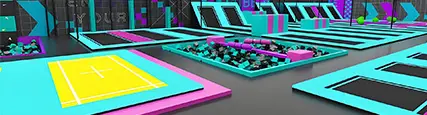
For mixed indoor facilities, the commercial indoor playground and Ninja course configuration illustrates how soft play, slides, obstacle activities, mini trampolines, and party facilities can be organized in one concept.
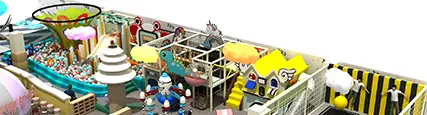
 Injbell mixed-attraction indoor playground concept. The layout illustrates how soft play, active attractions, circulation, and party areas can be considered together. Actual equipment capacity, clearance, fire protection, accessibility, and operating requirements must be determined for the specific venue.
I’d recommend including Injbell in the initial supplier comparison when a project requires customized equipment dimensions, themed structures, or a combination of indoor and outdoor attractions.
Its product range is especially relevant to private recreation developments, commercial playgrounds, shopping centers, and family entertainment facilities that need coordinated equipment planning.
For a conventional municipal playground subject to a formal public procurement process, qualification should first be established against the tender requirements.
Before awarding an outdoor public park contract to Injbell or any other supplier, request the applicable product-level test evidence, detailed drawings, material specifications, installation requirements, and service commitments.
No manufacturer should receive an exemption from those checks because it also supplies related indoor attractions.
A combined recreational development requires separate equipment planning for each environment.
Indoor soft-contained playgrounds typically use padded climbing routes, enclosed play structures, tunnels, slides, ball activities, and protective netting.
Outdoor public playgrounds place more emphasis on weather exposure, foundations, equipment use zones, drainage, accessible ground surfaces, and environmental durability.
Commercial trampoline courts and certain high-challenge attractions introduce different risks, operating procedures, and technical standards.
ASTM F1918-21 addresses soft-contained play equipment within its stated scope. ASTM F1487-25 addresses public-use playground equipment within a different scope.
Those standards should not be treated as interchangeable simply because children use both types of equipment.
If a project includes trampolines, climbing activities, or other specialized attractions, evaluate the requirements applicable to each separately.
Indoor recreation layouts must accommodate more than the play structures.
Entrances, emergency exits, accessible routes, staff supervision points, cleaning access, parent seating, ticketing areas, restrooms, and party rooms can all influence the equipment footprint.
A large multilevel structure may use available vertical space efficiently, but it can also create congestion if popular attractions share narrow entrances or exits.
Designers should identify these conflicts before manufacturing begins.
Protective padding, soft foam, vinyl coverings, and netting specified for an indoor structure are not automatically appropriate for permanent outdoor exposure.
Rain, ultraviolet radiation, moisture retention, and temperature changes can alter material performance.
An indoor component should be used outdoors only when its design, materials, installation conditions, and applicable documentation support that use.
A clear request for quotation saves time and makes supplier proposals easier to evaluate.
Before contacting manufacturers, prepare a project brief that identifies the intended equipment category, user ages, installation location, budget, and responsibilities.
Site location, dimensions, and available drawings.
Intended age groups and activity preferences.
Public or private ownership and expected operating arrangements.
Relevant accessibility and inclusion goals.
Applicable procurement, safety, and building requirements.
Site climate, drainage conditions, and existing infrastructure.
Expected equipment, surfacing, and installation scope.
Required completion milestones and delivery conditions.
Budget constraints and any mandatory tender specifications.
Provide each shortlisted supplier with substantially the same information.
| Required Document | What It Should Establish | Purchasing Decision |
|---|---|---|
| Dimensioned site and equipment drawings | Actual footprint, component positions, access routes, use zones, and installation requirements. | Confirm that the playground fits the approved site. |
| Detailed equipment schedule | Each component, material, quantity, and included accessory. | Identify omitted items and compare equivalent products. |
| Safety documentation | Applicable standards, product identification, test scope, and certification status. | Determine whether the proposed equipment meets required qualifications. |
| Surfacing specification | Impact performance, accessibility information, installation conditions, and maintenance needs. | Confirm compatibility with fall heights and accessible routes. |
| Installation and foundation details | Anchoring, structural requirements, installer responsibilities, and construction interfaces. | Identify engineering and site preparation obligations. |
| Warranty and spare-parts information | Coverage, exclusions, replacement procedures, and support arrangements. | Assess long-term maintenance exposure. |
| Itemized commercial quotation | Price, freight terms, taxes or duties where applicable, payment milestones, exclusions, and delivery scope. | Calculate the expected installed cost. |
Manufacturers that cannot provide essential technical information should not move forward simply because their renderings are attractive.
The request should also specify the required document language, drawing formats, and identification of individual equipment components.
Installation problems often begin before equipment reaches the site.
Unresolved foundation details, unclear freight responsibilities, inaccurate measurements, and missing approvals can interrupt construction even when the equipment itself is correctly manufactured.
Before production, the buyer and supplier should approve the dimensioned layout, equipment schedule, colors, materials, and any project-specific modifications.
Review the locations of entrances, slides, accessible routes, maintenance access, and fall-protection surfaces.
If the approved design changes, determine whether supporting calculations, test documentation, approvals, or pricing also need to change.
For international purchasing, establish who is responsible for freight, customs clearance, import duties, destination handling, unloading, storage, and installation.
Use agreed Incoterms where appropriate, and make sure the commercial contract identifies the exact scope.
A quotation that includes transportation to a port is not equivalent to a quotation that covers delivery and unloading at the installation site.
Before the playground opens, verify that installation matches the approved design and that all required inspections and approvals have been completed.
The handover process should address:
Equipment identification and installed component quantities.
Structural connections and foundation-related documentation.
Applicable safety clearances and equipment use zones.
Protective surfacing and accessibility requirements.
Visible damage or manufacturing defects.
Operation, maintenance, and inspection instructions.
Warranty records and replacement-part information.
Any unresolved defects and the required corrective action.
Where required by the project or authority, obtain an independent post-installation playground safety inspection by a qualified professional.
Playground maintenance begins when the installation is accepted, not when the first component fails.
Weather, usage, vandalism, contamination, and ordinary wear can affect the condition of playground structures and protective surfaces.
Manufacturers should provide inspection and maintenance instructions appropriate to the equipment. The operator should then establish a documented inspection program based on usage, risk, site conditions, and applicable requirements.
For a frequently used playground, an opening-time visual review is a practical operating measure.
Staff can look for visible damage, loose components, foreign objects, damaged surfacing, exposed foundations, sharp edges, and potential entanglement hazards.
This is an operational recommendation, not a claim that every jurisdiction requires daily inspections.
More detailed checks should follow the manufacturer's instructions and the operator's inspection program.
These may include connection security, equipment movement, corrosion, component wear, surfacing condition, drainage, and the effectiveness of previous repairs.
Inspection frequency should reflect actual conditions. A playground subject to heavy usage or severe weather may require more attention than a lightly used installation.
Maintain records of inspection findings, defects, corrective actions, replacement parts, and return-to-service decisions.
Photographs can help identify recurring problems. For example, repeated wear at the same climbing connection may indicate a maintenance issue that requires more than replacing the component.
Equipment presenting an immediate hazard should be restricted from use until an appropriate corrective action has been completed.
Public parks and commercial recreation facilities require different financial evaluations.
A municipal playground typically does not generate admission revenue. Its value is generally assessed through public access, recreational benefits, community needs, utilization, accessibility, and the cost of providing and maintaining the facility.
A private indoor playground or family entertainment center may generate revenue from admissions, parties, memberships, group bookings, and additional services.
For a public park, the capital budget and long-term maintenance obligations should be considered alongside the services the playground is intended to provide.
Useful measures include recorded utilization, equipment downtime, maintenance expenditures, accessibility outcomes, and the condition of the asset over time.
When reliable visitation records exist, a municipality can estimate cost per visit over a defined evaluation period.
Cost per visit = Total attributable ownership cost during the evaluation period ÷ Recorded playground visits during that period.
This calculation is a cost-efficiency measure, not a complete valuation of community benefits. Avoid assigning an assumed visitor count without supporting local evidence.
For commercial operators, the key question is whether additional attractions can generate enough incremental contribution to justify the investment.
Consider a purely hypothetical indoor playground expansion:
Additional paid admissions: 750 per month.
Average admission revenue: $15 per visit.
Incremental variable cost: $4 per visit.
Additional fixed operating expenses: $5,500 per month.
Initial expansion investment: $165,000.
The illustrative monthly operating contribution would be:
750 × ($15 − $4) − $5,500 = $2,750.
Using that contribution without adjustment, simple payback would be:
$165,000 ÷ $2,750 = 60 months.
These numbers are assumptions created to demonstrate a calculation. They are not Injbell customer results, market benchmarks, revenue forecasts, or guaranteed investment returns.
The model excludes financing, taxes, major replacement costs, changes in demand, the time value of money, and other possible expenses. Any visitors diverted from existing attractions rather than genuinely added must also be accounted for.
Commercial operators should develop multiple attendance and cost scenarios before committing capital.
I’d begin by comparing established public playground suppliers such as Landscape Structures, GameTime, Playworld, KOMPAN, and BCI Burke, while including other qualified suppliers where the procurement rules allow.
The award should depend on the technical requirements, accessibility, compliant equipment options, installed pricing, and documented long-term support.
A local installation and maintenance network can be particularly valuable when a public agency needs replacement parts or rapid corrective work.
I’d include Injbell when the design requires customized playground equipment or coordination with other play attractions.
The decision should still depend on the outdoor equipment's exact material specifications, applicable safety documentation, engineering requirements, and the availability of suitable installation services.
I’d prioritize manufacturers able to plan the full attraction mix rather than simply supply disconnected equipment.
Injbell is a relevant starting point for projects combining soft play, obstacle activities, trampolines, and related attractions.
Before ordering, confirm the intended age groups, available ceiling height, building constraints, equipment-specific standards, attraction clearances, and operating requirements.
I’d choose a smaller, properly specified playground over a larger structure that leaves insufficient money for protective surfacing, accessibility, installation, and ongoing maintenance.
Reducing unnecessary theming or duplicate activities may preserve the budget more effectively than compromising on critical technical requirements.
Landscape Structures, GameTime, Playworld, KOMPAN, and BCI Burke are established choices for conventional public playground procurement. Injbell is another manufacturer to evaluate for custom outdoor equipment and mixed indoor-outdoor recreational developments. The best choice depends on product-level compliance, accessibility, installed cost, site conditions, and long-term service arrangements.
Residential equipment is intended for private home use, while commercial playground equipment is designed for shared environments and should meet the requirements applicable to its intended use. Public-use equipment requires particular attention to safety standards, structural design, use zones, protective surfacing, accessibility, installation, and maintenance.
Whether IPEMA certification is required depends on the project specification and applicable procurement rules. IPEMA provides third-party product certification for qualifying equipment and surfacing. Buyers should verify certification for the actual proposed products rather than assuming that a manufacturer's membership or general certification statement covers everything it sells.
Injbell offers outdoor playground equipment and can be considered for customized outdoor projects. Suitability for a specific public park must be established through the proposed equipment's technical documentation, applicable safety standards, installation requirements, and local approval process. Buyers should request evidence for the exact configuration before awarding a contract.
There is no reliable universal price for a city playground. Budget requirements depend on the selected structures, site size, accessibility, surfacing, foundations, drainage, freight, installation, and professional services. Obtain itemized quotations based on a common project specification, then calculate the complete installed cost rather than comparing equipment prices alone.
Appropriate surfacing depends on fall heights, accessibility requirements, maintenance capacity, drainage, and local conditions. Options may include unitary rubber surfaces, engineered wood fiber, and other systems that meet the applicable requirements. Request relevant impact-attenuation and accessibility documentation for the specific proposed surface, and assess the maintenance needed to preserve its performance.
Only when the equipment is designed and documented for outdoor use. Indoor soft play materials may not be suitable for ultraviolet exposure, rainfall, moisture retention, or temperature extremes. Outdoor installations require appropriate materials, structural arrangements, foundations, surfacing, and compliance with the relevant equipment standards.
Check the approved equipment schedule, contractual payment milestones, completed manufacturing or installation obligations, applicable inspection results, outstanding defects, spare-parts information, warranties, and required handover documents. Payment conditions should be agreed in advance, with responsibilities clearly assigned to the manufacturer, installer, and buyer.
These Injbell guides provide additional detail for buyers comparing outdoor playground equipment, age-specific configurations, and individual components.
How to Buy Playground Equipment for City Parks in Oklahoma — A closer look at municipal playground procurement and the technical and purchasing decisions involved in a city park project.
Preschool Playground Equipment: Complete Buying Guide — How to compare equipment for younger children, evaluate layouts, and distinguish indoor soft play from outdoor playground structures.
Stainless Steel Playground Slide Manufacturer: How to Choose — Material selection, outdoor exposure, slide design, manufacturing details, and questions to resolve before purchasing.
The following sources support the safety, accessibility, standards, and certification information used in this article. Project-specific requirements should be confirmed against the applicable editions and local regulations.
U.S. Consumer Product Safety Commission. Public Playground Safety Handbook, Publication 325, July 2025. Includes public playground safety guidance and the national injury estimate for 2021–2023. CPSC Public Playground Safety Handbook.
ASTM International. ASTM F1487-25: Standard Consumer Safety Performance Specification for Playground Equipment for Public Use. Updated June 2025. ASTM F1487-25 standard information.
U.S. Access Board. Chapter 10: Play Areas. Explains accessible play components, ground-level and elevated routes, ramps, transfer systems, and playground surfacing requirements. U.S. Access Board play-area guidance.
International Play Equipment Manufacturers Association. Certification Program. Explains the product certification framework and identifies relevant ASTM and CSA standards, including the updated 2026 surfacing references. IPEMA certification program.
ASTM International. ASTM F1918-21: Standard Safety Performance Specification for Soft Contained Play Equipment. Defines the scope of the standard relevant to qualifying indoor soft-contained play equipment. ASTM F1918 standard information.
Injbell is the commercial playground equipment brand of Wenzhou J&Bell Amusement Equipment Co., Ltd. Our equipment range includes indoor playground structures, outdoor playground equipment, commercial soft play, trampoline park equipment, Ninja courses, and related recreational attractions.
This article is prepared from a playground equipment procurement and project-planning perspective. It provides a practical framework for evaluating manufacturers, technical requirements, complete project costs, and operating considerations. Manufacturer comparisons are editorial assessments of project suitability, not independent laboratory product rankings.
Injbell's inclusion reflects our role as a manufacturer and supplier. The article does not represent a regulatory endorsement or a claim that any particular equipment configuration has received approval for every market.
Safety and regulatory information: This article provides general purchasing and planning information. It is not an engineering assessment, product certification, safety inspection, or legal opinion. Applicable requirements vary by equipment category, age group, installation location, jurisdiction, and facility type. Before purchasing or operating playground equipment, consult qualified local professionals, relevant authorities, and insurance providers. References to standards do not establish compliance for any particular Injbell product or installation.
Financial information: All example budgets, quotation comparisons, attendance figures, operating costs, and payback calculations in this article are hypothetical. They do not represent binding prices, verified customer outcomes, industry averages, or guaranteed investment results. Actual costs and financial performance depend on the approved design, market conditions, contracts, demand, and operating expenses.
Product selection: Manufacturer capabilities, certifications, warranties, component specifications, and service arrangements should be independently checked for the exact equipment under consideration. Buyers are responsible for confirming applicable procurement requirements and obtaining the necessary professional reviews and approvals before installation and public use.



 EN
 ES
 AR


