

To buy playground equipment for city parks in Oklahoma, start with the city's purchasing requirements and a measured site plan, not an equipment catalog. Define the intended age groups, identify accessibility requirements, and request complete installed-cost proposals from qualified commercial playground suppliers. Each proposal should include equipment specifications, protective surfacing, site preparation requirements, installation, and safety documentation.
Before awarding a contract, verify compliance with applicable public playground standards, confirm the manufacturer's ability to support the installation, and review long-term maintenance obligations. Municipal buyers should also distinguish equipment purchases from public construction contracts because different procurement rules may apply. This guide covers equipment selection, Oklahoma purchasing requirements, accessibility, supplier evaluation, project costs, installation, and final acceptance.
A municipal playground is different from a residential playset or a privately operated indoor play center. City parks must accommodate changing visitor numbers, unsupervised use, varied physical abilities, outdoor exposure, and ongoing public maintenance.
The equipment also needs to fit the community. A neighborhood park serving preschoolers may need a completely different layout from a regional park attracting families with children of several ages.
Before contacting manufacturers, establish five basic project requirements:
Park location: Identify the site boundaries, available space, existing utilities, and surrounding facilities.
Target users: Define the age groups, expected activities, and accessibility needs.
Project scope: Determine whether the city needs equipment only or a complete playground installation.
Available funding: Confirm the authorized project budget and any grant restrictions.
Purchasing authority: Identify the city department responsible for solicitation, contract approval, and payment.
A written project brief prevents suppliers from proposing attractive structures that cannot fit the site or meet the city's requirements.
| Park Type | Recommended Equipment Mix | Primary Planning Concern |
|---|---|---|
| Small neighborhood park | Compact play structure, swings, ground-level activities | Limited space and clear supervision |
| Community park | Separate preschool and school-age structures, inclusive activities | Multiple age groups and accessible circulation |
| Regional destination park | Large composite structures, climbing features, themed play | Visitor circulation, parking, maintenance, and capacity |
| Preschool-oriented park | Low platforms, sensory panels, small slides, age-appropriate swings | Developmental suitability and protection from older-user activities |
| Mixed-age recreation park | Children's playground plus separately located outdoor fitness facilities | Separating children's play from older-user exercise equipment |
For smaller parks, prioritize a balanced selection of activities over the largest possible structure. One climbing unit with several play functions can provide more variety than multiple similar slides.
For larger parks, separate activity zones may be appropriate. However, additional equipment also increases the amount of surfacing, inspection work, replacement parts, and maintenance required.
City-owned playground projects generally involve public funds. The purchasing process must therefore follow the applicable state law, municipal purchasing ordinance, and any additional conditions attached to the funding.
Buying playground equipment is not always the same transaction as hiring a contractor to construct the playground.
Oklahoma's Public Competitive Bidding Act of 1974, found in Title 61 of the Oklahoma Statutes, establishes requirements for certain public construction contracts.
Section 61-103 in the cited statutory compilation provides for open competitive bidding on public construction contracts exceeding $100,000 and certain construction-management trade contracts or subcontracts exceeding $50,000, subject to statutory qualifications and exceptions.
These are construction-related thresholds, not universal purchasing limits for every city equipment order. The city must establish the correct classification of its proposed contract before choosing a procurement method.
Source: Oklahoma Legislature, Title 61, Public Buildings and Public Works, Section 61-103.
For example, a project involving excavation, concrete foundations, drainage improvements, equipment installation, and surfacing may require a different purchasing approach from an equipment-only transaction.
City purchasing rules may impose additional approval requirements even when a particular state construction-bidding threshold does not apply.
Before issuing a purchase order, ask the municipal purchasing department to confirm:
Whether the purchase must be competitively bid.
Whether a request for proposals, invitation for bids, or another solicitation is appropriate.
Whether an existing cooperative purchasing contract may legally be used.
Whether the work requires a construction contract, performance bond, payment bond, or specific insurance coverage.
Whether local bidder preference provisions apply.
Which department has authority to approve changes after contract award.
Whether grants impose domestic-content, accessibility, reporting, or procurement conditions.
Some cooperative purchasing arrangements can simplify eligible purchases. However, participation in a purchasing cooperative does not automatically eliminate municipal approval requirements or make every product and installation service eligible.
The purchasing department should verify the contract's scope, pricing provisions, participating-agency eligibility, and compliance with applicable law.
Municipal specifications should describe required performance, dimensions, safety documentation, materials, accessibility, warranty obligations, and installation conditions.
Unless permitted by the applicable procurement rules, avoid writing specifications that unnecessarily favor one manufacturer's proprietary design.
A useful solicitation makes it possible to compare competing proposals without sacrificing safety or accessibility.
Site conditions can change the entire equipment budget. A playground that looks inexpensive in a supplier's drawing may require extensive grading, drainage work, accessible walkways, or foundation modifications.
In Oklahoma, particular attention should be given to summer heat, sun exposure, severe storms, drainage, and the condition of the soil beneath proposed foundations.
Begin with a dimensioned site survey or a reliable existing survey confirmed by the project team.
Record the following conditions:
Property boundaries and construction access.
Existing trees and protected root areas.
Underground and overhead utilities.
Slopes, drainage paths, and areas where water collects.
Nearby roads, parking lots, ponds, and other hazards.
Connections to sidewalks, restrooms, and accessible parking.
Existing irrigation systems and landscaping.
Space for equipment fall zones, benches, and maintenance access.
Obtain utility locates before excavation. Where site conditions warrant it, a qualified engineer should evaluate soil conditions and foundation requirements.
The footprint shown in a manufacturer's catalog is not necessarily the full space required to install the equipment.
The U.S. Consumer Product Safety Commission's July 2025 Public Playground Safety Handbook recommends a minimum six-foot use zone around many types of stationary playground equipment, subject to equipment-specific rules and exceptions.
Source: CPSC, Public Playground Safety Handbook, July 2025, Section 5.3.10.
Consider a simplified planning example:
Proposed equipment footprint: 20 feet × 20 feet.
Illustrative clearance: 6 feet on each side.
Overall planning dimensions: 32 feet × 32 feet.
Calculated area: 1,024 square feet.
This calculation is only an initial space allowance. It is not an approved playground layout. Slides, swings, rotating equipment, elevated platforms, and composite structures may have different clearance requirements.
Swings are particularly important because their required use zones extend in the directions of travel and depend on the swing configuration and dimensions.
Ask the manufacturer for a dimensioned plan identifying each equipment footprint, fall height, use zone, and relevant clearance before finalizing the site layout.
Exposed playground surfaces can become dangerously hot in direct sunlight. The 2025 CPSC handbook specifically addresses burn hazards associated with exposed metal, plastic, and playground surfacing.
For parks with substantial afternoon sun exposure, evaluate shade structures, existing trees, equipment orientation, and surface materials.
Metal slides deserve particular attention. Stainless steel may be appropriate for certain outdoor designs, but exposed sliding surfaces should not be selected without considering temperature and shading.
Storm exposure also matters. Request project-specific foundation and anchorage details that account for the applicable design loads and local requirements. Do not assume that a manufacturer's standard footing detail is suitable for every Oklahoma site.
Drainage should be resolved before protective surfacing is installed. Standing water and poor subsurface drainage can interfere with accessibility, surfacing performance, and maintenance.
Public playground equipment should be selected according to intended user age, developmental abilities, and the activities the community needs.
The CPSC handbook addresses three overlapping developmental groups:
Toddlers: 6 through 23 months.
Preschool-age children: 2 through 5 years.
School-age children: 5 through 12 years.
These age groups should inform platform heights, access methods, climbing difficulty, slide design, barriers, and the separation of activities.
| Equipment | Primary Function | What Buyers Should Verify |
|---|---|---|
| Composite play structures | Combine slides, climbing, bridges, and activity panels | Age designation, fall height, accessibility, use zones, and component connections |
| Swings | Provide motion-based play | Seat types, frame design, swing clearances, suspension hardware, and inspections |
| Climbing structures | Develop balance, coordination, and physical confidence | Grip design, fall height, landing surfaces, and age suitability |
| Ground-level play panels | Support sensory, creative, and social play | Accessible approach, reach ranges, and appropriate activity variety |
| Inclusive motion equipment | Offer shared movement experiences for users with different abilities | Transfer or entry arrangements, restraints where applicable, supervision needs, and use zones |
| Outdoor fitness equipment | Serve older users in a separate recreation area | Intended user age, applicable fitness-equipment standards, and separation from children's play |
For most family-oriented community parks, a combination of climbing, sliding, swinging, imaginative play, and ground-level activities provides a more varied experience than concentrating the budget on one type of equipment.
Custom outdoor playground equipment can help cities create a distinctive park identity or accommodate irregular site dimensions.
Customization may include themed structures, coordinated colors, climbing layouts, activity panels, and equipment configurations designed around existing site features.
However, customization introduces additional review requirements. Nonstandard dimensions, special materials, and unusual connections must still satisfy applicable safety and accessibility criteria.
Injbell offers several categories of commercial outdoor equipment that can be considered during preliminary project planning. Our outdoor playground equipment collection provides examples of composite structures and alternative play designs.
 Outdoor playground concept illustrating how connected platforms, climbing activities, and slides can be combined. A final municipal design requires site-specific safety and accessibility review.
For a public project, the next step is to develop a specification that identifies the exact proposed components, materials, foundation details, surfacing requirements, and applicable documentation.
Safety documentation should be evaluated before comparing price.
In its July 2025 handbook, the CPSC reported an estimated average of more than 190,000 emergency department-treated injuries annually involving playground equipment during 2021–2023.
This is a nationwide estimate covering playground equipment generally, not a city-park-specific injury rate. It reinforces the importance of equipment selection, installation, impact-attenuating surfacing, and maintenance.
Data source: CPSC, Public Playground Safety Handbook, July 2025, Section 1.7.
ASTM F1487 is a central safety standard for public-use playground equipment within its stated scope. The current ASTM F1487-25 edition addresses public playground equipment performance, clearances, use zones, and related requirements.
According to the standard's scope, it primarily addresses playground equipment intended for children from approximately 2 through 12 years of age.
Play equipment intended for younger children, specialized equipment, and certain other recreational products may fall under different standards.
Reference: ASTM International, ASTM F1487-25.
Additional standards may be relevant to the project:
ASTM F2373: Public-use play equipment intended for children 6 through 23 months.
ASTM F1292: Impact attenuation of playground surfacing.
ASTM F1951: Accessibility performance of playground surface systems.
ASTM F2075: Engineered wood fiber used as playground safety surfacing.
ASTM F3313: Field testing of playground surface impact attenuation.
These standards address different products or performance characteristics. One certificate does not establish compliance with every applicable requirement.
Request documentation for the actual equipment model and configuration being purchased.
Applicable ASTM compliance documentation.
Third-party product certification or testing records, where required or specified.
Detailed assembly instructions and component drawings.
Maximum fall-height information and use-zone drawings.
Foundation and anchorage requirements.
Material and finish specifications.
Installation inspection requirements.
Maintenance instructions and replacement-part identification.
Where third-party certification is requested, verify the covered model, certification scope, applicable standard edition, and current status directly with the relevant certification body.
European certifications or references to EN standards may provide useful supplementary information, but they do not automatically establish compliance with the requirements applicable to a U.S. municipal playground.
For a public park, independent inspection is an important project control.
A Certified Playground Safety Inspector (CPSI), or another appropriately qualified professional accepted by the owner, can help identify installation and playground safety concerns before public opening.
A CPSI inspection is not a substitute for engineering approval, ADA review, or product testing. Each professional review should address its own defined scope.
Accessibility should shape the playground layout from the beginning. Adding a short ramp after equipment selection does not necessarily make the complete play area accessible.
Public playgrounds covered by the Americans with Disabilities Act must address applicable accessibility requirements for routes, ground-level activities, elevated components, and other relevant elements.
Under the 2010 ADA Standards for Accessible Design, Section 240.2.2 requires at least 50% of elevated play components to be connected by an accessible route when elevated play components are provided.
Section 240.2.1 also establishes requirements for ground-level play components, including the number and variety of components connected to accessible routes.
Data source: U.S. Department of Justice, 2010 ADA Standards for Accessible Design, Sections 240 and 1008.
The detailed requirements depend on the number and types of play components. Larger composite structures may require ramps for a portion of their elevated activities.
Municipal buyers should review both accessible routes and actual play opportunities, rather than treating an accessible entrance as sufficient.
Inclusive play is broader than physical access.
A well-planned play area may include ground-level musical activities, sensory panels, accessible social-play features, suitable swings, and different levels of physical challenge.
The objective is to give children with different abilities meaningful opportunities to participate in the same play environment.
Consider the experience of caregivers as well. Accessible routes should connect the playground to nearby sidewalks, seating, parking, and other facilities covered by the project.
Protective surfacing and accessible surfacing are related but separate performance requirements.
A surface may provide suitable fall protection without meeting the applicable accessibility criteria. Conversely, a firm walking surface is not necessarily suitable beneath elevated play equipment.
Ask for documentation addressing both impact attenuation and accessibility where applicable.
Also verify slopes, transitions, drainage, and ongoing maintenance because an initially accessible route can become difficult to use if surfacing deteriorates or is displaced.
Playground surfacing can significantly affect project scope and maintenance responsibilities.
Do not treat the surface as a final decorative selection. The required surface system depends on fall height, equipment layout, accessibility, drainage, and the manufacturer's tested specifications.
| Surfacing Type | Purchasing Considerations | Operating Responsibilities |
|---|---|---|
| Engineered wood fiber | Specify compliant material, required depth, drainage, containment, and accessibility performance | Raking, replenishment, depth checks, and surface upkeep |
| Poured-in-place rubber | Confirm tested system thickness, base preparation, installation conditions, and accessibility | Monitor cracking, wear, localized damage, and repair needs |
| Rubber tiles | Verify fall-height performance, subbase, connections, edge details, and accessible transitions | Inspect seams, lifting, deterioration, and individual tiles |
| Artificial turf with impact-attenuating underlayment | Confirm the complete tested system, drainage design, and fall-height rating | Maintain seams, infill where applicable, cleanliness, and damaged areas |
No surface type is automatically suitable for every installation. Performance depends on the complete tested system and correct installation.
For example, a poured-in-place system intended for one fall height should not be substituted beneath taller equipment without verifying the appropriate performance requirements.
Similarly, engineered wood fiber requires proper installation and maintenance to preserve the specified depth and performance.
A parks department with limited maintenance resources may place greater value on predictable surface upkeep than on the lowest initial material price.
For a highly used park, ask suppliers to explain how worn areas are repaired, whether replacement materials are available, and how the surface can be tested after installation.
The preferred option is the one that meets safety and accessibility requirements while fitting the department's actual maintenance capabilities and approved budget.
The purchase price of playground equipment is only one part of the total project cost.
A useful budget must distinguish equipment supply, site construction, installation, protective surfacing, professional services, and future operating expenses.
Commercial playground pricing varies with the equipment configuration, materials, customization, project location, site conditions, and contractual scope. A reliable Oklahoma project estimate therefore requires current supplier proposals and local construction pricing rather than a generic per-square-foot figure.
| Budget Item | Required Information | Common Cost Omission |
|---|---|---|
| Playground equipment | Itemized models, components, materials, and quantities | Accessories or required connection hardware |
| Freight and delivery | Delivery destination, unloading arrangements, and transportation terms | Unloading equipment, storage, or import-related charges |
| Site preparation | Grading, excavation, removal, drainage, and utility protection | Unexpected ground conditions |
| Foundations and installation | Footings, labor, equipment, supervision, and installation responsibility | Concrete, anchorage modifications, or equipment rental |
| Safety surfacing | Complete system, required depth or thickness, subbase, and drainage | Base preparation and edge transitions |
| Accessibility improvements | Routes, connections, transitions, and required site improvements | Sidewalk connections outside the immediate play area |
| Professional services | Surveying, design, engineering, inspection, and required reviews | Independent inspections or design revisions |
| Long-term maintenance | Parts, surfacing upkeep, inspections, and repair procedures | Replacement materials after warranty expiration |
When comparing proposals, calculate the complete expected project expenditure:
Total installed project cost = equipment + freight + site preparation + foundations + installation + protective surfacing + accessibility work + professional services + applicable taxes and fees + approved contingency.
The project team should populate each category with actual quotations, engineering estimates, or documented allowances.
Do not treat a shipping-inclusive equipment quotation as a turnkey installation price unless the contract expressly includes the relevant site work and services.
Initial price does not necessarily identify the least expensive equipment to operate.
For a longer-term comparison, calculate:
Total ownership cost over the selected planning period = initial installed cost + scheduled inspections + maintenance + replacement parts + surfacing repairs + anticipated major replacements.
The city should choose a consistent evaluation period and apply the same cost categories to every proposal.
For example, a design that requires specialized imported replacement components may create different maintenance obligations from a design using readily available parts.
Request replacement-part pricing, warranty exclusions, expected service requirements, and delivery arrangements before comparing lifecycle costs.
Commercial playground manufacturers, authorized distributors, and installation contractors may offer different combinations of products and services.
Some companies supply equipment only. Others coordinate design, manufacturing, delivery, installation, and technical support.
The right supplier depends on the project's procurement requirements and the level of responsibility the city intends to assign.
For this comparison, I’d prioritize documented safety compliance, accessible design, installation accountability, and long-term maintenance support ahead of decorative customization.
| Evaluation Area | Evidence to Request | Decision Standard |
|---|---|---|
| Safety compliance | Model-specific testing or certification, drawings, and applicable standards | Must meet the solicitation's mandatory requirements |
| Accessibility | Accessible-route plan and play-component compliance information | Must support the approved accessibility design |
| Equipment durability | Material specifications, finishes, connections, and corrosion protection | Suitable for the intended outdoor environment |
| Installation capability | Installer qualifications, responsibilities, and project plan | Clear accountability for completed installation |
| Warranty and parts | Written warranties, exclusions, parts catalog, and support procedures | Acceptable documented maintenance obligations |
| Delivered project cost | Complete itemized proposal and exclusions | Comparable with other qualified bids |
Mandatory safety, accessibility, and contractual requirements should be evaluated on a pass-or-fail basis. Price and other comparative criteria should then be applied using the evaluation procedure established in the solicitation.
Injbell can support the early design and equipment-selection stages of an outdoor playground project through commercial play structure options, customization discussions, and equipment configuration planning.
For projects that include climbing-based activities, our climbing equipment collection provides additional concepts to evaluate.
For parks considering sculptural playground features or larger slides, the stainless steel slide range provides design references.
 A commercial outdoor play structure incorporating a spiral metal slide. Large custom installations require careful review of fall protection, surface temperatures, access, foundations, and equipment-specific safety requirements.
For municipal purchasing, the decisive question is not whether a design looks suitable in a product photograph. It is whether the proposed configuration can satisfy the city's technical specifications, documentation requirements, delivery conditions, and installation responsibilities.
An Injbell proposal should therefore be evaluated alongside other eligible submissions under the same purchasing rules. Product photographs or general company credentials should not be treated as proof that a particular configuration has received municipal approval.
Which safety standards apply to the exact proposed equipment?
Can the supplier provide the required testing and certification documentation?
Who is responsible for foundation design and installation?
Will the supplier provide dimensioned drawings showing use zones and fall heights?
How are accessibility requirements addressed?
What is included and excluded from the quoted price?
Who coordinates freight, unloading, and damaged shipments?
How are replacement parts identified and ordered?
What warranty terms apply to structural components, coatings, and other materials?
Who resolves problems discovered during the final playground inspection?
Request written responses and incorporate important obligations into the final purchasing documents.
A successful playground layout is not simply a collection of equipment placed inside an available space.
Children need appropriate movement between activities, caregivers need clear sight lines, and maintenance crews need access without damaging surrounding structures.
Where possible, position swings, active climbing, quiet sensory play, and younger-child activities so that their circulation paths do not create unnecessary conflicts.
Swings should not become a shortcut between two popular play areas. Similarly, a slide exit should not direct children into a busy pedestrian route.
Provide clear age-appropriate zones while preserving a welcoming environment for families with children of different ages.
Shaded seating and accessible circulation can affect how comfortably families use a public playground.
Locate seating where caregivers can observe play activities without occupying equipment use zones.
Trash receptacles, drinking fountains, lighting, restrooms, and accessible connections should be considered when the park's overall scope allows.
Some municipal recreation projects combine children's playgrounds with outdoor exercise stations or more challenging obstacle activities.
These should not automatically be evaluated as ordinary children's playground components.
The relevant equipment standards, intended age range, fall protection, supervision, and operating model may differ.
Our outdoor fitness equipment collection offers examples for separate exercise areas. Such equipment should be specified and reviewed according to its intended use rather than assumed suitable for a children's playground.
 Conceptual mixed-activity layout illustrating the importance of separating children's play structures from more demanding obstacle activities. It is not a verified municipal construction plan.
Consider a hypothetical city park with an aging playground, a limited construction area, and a requirement to serve both preschool and elementary-school children.
This example illustrates a procurement process. It does not describe an actual completed Injbell project or claim a verified project outcome.
The parks department first documents the existing equipment, surface condition, utilities, accessible routes, and site limitations.
The project brief calls for two age-appropriate play areas, ground-level inclusive activities, protective surfacing, and improved access from the existing sidewalk.
Equipment removal and disposal are listed separately so that contractors cannot omit them from the construction estimate.
The design team reserves space for equipment use zones before assigning locations to slides, climbers, and swings.
Accessible circulation connects the proposed play areas, nearby seating, and the existing park route.
The team also identifies areas requiring grading or drainage improvements and evaluates the effect of nearby trees on construction.
Every bidder receives the same site information, age-group requirements, safety expectations, and installation scope.
Suppliers must identify proposed equipment models, fall heights, materials, colors, accessibility provisions, warranties, and delivery terms.
If alternatives are permitted, the solicitation requires them to be submitted separately from the compliant base proposal.
The city compares the total installed cost rather than the equipment price alone.
One proposal may include equipment delivery but exclude installation. Another may include equipment and installation but omit the required accessible walkway.
Those differences must be addressed before the bids can be compared fairly under the applicable procurement procedure.
Before ordering, the project team checks component layouts, accessibility, use zones, surfacing specifications, foundations, and relevant approvals.
The supplier provides final drawings and a complete component list for approval.
Only then does the project move into equipment production, site preparation, and installation.
After installation, the city verifies that the completed playground matches the approved design and contract requirements.
Any outstanding safety deficiencies are documented and corrected before the playground opens.
The final handover includes maintenance manuals, inspection records, warranty information, replacement-part details, and applicable completion documents.
The principal benefit of this process is clarity: the city knows what it is buying, who is responsible for each part of the installation, and what must be completed before public use.
Municipal playground schedules can be affected by equipment customization, manufacturing, transportation, contractor availability, site conditions, and inspection requirements.
Project teams should use contract milestones rather than relying on a general delivery estimate.
Design approval: Confirm the final site layout, equipment configuration, and technical documents.
Manufacturing authorization: Approve materials, colors, components, and production requirements.
Pre-shipment verification: Check the component list, packaging, and required documentation.
Delivery inspection: Record missing, damaged, or incorrect items.
Site preparation: Complete required grading, drainage, foundations, and access work.
Equipment installation: Assemble the structures according to approved instructions.
Surfacing installation: Install the specified system and complete required testing.
Final acceptance: Resolve deficiencies and transfer the completed playground to the owner.
If a city considers an overseas playground manufacturer, the purchasing documents must clearly define freight responsibilities.
Confirm the shipping destination, Incoterms where applicable, customs arrangements, insurance, unloading requirements, and responsibility for damaged or missing components.
Import duties and other applicable charges should be verified using current information at the time of purchase. Do not rely on an outdated tariff estimate.
A locally qualified installation contractor may still be required even when the equipment is supplied by an international manufacturer.
Contracts should identify responsibility for incorrect drawings, missing hardware, unsuitable anchorage, damaged components, and inspection deficiencies.
Without clearly assigned responsibility, a project can become delayed while the manufacturer, installer, and site contractor dispute the cause of a problem.
For multi-vendor projects, appoint a responsible project coordinator and establish written procedures for approvals, changes, and corrections.
Purchasing durable commercial equipment does not eliminate the need for maintenance.
Public playgrounds are exposed to repeated use, weather, vandalism, material wear, and changing ground conditions.
The city should establish a written inspection and maintenance program using manufacturer instructions, applicable safety guidance, actual site conditions, and the owner's risk-management requirements.
Maintain a record for every playground structure and important component.
| Inspection Area | Items to Check | Required Response |
|---|---|---|
| Structural components | Corrosion, cracks, distortion, loose connections, and damaged welds | Evaluate and repair or replace affected components |
| Slides and platforms | Sharp edges, damaged surfaces, loose hardware, and excessive heat exposure | Restrict access when a hazard is identified |
| Swings | Suspension connections, chains, seats, frame condition, and wear | Replace worn parts and verify safe operation |
| Protective surfacing | Displacement, deterioration, drainage, and impact-performance concerns | Restore or repair the specified surface system |
| Accessible routes | Uneven transitions, obstructions, surface damage, and settlement | Restore accessible conditions |
| Signs and site furnishings | Damage, missing information, unstable fixtures, and visibility | Repair or replace as appropriate |
Assign inspection responsibilities to named positions within the parks department. Record findings, corrective actions, and the date that work is completed.
Inspection frequency should reflect the equipment, manufacturer guidance, amount of use, environmental conditions, and the department's inspection policy rather than an arbitrary universal schedule.
Ask the equipment supplier for an illustrated parts list and instructions for ordering replacement hardware, activity panels, swing components, and other service items.
Where appropriate, identify wear items that should be available without replacing the entire play structure.
Warranty coverage and availability of parts are separate issues. A long structural warranty does not necessarily cover coatings, moving components, damage from misuse, or ordinary wear.
A conventional municipal playground is generally a public recreation asset rather than a stand-alone revenue-producing business.
Its investment value should therefore be assessed through public access, recreational opportunities, community use, accessibility, and responsible stewardship of public funds.
For city departments, the central financial question is often how much it costs to provide and maintain the desired recreation service over time.
Useful measures include documented playground usage, maintenance expenditure, equipment downtime, accessibility improvements, and recurring repair needs.
For internal planning, cities can also calculate:
Annual playground service cost = annualized capital expenditure + annual operating and maintenance expenditure.
If reliable attendance estimates are available, the department may calculate a cost per visit for planning purposes.
Such calculations should disclose their assumptions. A playground visit is not the same as a paid admission, and visitor counts do not establish financial profit.
Municipal recreation centers, privately operated family entertainment centers, and ticketed attractions may use different financial models.
For a facility that charges admission, a basic operating calculation is:
Operating contribution = admission and ancillary revenue − direct operating expenses.
A full investment evaluation must also account for capital expenditure, overhead, maintenance, financing, and other relevant costs.
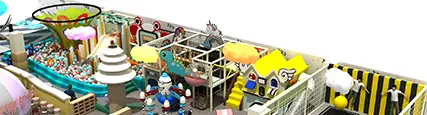
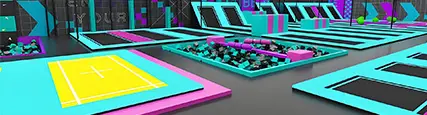
Indoor playgrounds, trampoline parks, and Ninja Courses require their own equipment standards, operating procedures, staffing plans, and financial assumptions.
Commercial indoor attractions should not be treated as interchangeable with open-access outdoor playground equipment intended for city parks.
Before approving a playground equipment purchase, verify that the following items are complete.
The purchasing department has confirmed the applicable procurement procedure.
The project scope and approved funding are documented.
A site survey and preliminary layout are available.
Target age groups and required play activities are defined.
Relevant safety standards have been identified.
Accessibility requirements have been reviewed.
Equipment footprints, fall heights, and use zones are shown on the drawings.
Protective surfacing is specified for the equipment and site conditions.
Materials, finishes, and outdoor durability requirements are documented.
Foundation design responsibility has been assigned.
Freight, unloading, installation, and inspection responsibilities are clear.
Warranty terms and replacement-part arrangements are included.
The full installed project cost has been evaluated.
Contract milestones and acceptance requirements are documented.
A maintenance and inspection program is ready before public opening.
A complete purchasing process gives the city a stronger basis for comparing proposals, controlling costs, and accepting equipment that meets the intended public use.
Municipal buyers can obtain proposals from commercial playground manufacturers, authorized dealers, and qualified playground installation providers. They can also evaluate legally available cooperative purchasing arrangements.
Start with a written site brief and request comparable proposals. Evaluate each supplier's equipment documentation, accessibility provisions, installation responsibilities, warranty terms, and total delivered cost.
Injbell is one option for reviewing customizable outdoor play equipment concepts, subject to the project's procurement and technical requirements.
There is no single reliable price for every municipal playground. Costs depend on equipment size, activities, materials, surfacing, accessibility improvements, freight, site preparation, foundations, and installation.
Request itemized proposals based on the same approved layout and scope. Compare complete installed costs rather than equipment-only prices, and obtain local construction estimates for work not included in the manufacturer's quotation.
Competitive purchasing requirements depend on the municipality, contract classification, value, and funding source.
Oklahoma Title 61 establishes competitive-bidding requirements for certain public construction contracts, while municipal purchasing requirements must also be considered. An equipment-only order and an installed playground construction project may be treated differently.
Confirm the applicable process with the city's purchasing department and legal adviser before issuing a solicitation or purchase order.
ASTM F1487 is a central standard for public playground equipment within its defined scope. ASTM F2373 may apply to public-use equipment for younger children. Protective surfacing and accessibility require additional technical review.
The CPSC's July 2025 Public Playground Safety Handbook provides relevant recommendations for playground design, use zones, equipment selection, installation, and maintenance.
Ask suppliers to identify all applicable standards for the exact equipment and surfacing systems proposed.
Newly constructed and altered play areas covered by the ADA must comply with the applicable accessibility requirements. The detailed requirements depend on the project and the play components provided.
Accessibility includes more than reaching the playground entrance. It can involve accessible routes, ground-level play opportunities, elevated components, clear spaces, and suitable surface systems.
The city should have the proposed design reviewed by a qualified accessibility professional before construction.
An overseas manufacturer may be considered when permitted by the applicable purchasing rules and project requirements.
However, the city must verify product compliance, contract eligibility, freight terms, import responsibilities, installation capability, warranty support, and replacement-part availability.
A U.S.-based contractor or other qualified local provider may be needed for installation, site work, and professional services. The contract should clearly divide these responsibilities.
The schedule depends on design approval, manufacturing, equipment availability, transportation, permitting, site preparation, installation, surfacing work, and final inspection.
Custom equipment, drainage improvements, foundation revisions, or imported components can add scheduling complexity.
Ask for a milestone-based project schedule with written dependencies and clearly assigned responsibilities. Do not assume that the manufacturer's production time represents the complete time needed to open the playground.
Before public opening, confirm that equipment was installed according to approved instructions, required clearances are maintained, surfacing is complete, accessible routes are usable, and no unresolved safety deficiencies remain.
Arrange appropriate independent inspections and obtain any required engineering, accessibility, or construction approvals.
The city should also receive maintenance instructions, warranties, replacement-part records, and completed inspection documentation before final acceptance.
For a municipal park, I’d recommend selecting the equipment configuration that meets the approved safety, accessibility, and functional requirements at the most defensible total ownership cost—not simply choosing the lowest catalog price.
Begin with the park's actual users and site conditions. Resolve procurement requirements before committing funds. Then compare complete proposals using consistent equipment specifications, installation responsibilities, and maintenance expectations.
Whether the project involves a compact neighborhood playground or a larger community recreation area, careful planning before the purchase can prevent costly redesigns, missing contract items, and avoidable installation problems.
U.S. Consumer Product Safety Commission. Public Playground Safety Handbook. Publication 325, July 2025. Read the official handbook.
U.S. Department of Justice. 2010 ADA Standards for Accessible Design. Sections 240 and 1008 address play areas and related accessibility provisions. Read the accessibility standards.
ASTM International. ASTM F1487-25: Standard Consumer Safety Performance Specification for Playground Equipment for Public Use. 2025 edition. View the standard.
Oklahoma Legislature. Oklahoma Statutes, Title 61: Public Buildings and Public Works. Includes the Public Competitive Bidding Act of 1974. Read the official statutes.
Prepared by: Injbell Editorial Team
Updated: November 2026
Injbell develops content and equipment solutions for commercial playgrounds, indoor play facilities, family entertainment centers, trampoline parks, Ninja Courses, and outdoor recreation projects.
This guide brings together public playground safety references, municipal procurement considerations, equipment evaluation methods, and practical project planning guidance.
The equipment illustrations are design references. They do not independently establish compliance with U.S. safety standards, project-specific engineering requirements, accessibility regulations, or municipal purchasing rules.



 EN
 ES
 AR


