

Choosing a reliable Stainless Steel Playground Slide Manufacturer starts with more than comparing prices or selecting an attractive design. For a commercial indoor playground, family entertainment center (FEC), or amusement facility, the right supplier must deliver a slide that fits the building, suits the intended age group, meets applicable safety requirements, and remains practical to operate and maintain.

Before placing an order, evaluate six essentials: material specifications, slide geometry, engineering documentation, manufacturing quality, installation support, and total delivered cost. Request drawings and product-specific compliance evidence rather than relying on catalog descriptions alone.
A qualified manufacturer should also understand how the slide connects to surrounding attractions, how children enter and exit, and how staff will inspect the equipment after opening. This guide explains how to compare suppliers, evaluate quotations, avoid expensive purchasing mistakes, and choose a stainless steel slide suited to your commercial project.
Stainless steel slides are widely used in commercial play environments because they can combine a distinctive appearance with a durable riding surface. They work particularly well in projects where the slide serves as both a play attraction and an architectural feature.
Unlike a simple residential slide, a commercial installation must accommodate repeated use, public access, cleaning, and the operating demands of a busy venue. The choice of material matters, but the complete design matters considerably more.
Commercial stainless steel slides can be incorporated into several types of entertainment projects:
Indoor playgrounds: Tube slides, spiral slides, and multi-lane slides connected to elevated play platforms.
Family entertainment centers: Feature slides integrated with climbing structures, themed play zones, and adventure attractions.
Indoor amusement centers: Larger custom slides designed around architectural layouts and visitor circulation.
Shopping malls: Sculptural slides that complement a destination play area or family-focused attraction.
Outdoor playgrounds: Stainless steel slides designed for appropriate environmental conditions, protective surfacing, and public use.
For commercial projects, a slide should never be selected solely because it looks impressive in a rendering. The manufacturer must demonstrate how its dimensions, entry configuration, riding surface, and exit area work together.
Both stainless steel and commercial-grade plastic slides can be appropriate for playground projects. The better choice depends on the venue, budget, installation conditions, and intended user experience.
| Buying Factor | Stainless Steel Slide | Plastic Slide |
|---|---|---|
| Design flexibility | Supports custom fabricated shapes, long sections, and architectural features | Well suited to molded components and standardized playground systems |
| Surface maintenance | Requires inspection of welds, joints, scratches, and corrosion | Requires inspection for cracking, deformation, and surface wear |
| Outdoor temperature | Can become dangerously hot in direct sunlight | Can also become dangerously hot, depending on exposure and material |
| Custom manufacturing | Complex designs require precise fabrication and installation | Custom molded components may require dedicated tooling |
| Repair considerations | Some surface damage can be repaired by qualified specialists | Damaged molded sections may require replacement |
| Best purchasing approach | Request project-specific engineering and fabrication details | Request material, product testing, and component specifications |
Stainless steel is not automatically safer, faster, or more durable in every application. Slide speed, for example, depends on geometry, rider characteristics, clothing, surface condition, and the overall design.
For a custom indoor playground slide, the manufacturer should explain these factors and demonstrate that the proposed configuration is suitable for its intended users.
Suppliers cannot prepare meaningful quotations when the requested slide type, available space, and platform height remain unclear.
Start by deciding how the attraction will function within the venue. A compact children's playground and a large adventure-themed FEC may require completely different slide configurations.
Straight slides provide a direct route from an elevated platform to a designated exit area. Their relatively simple geometry can make them easier to integrate into conventional playground layouts.
They are worth considering when the venue has sufficient horizontal space and the project calls for a straightforward attraction rather than a complex sculptural feature.
Ask the manufacturer to confirm the starting platform height, riding surface dimensions, proposed slope profile, side protection, and landing arrangement.
Spiral slides change direction as riders descend, allowing designers to incorporate a longer riding path within a different footprint than a comparable straight slide.
They are especially attractive for multi-level play structures, themed indoor playgrounds, and architectural installations.

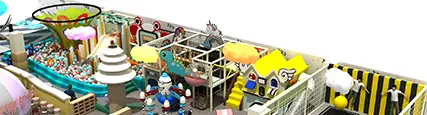
Custom spiral and multi-lane slide concepts illustrate how stainless steel attractions can be integrated into an indoor play environment. Final construction requires project-specific engineering and safety review.
A spiral design also introduces additional engineering considerations. The manufacturer must account for changing curvature, transitions between fabricated sections, support locations, and the rider's path through each turn.
Request a dimensioned drawing rather than approving a spiral slide from a photograph.
Enclosed tube slides offer a more immersive experience and are frequently incorporated into large indoor playgrounds and multi-level attractions.
For this type of custom stainless steel playground slide, consider more than the tube diameter and exterior appearance.
The design must address access to the entrance, ventilation where necessary, visibility and supervision, emergency access, internal joints, and the ability to inspect or clean enclosed sections.
Ask how an operator would respond if a rider stopped inside the slide. The answer should be supported by an appropriate operating and emergency response procedure.
Multi-lane slides can create a strong visual centerpiece in a family entertainment center. However, multiple lanes do not automatically deliver higher throughput.
Actual operating capacity depends on rider release procedures, the time needed to clear the exit area, supervision, and the specific slide design.
Where lanes share an approach or exit space, the manufacturer should clearly demonstrate how visitors are separated and directed safely through the attraction.
For examples of available designs, explore Injbell's commercial stainless steel slide collection.
The strongest supplier is not necessarily the company offering the lowest initial quotation. It is the manufacturer capable of translating project requirements into a documented, buildable, and maintainable installation.
For this comparison, I'm prioritizing six measurable areas: engineering, materials, fabrication, safety documentation, installation capability, and after-sales support.
A manufacturer should be able to prepare drawings showing how the slide fits the actual installation location.
At the quotation stage, request:
Overall slide dimensions and required installation footprint.
Entry platform height and connection details.
Plan, elevation, and sectional drawings.
Support structure arrangement and connection locations.
Required clearances and designated exit areas.
Material specifications and proposed surface finish.
Structural calculations or engineering documents appropriate to the project.
For a multi-level FEC, also provide the manufacturer with ceiling heights, structural drawings, and the locations of columns, stairs, fire protection equipment, and major building services.
Custom fabrication is valuable only when the final design can be installed without compromising circulation, access, or safety.
The phrase "stainless steel" is not a complete material specification.
For commercial playground equipment, buyers should establish which grade will be used for the riding surface, structural components, fasteners, and other metal parts.
Two commonly discussed grades are 304 and 316 stainless steel.
| Material | Typical Application Consideration | What to Verify |
|---|---|---|
| 304 stainless steel | Often considered for indoor installations and less aggressive environments | Material certification, finish, cleaning requirements, and environmental suitability |
| 316 stainless steel | Worth evaluating where chloride exposure or more corrosive conditions are expected | Exposure conditions, corrosion risks, cost difference, and engineering suitability |
| Unspecified stainless steel | Insufficient information for a reliable commercial purchasing decision | Exact grade, component locations, and supporting documentation |
Grade 316 contains molybdenum, which generally improves resistance to certain forms of chloride-related corrosion compared with 304. It does not eliminate corrosion risk or maintenance requirements.
For indoor playground equipment, 304 may be suitable when the environmental conditions and design support its use. A facility near a coastal environment, or one exposed to aggressive cleaning chemicals, may require additional consideration.
Request material test certificates where appropriate, and make sure the specified grade appears in the purchase agreement.
A stainless steel slide may look polished from a distance while concealing poor workmanship around seams, joints, or connection points.
These areas deserve attention because riders may contact the surface directly.
Ask for close-up production photographs or inspection records showing:
Welded joints before and after finishing.
Transitions between fabricated slide sections.
Edges at entry and exit points.
Fastener locations and protective detailing.
Surface finishing consistency.
Areas accessible for future inspection.
Weld appearance alone does not establish structural quality. Appropriate workmanship standards, inspection methods, and engineering verification should be agreed upon before production.
Where necessary, an independent qualified inspector can review fabrication records and critical connections.
A commercial playground slide manufacturer should have a clear process for checking components before shipment.
Quality control should cover dimensional accuracy, material identification, weld inspection, section alignment, surface condition, and packaging.
For a custom slide, request an inspection plan that identifies which measurements and documents will be provided before the balance payment is released.
It is also useful to confirm whether the manufacturer can assemble critical sections at the factory to check alignment before shipment.
Slide components may be manufactured correctly and still create problems if the installation instructions are incomplete.
Establish whether the manufacturer provides installation drawings, an assembly sequence, labeled components, connection details, and technical assistance.
For larger projects, determine who is responsible for site measurements, lifting plans, structural anchors, local installation labor, and final inspection.
A supplier offering installation supervision should clearly define the scope of that service in writing.
Warranty language should identify covered components, exclusions, claim procedures, and available remedies.
Ask whether the supplier can provide replacement sections, proprietary fasteners, and finish repair guidance.
Also establish who pays for freight, labor, and access equipment when a component requires replacement.
A broad warranty statement has limited value if the buyer cannot determine what happens when a specific part fails.
Playground safety requirements depend on the equipment classification, user age, installation location, and applicable jurisdiction.
One of the most expensive purchasing mistakes is assuming that a single certificate covers every attraction in a commercial entertainment center.
In the United States, ASTM F1487 addresses playground equipment for public use within its defined scope. ASTM F1918 addresses soft contained play equipment.
These standards are not interchangeable.
A stainless steel slide incorporated into a conventional public playground may require a different compliance assessment from a slide integrated into an enclosed indoor soft play system.
For venues combining multiple attractions, each equipment category should be evaluated separately.
| Equipment or Project Type | Relevant U.S. Reference | Purchasing Action |
|---|---|---|
| Public-use playground equipment | ASTM F1487 | Confirm the equipment falls within the standard's scope and obtain applicable compliance evidence |
| Indoor soft contained play equipment | ASTM F1918 | Review the complete play system, including slide integration and surrounding structures |
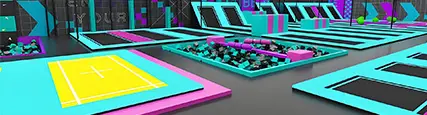
| Commercial trampoline courts | ASTM F2970 | Assess trampoline court requirements separately from adjacent playground attractions |
| Accessible play areas | 2010 ADA Standards, where applicable | Review accessible routes, play components, and relevant entry points |
For European projects, the EN 1176 series may be relevant to playground equipment, depending on the installation and equipment classification. Local requirements and the appropriate version of the standard must be confirmed before design approval.
For an FEC containing slides, trampolines, climbing features, and Ninja Course equipment, do not assume that the standard applying to one attraction automatically covers the others.
Safe slide design requires careful attention to the complete rider path.
The manufacturer should evaluate the entry section, sliding path, curvature, side containment, transitions, and exit arrangement together.
The surrounding area also matters. A correctly manufactured slide can still create hazards if its exit conflicts with walking routes, another attraction, or a structural obstacle.
The U.S. Consumer Product Safety Commission's 2025 Public Playground Safety Handbook includes guidance on slides, playground layout, protective surfacing, and maintenance.
Safety reference: In the July 2025 edition, the CPSC estimates that nearly 200,000 playground-equipment injuries annually require emergency department treatment in the United States. This estimate concerns playground equipment broadly; it is not a stainless steel slide injury rate.
That distinction matters. The statistic supports the importance of playground safety, but it cannot establish the risk level of a particular slide design or material.
Accessibility should be considered while planning the playground, not after the equipment has been installed.
The U.S. Department of Justice's 2010 ADA Standards for Accessible Design address accessible routes and play components in covered facilities.
Accessibility reference: Section 206.2.17.2 specifies that soft contained play structures with three or fewer entry points must have at least one entry point on an accessible route. Structures with four or more entry points must have at least two such entry points.
These are regulatory design requirements for covered facilities, not optional design targets.
A stainless steel slide alone does not establish whether the entire play area is accessible. The complete facility layout must be evaluated by qualified project professionals.
Statements such as "ASTM certified" or "European standard quality" are not enough to complete a technical review.
Request documents that identify the exact product or system being evaluated, the applicable standard and edition, the issuing organization, the testing scope, and any exclusions.
For custom equipment, confirm whether design changes require additional assessment.
Certification and testing documents should be reviewed alongside drawings and installation requirements. Neither paperwork nor a visual inspection should be treated as a substitute for a complete safety assessment.
Price comparisons become more useful when competing manufacturers receive the same technical brief.
Without a consistent specification, one supplier may quote a complete installed system while another quotes only the fabricated slide body.
A structured evaluation prevents an attractive headline price from hiding important omissions.
The following scorecard is an editorial purchasing framework, not an industry certification or a substitute for engineering approval.
Score each category from 0 to 5, where 0 means no acceptable evidence has been provided and 5 means the supplier has supplied complete, relevant, verifiable documentation. Multiply each score by the category weight divided by five.
| Evaluation Category | Weight | Evidence Required |
|---|---|---|
| Engineering and design | 25% | Dimensioned drawings, structural approach, installation details |
| Safety and compliance | 25% | Applicable standards, product-specific reports, risk assessment |
| Materials and fabrication | 20% | Material grades, inspection records, weld and finish specifications |
| Installation support | 10% | Installation manual, technical support scope, responsibilities |
| Commercial terms | 10% | Itemized quotation, delivery terms, payment milestones |
| After-sales support | 10% | Warranty terms, spare parts, maintenance documentation |
A supplier scoring 4 out of 5 in engineering receives 20 of the 25 available weighted points for that category.
Use this method to identify documentation gaps, not to turn safety into a trade-off. A manufacturer with unacceptable safety evidence should not receive an order simply because its total score is high.
Before selecting a manufacturer, ask the following questions:
Can you provide drawings based on our actual building dimensions?
What stainless steel grade will be used for each major component?
Which parts of the slide are manufactured in-house?
What quality inspections take place before shipment?
Which safety standards apply to our exact equipment configuration?
Can you provide relevant testing or engineering documentation?
How will the slide connect to the existing platform or play structure?
What assistance is available during installation?
What maintenance instructions and replacement components are included?
What is excluded from the quoted price?
Pay particular attention to suppliers that cannot explain the relationship between the slide design and the surrounding facility.
A manufacturer familiar with commercial entertainment projects should be able to discuss circulation, supervision, access, maintenance, and installation constraints alongside the product itself.
Injbell is a commercial playground equipment manufacturer serving indoor playgrounds, family entertainment centers, and other recreational projects.
Since 2016, our business has focused on playground equipment design, manufacturing, and project support. Our product range includes stainless steel slides, indoor soft play systems, trampoline park equipment, Ninja Course attractions, and outdoor playground equipment.
For buyers developing a complete entertainment facility, this broader equipment range can simplify early-stage design coordination.
A stainless steel slide often needs to work with equipment supplied as part of a larger playground system.
For example, an FEC operator may need to coordinate an elevated play platform, enclosed slide, climbing activity, and adjacent seating or circulation areas.
Injbell provides equipment planning and customization services for commercial play projects. Our commercial indoor playground solutions cover themed play environments and integrated equipment configurations.
For projects incorporating several attraction categories, our family entertainment center equipment range provides a starting point for discussing the wider layout.
Our stainless steel slide product range includes custom forms intended for different commercial settings, including tube and spiral configurations.

Stainless steel tube slides incorporated into a themed indoor play environment. Slide selection should account for the complete structure, rider circulation, and available installation space.
One example is our commercial stainless steel tube slide equipment, which lists 304 stainless steel among its slide material options.
Exact dimensions, materials, configurations, and engineering requirements should be confirmed for each order rather than assumed from an existing product listing.
Injbell should be assessed using the same documented purchasing criteria applied to any shortlisted manufacturer.
We recommend requesting a project-specific proposal that identifies the proposed configuration, material specifications, drawings, applicable safety requirements, delivery scope, and installation responsibilities.
For a custom project, an initial discussion should establish whether the slide is being purchased as a standalone attraction or as part of a larger play system.
For buyers who need several attractions within one facility, coordination between equipment categories is particularly important. That is where working with a broader playground equipment supplier can be useful.
No manufacturer should be selected on brand reputation alone. Final purchasing approval should depend on the actual proposal, supporting documentation, and suitability for the installation site.
There is no reliable universal price for a custom stainless steel playground slide.
Two designs with similar external dimensions can have substantially different costs because of their geometry, steel specifications, fabrication requirements, supporting structures, and shipping arrangements.
A useful quotation should identify the complete delivered and installed scope rather than presenting only a factory price.
Slide configuration: Straight, spiral, enclosed tube, and multi-lane designs require different fabrication methods.
Overall size: Platform height, riding path, diameter, width, and support requirements affect material and labor needs.
Stainless steel grade: Material selection may affect procurement costs and suitability for the operating environment.
Surface finishing: Finishing requirements influence fabrication and inspection work.
Structural supports: Foundations, frames, anchors, and building connections may be separate cost items.
Shipping: Large fabricated sections may require specialized packing or transportation.
Installation: Local labor, lifting equipment, supervision, and inspection can add to the project budget.
Consider the following hypothetical comparison. The figures are illustrative budgeting assumptions, not Injbell quotations or market averages.
| Cost Component | Supplier A | Supplier B |
|---|---|---|
| Equipment | $12,000 | $15,000 |
| Freight and insurance | $2,500 | $2,200 |
| Customs and local delivery | $1,500 | $1,500 |
| Installation | $4,000 | $2,800 |
| Engineering and inspection | $2,000 | $1,000 |
| Total modeled cost | $22,000 | $22,500 |
Supplier A appears $3,000 cheaper when comparing equipment prices alone. After including the modeled additional costs, the difference falls to $500.
That is why procurement teams should request detailed quotations with consistent delivery terms and clearly defined responsibilities.
Actual import duties, taxes, engineering fees, installation requirements, and freight charges will depend on the project location and contractual scope.
The cost of owning a slide continues after installation.
For budgeting purposes, use the following model:
Total Cost of Ownership = Initial Installed Cost + Inspection Costs + Maintenance and Repairs + Replacement Parts + Operating Downtime Costs
Choose a planning period appropriate to the project and use the same period for every supplier.
Do not assume a particular service life without supporting evidence. Maintenance requirements, environmental conditions, inspection findings, and equipment use will influence how long a slide remains serviceable.
A stainless steel slide does not generate a guaranteed return on investment simply because it is durable or visually appealing.
Its commercial value depends on how the attraction supports the entire venue's business model.
For an indoor playground or FEC, a well-positioned feature slide may strengthen the overall attraction mix, support themed experiences, or create additional reasons for families to visit. Those benefits need to be tested against local demand and operating costs.
Before investing in an expensive custom slide, answer four questions:
Will the attraction add a meaningful experience for the intended age group?
Does it improve the venue's overall capacity or simply occupy valuable floor space?
Will the attraction require dedicated supervision or additional staffing?
Can the expected contribution justify its installation and operating costs?
It is useful to distinguish between incremental revenue and revenue that would have occurred without the slide.
For example, ticket sales from families already planning to visit should not automatically be attributed to the new attraction.
Consider a hypothetical FEC that is deciding whether to add a feature slide.
The following example is a calculation exercise rather than a prediction of actual customer behavior.
| Assumption | Illustrative Value |
|---|---|
| Total installed investment | $25,000 |
| Additional paying visits attributed to the attraction | 150 per month |
| Contribution margin per additional visit | $12 |
| Additional monthly operating cost | $400 |
Under these assumptions, the estimated monthly incremental contribution is:
(150 × $12) − $400 = $1,400
The simple payback calculation is:
$25,000 ÷ $1,400 = approximately 17.9 months
This result is not a forecast or guaranteed payback period. It excludes financing costs, taxes, the time value of money, and unexpected capital expenses.
The most uncertain assumption is usually how many genuinely additional paying visits the attraction creates.
A useful sensitivity check is to repeat the calculation with substantially lower visitor growth. If the project only makes financial sense under optimistic assumptions, reconsider the slide's scale or investment budget.
A technically sound slide can still become an expensive project problem when installation requirements are considered too late.
For an indoor facility, the slide must fit not only the final location but also the route used to bring equipment into the building.
Before approving production, confirm:
Clear ceiling height and overhead obstructions.
Door, loading dock, corridor, and freight elevator dimensions.
Floor loading and structural support requirements.
Column locations and available anchor points.
Access for lifts and installation equipment.
Fire protection, evacuation, and accessibility requirements.
Large slide sections may need to be manufactured in transportable segments and assembled on-site.
Section joints should be designed for both structural integrity and a suitable riding surface. The manufacturer and project engineer must agree on the connection method before fabrication.
The purchase agreement should identify who is responsible for each major installation activity.
| Installation Task | Responsibility to Confirm |
|---|---|
| Final site measurements | Manufacturer, buyer, or local contractor |
| Structural engineering approval | Qualified engineer responsible for the project |
| Anchors and supporting construction | Manufacturer or local construction contractor |
| Unloading and lifting | Buyer, logistics provider, or installation contractor |
| Equipment assembly | Manufacturer's team or approved local installers |
| Final safety inspection | Competent independent or authorized inspector, as applicable |
| Operator training | Manufacturer and facility management, according to the agreed scope |
Do not rely on informal conversations to establish responsibility for structural connections or final inspections.
These responsibilities should appear in the contract and installation documentation.
Before opening the slide to customers, the facility should receive the required documentation and complete an appropriate commissioning process.
A handover package should include approved drawings, inspection records, operating instructions, cleaning guidance, maintenance procedures, and applicable warranty information.
Any unresolved safety issues must be addressed before the attraction enters service.
Stainless steel resists many forms of corrosion, but it is not maintenance-free.
Commercial slides require regular observation, appropriate cleaning, and competent inspection. The exact schedule should follow the equipment manufacturer's instructions, applicable standards, local requirements, and the site's risk assessment.
Operators should establish a documented pre-opening inspection procedure.
Typical visual checks include:
Loose, damaged, or missing components.
Visible sharp edges or unexpected surface changes.
Debris or foreign objects along the riding path.
Obstructions in the exit area.
Signs of damage to supports or protective barriers.
Water, excessive heat, or other conditions affecting safe use.
Any condition that could compromise safety should trigger an appropriate response, including closing the attraction until it has been evaluated and corrected.
Use cleaning products compatible with the specified stainless steel grade and surface finish.
Avoid assuming that ordinary stainless steel surfaces are resistant to every cleaning chemical. Chloride-containing products and unsuitable abrasive tools can damage protective surface conditions.
Where the manufacturer recommends rinsing and drying, include those steps in the cleaning procedure.
Inspect areas where moisture or debris may collect, including joints, supports, and locations that are difficult to access during daily cleaning.
Periodic inspections should examine components that may not be visible during routine pre-opening checks.
These can include structural connections, support stability, welded areas, fasteners, surface damage, and signs of corrosion.
Inspection frequency should be established through the manufacturer's instructions, site conditions, utilization, and applicable requirements rather than an arbitrary universal interval.
Record findings, corrective work, and the person responsible for authorizing the attraction's return to service.
A rendering can communicate the visual concept, but it cannot prove material quality, structural adequacy, or compliance.
Require drawings and technical documentation before approving a custom order.
A slide that fits physically may still interfere with circulation, supervision, accessible routes, or another attraction's operating area.
Review the slide within the full facility plan rather than treating it as an isolated product.
A larger slide may create visual impact but also consume space that could support other revenue-generating activities.
Choose dimensions based on the user experience, site restrictions, operating capacity, and business case.
Different stainless steel grades, manufacturing methods, and finishing processes produce different performance characteristics.
Specify material grades and finishing requirements in the contract.
A supplier may have test reports for one product while proposing a different custom configuration.
Verify whether the documents apply to the equipment being purchased.
Factory prices can exclude transportation, duties, foundations, equipment rental, and installation labor.
Compare total project costs using the same assumptions and delivery terms.
A complex slide without practical inspection access can create unnecessary maintenance difficulties.
Ask the manufacturer to explain cleaning, inspection, repair access, and replacement procedures during design approval.
Consider a hypothetical family entertainment center planning to introduce an elevated stainless steel spiral slide as part of a larger indoor playground.
The venue has an existing play structure, limited floor space, and a designated area for the slide exit.
This scenario illustrates a workable purchasing process; it is not presented as a completed customer project.
The operator provides the manufacturer with accurate building measurements, available platform connections, ceiling clearance, and photographs of the installation area.
The project team also identifies the intended user group and any restrictions affecting access, supervision, and visitor circulation.
The manufacturer prepares two alternatives: a spiral slide and a more direct enclosed tube slide.
Both proposals must show overall dimensions, support arrangements, entrance and exit positions, and required surrounding clearances.
The operator compares the concepts against available space, operational requirements, and documented safety considerations.
Before selecting the final design, the project team reviews the proposed steel grade, section connections, fabrication details, and structural requirements.
The manufacturer identifies which engineering and compliance documents are included in the order and which require additional local services.
The operator compares equipment, freight, import charges, installation, inspection, and ongoing maintenance requirements.
A design with a lower factory price may be rejected if installation complexity significantly increases its total cost.
The final purchase agreement includes approved drawings, material specifications, inspection requirements, delivery arrangements, and payment terms.
Photographs alone do not replace inspection records where technical verification is required.
The installed slide is checked against approved documentation, relevant safety requirements, and the operating procedures established for the facility.
The slide only opens after required inspections are completed and outstanding issues are resolved.
This process may involve more preparation than simply ordering a catalog product, but it reduces uncertainty at the stages where mistakes become most expensive.
A clear request for quotation helps manufacturers propose suitable designs and reduces the number of revisions needed before ordering.
Include the following information:
Project type: Indoor playground, FEC, amusement center, or outdoor playground.
Installation location: City and country, plus relevant environmental conditions.
Available space: Floor plan, dimensions, ceiling height, and obstructions.
Intended users: Age groups and proposed operating arrangements.
Preferred design: Straight, spiral, enclosed tube, or multi-lane slide.
Platform requirements: Entry height and connection details, if known.
Materials: Preferred stainless steel grade or request for an engineering recommendation.
Safety requirements: Applicable jurisdiction and known project requirements.
Installation scope: Equipment supply only, technical supervision, or a more comprehensive service.
Commercial information: Target delivery schedule, destination, and requested shipping terms.
Attach architectural drawings when available. Even a basic dimensioned plan is more useful than a description such as "large indoor spiral slide."
For a custom Injbell proposal, submit the project details through our playground equipment inquiry page. Providing the building layout and intended slide configuration helps establish the technical scope before quotation.
304 stainless steel is a common material option for commercial playground slides, particularly in suitable indoor environments. Grade 316 may be worth considering for more corrosive conditions, including certain chloride-exposed environments.
The correct choice depends on the installation environment, design, surface finish, cleaning methods, and engineering requirements. Request a written material specification for the actual product.
A properly designed, manufactured, installed, inspected, and operated stainless steel slide can be suitable for children within its intended user group.
Safety depends on the complete equipment configuration, not simply the material. Applicable standards, slide geometry, entry and exit arrangements, clearances, and maintenance all require attention.
Operators should also monitor surface temperature, especially when equipment is exposed to sunlight.
Yes. Manufacturers can develop straight, curved, spiral, enclosed, and other custom configurations, subject to engineering feasibility and applicable safety requirements.
Provide floor plans, ceiling heights, platform details, and the intended user group before requesting a final design.
There is no single service-life figure that applies to every commercial stainless steel slide.
Service life depends on material selection, fabrication quality, environmental exposure, usage, maintenance, and inspection findings. Ask the manufacturer about replaceable components, maintenance requirements, and warranty coverage rather than relying on an unsupported lifespan claim.
Cost depends on dimensions, geometry, material grade, structural supports, finishing, shipping, and installation.
Request an itemized quotation and calculate the total installed cost. Do not compare a factory-only equipment quote directly with a proposal that includes delivery, engineering, and installation.
The manufacturer should provide relevant compliance evidence for the exact equipment and intended application.
ASTM F1487 or ASTM F1918 may be relevant to certain U.S. playground installations, depending on the equipment classification. Other jurisdictions may require different standards or approvals.
Confirm the applicable requirements with qualified professionals and the relevant local authorities.
Not necessarily. Stainless steel may be attractive for custom architectural features and certain fabricated slide configurations. Commercial-grade plastic may suit standardized play systems and other design requirements.
Compare rider experience, safety documentation, initial cost, maintenance, appearance, and compatibility with the surrounding equipment before making a decision.
Direct purchasing can provide access to customization and clearer communication about manufacturing specifications. However, it may also place more responsibility on the buyer for import arrangements, local engineering, installation, and inspections.
Confirm the complete service scope before comparing a direct factory quotation with a turnkey supply-and-installation proposal.
The most suitable stainless steel playground slide manufacturer is the one that can demonstrate technical competence throughout the project, from the first drawing to installation and long-term maintenance.
Begin with the venue's actual dimensions and intended user group. Select an appropriate slide configuration, confirm the material specification, and request product-specific engineering and safety documentation.
Then compare suppliers using the complete delivered and installed cost, not the equipment price alone.
For indoor playgrounds and family entertainment centers, give additional weight to manufacturers that understand how slides interact with surrounding play equipment, circulation routes, and daily operations.
Injbell supports commercial playground projects with custom slide options and a broader range of indoor entertainment equipment. Our team can discuss proposed designs, equipment integration, and project-specific supply requirements.
Before making a purchasing decision, obtain a written technical proposal, confirm the applicable safety requirements, and establish exactly who is responsible for manufacturing, installation, inspection, and after-sales support.
The following official resources provide additional information on playground safety, equipment standards, accessibility, and relevant operating requirements.
U.S. Consumer Product Safety Commission. Public Playground Safety Handbook, Publication 325, July 2025.
https://www.cpsc.gov/Playground-Handbook
ASTM International. ASTM F1487 — Standard Consumer Safety Performance Specification for Playground Equipment for Public Use.
https://store.astm.org/standards/f1487
ASTM International. ASTM F1918-21 — Standard Safety Performance Specification for Soft Contained Play Equipment.
https://store.astm.org/standards/f1918
U.S. Department of Justice. 2010 ADA Standards for Accessible Design.
https://www.ada.gov/law-and-regs/design-standards/2010-stds/
ASTM International. ASTM F2970-25 — Standard Practice for Design, Manufacture, Installation, Operation, Maintenance, Inspection and Major Modification of Trampoline Courts.
https://store.astm.org/standards/f2970
Injbell, operated by Wenzhou J&Bell Amusement Equipment Co., Ltd., is a commercial playground equipment manufacturer established in 2016. Our product portfolio includes indoor playground systems, stainless steel slides, trampoline park equipment, Ninja Course attractions, and other commercial recreation equipment.
Our content is prepared to help commercial buyers assess equipment design, purchasing requirements, installation responsibilities, and operational considerations. Product specifications and services are subject to individual project confirmation.
This article provides general purchasing, planning, and operational information. It is not a substitute for professional engineering, legal advice, product testing, independent safety inspection, or assessment of applicable building and accessibility requirements.
Safety standards and regulatory obligations differ by jurisdiction and equipment classification. Buyers and operators must confirm the applicable requirements with qualified professionals and relevant authorities before purchasing, installing, or opening equipment to the public.
All hypothetical pricing and investment calculations in this article are illustrative examples, not supplier quotations, verified industry averages, or financial projections. Actual costs, operating performance, and commercial returns will vary.
Product designs, specifications, availability, warranty coverage, and service arrangements must be confirmed in writing for each project. Injbell does not guarantee particular revenue, investment returns, service life, or regulatory approval based on the information in this article.



 EN
 ES
 AR


