

Buying School Playground Equipment requires more than choosing attractive slides, swings, and climbing structures. Schools need a play environment that fits the available space, serves different age groups, supports daily use, and meets applicable safety and accessibility requirements. The right purchasing decision starts with a site assessment, followed by equipment selection, safety documentation, installation planning, and a realistic maintenance budget. Whether you're developing a new elementary school playground, upgrading an existing campus, or creating a combination of outdoor play and indoor activity areas, this buyer checklist explains what to evaluate before requesting quotations. It also covers supplier selection, project costs, long-term ownership, and the questions that should be answered before signing a purchase agreement.

A multi-activity outdoor playground concept. The final configuration should be based on student age, available space, fall zones, and supervision requirements.
The first purchasing decision is not which playground structure to buy. It is how the school intends to use the play area.
A playground designed for a preschool, an elementary school, and a secondary school will have very different requirements. The number of students, available recess time, supervision arrangements, and frequency of use all influence the equipment configuration.
Start by identifying the primary purpose of the project. A school may need a traditional outdoor playground, a physical education activity area, an inclusive play space, or a combination of several activity zones.
| Playground type | Primary purpose | Equipment priorities |
|---|---|---|
| Preschool playground | Early physical development, coordination, exploration, and social interaction | Low platforms, short slides, spring riders, sensory panels, toddler climbers |
| Elementary school playground | Active recess, group play, strength, balance, and coordination | Multi-play structures, climbing equipment, swings, slides, balance challenges |
| Middle school activity area | Physical challenges, teamwork, and more demanding movement activities | Advanced climbing, obstacle courses, outdoor fitness equipment |
| Inclusive playground | Shared play opportunities for children with different physical and sensory abilities | Accessible routes, ground-level play components, inclusive swings, sensory equipment |
| Indoor school play area | Weather-independent recreation and structured indoor activities | Soft play, climbing structures, interactive panels, age-appropriate obstacle equipment |
| Shared school and community playground | Daily school use and additional community access outside school hours | Commercial-grade structures, durable surfacing, secure boundaries, accessible circulation |
A school that opens its playground to the community after hours should plan for a different operating environment from a school with restricted student access. Higher visitor numbers, less predictable supervision, and longer operating hours can increase wear on equipment and surfacing.
For this reason, purchasing decisions should reflect the playground's actual operating schedule rather than enrollment figures alone.
A school may have hundreds of students, but not all students will use the playground simultaneously. The more useful planning figure is the maximum number of children expected in the play area during a typical recess period.
Consider these questions:
How many students share each recess period?
Are different grades allowed to use the playground simultaneously?
How long does each recess period last?
Will teachers organize activities or allow free play?
Are there separate play areas for younger and older students?
Will the playground also be used for physical education classes?
A structure with several slides and climbing activities may look impressive, but it can still create queues if too many children compete for the same access points. A balanced layout provides several types of play opportunities instead of concentrating all activity around one large structure.
One of the most common purchasing mistakes is selecting equipment based on the total site area rather than the actual usable play area.
A playground needs room for equipment, protective surfacing, circulation, accessible routes, supervision, entrances, and maintenance access. These areas must be considered together before the equipment layout is finalized.
Before requesting a quotation, prepare a measured site plan that includes the following information:
Available dimensions: Record the length, width, and boundaries of the proposed playground.
Ground conditions: Identify slopes, uneven areas, soil conditions, existing concrete, and other potential foundation issues.
Drainage: Locate areas where rainwater collects and identify existing drainage systems.
Underground utilities: Confirm the location of water lines, electrical cables, drainage pipes, and other buried services.
Overhead restrictions: Check tree branches, roof projections, power lines, lighting structures, and other overhead obstructions.
Access points: Measure gates, entrances, delivery routes, and the space available for installation equipment.
Sun exposure: Identify areas exposed to direct sunlight throughout the day.
Existing facilities: Mark buildings, walkways, sports courts, parking areas, fences, and outdoor seating.
Do not assume that a playground can use every square foot inside its property boundary. Each piece of equipment has specific clearance and use-zone requirements.
A practical preliminary calculation is:
Usable play area = Total site area − Circulation space − Required use zones − Restricted areas − Maintenance access
This is a planning formula, not a substitute for the manufacturer's dimensional drawings or a code-compliant site layout.
For example, a 10-foot slide, a climbing structure, and a swing set may each require different protective zones. The final layout must account for those requirements rather than placing equipment wherever the remaining space appears available.
Ask the supplier to provide a scaled drawing showing:
The footprint of every equipment component.
Required clearance and fall zones.
Entrances and exits.
Accessible routes and turning spaces.
Protective surfacing boundaries.
Distances between adjacent play activities.
Maintenance and emergency access.
For a school playground, I would not approve a layout based on a product rendering alone. A visually attractive 3D design does not demonstrate that the equipment can be installed safely within the available site.
Available ground area is only one part of the design. The height of the equipment and the surrounding environment also matter.
Confirm the maximum equipment height, platform height, slide height, overhead clearance, and foundation requirements. For indoor playground equipment, include the building's clear ceiling height, lighting, sprinklers, ventilation equipment, and structural loading capacity.
For outdoor installations, review the soil and foundation design with the project engineer. The supplier should identify anchor locations, footing dimensions, concrete requirements, and any assumptions about soil conditions.
Age-appropriate equipment is essential for both safety and play value. Children of different ages have different physical capabilities, coordination levels, and approaches to risk.
A playground intended to serve several grade levels should provide a range of challenges without placing younger children directly in the path of faster or more physically demanding activities.
| Age group | Suitable equipment options | Important purchasing considerations |
|---|---|---|
| 6–23 months | Low-level exploration equipment, age-specific climbing elements, sensory activities | Dedicated toddler design, close supervision, restricted openings, low fall heights |
| 2–5 years | Low climbing structures, short slides, spring riders, small playhouses, sensory panels | Easy access, manageable platform heights, protective barriers, separate play zones |
| 5–8 years | Multi-play structures, climbing nets, slides, swings, balance equipment | Progressive challenges, suitable grip dimensions, accessible ground-level activities |
| 9–12 years | Advanced climbers, overhead ladders, rope challenges, multi-level play structures | Structural stability, appropriate fall protection, clear activity separation |
| 13 years and older | Outdoor fitness stations, age-appropriate obstacle challenges, supervised adventure activities | Separate equipment assessment, appropriate user capacity, supervision, applicable fitness or adventure standards |
These are planning categories rather than substitutes for equipment-specific age recommendations. Some age groups overlap, and the manufacturer's intended user range must be checked for every product.
Preschool playgrounds should encourage exploration without requiring children to manage heights, distances, or physical challenges beyond their abilities.
Useful equipment includes:
Low climbing structures with easy-to-grip handholds.
Short slides with suitable entry and exit arrangements.
Spring riders designed for the intended age range.
Ground-level sensory panels and interactive activities.
Small bridges and balance elements.
Playhouses that encourage imaginative group play.
Keep toddler and preschool activities away from high-speed play zones. A separate entrance or clearly defined boundary can help teachers supervise younger children without constantly managing interactions with older students.
Elementary-age children generally benefit from a combination of climbing, sliding, swinging, balancing, and imaginative activities.
A multi-play structure can combine several activities in one footprint, making it suitable for schools with limited space. However, the design should avoid creating a single bottleneck where every child must enter or exit through the same narrow point.
Consider combining a central play structure with separate balance equipment, ground-level activity panels, and open movement space.
Older students may quickly lose interest in equipment designed for younger children. For this age group, more challenging movement activities can provide a better use of the available space.
Options include climbing walls, rope challenges, outdoor fitness stations, and supervised obstacle courses.
These installations should be assessed according to their intended use. A specialized fitness or adventure attraction should not automatically be treated as ordinary playground equipment simply because children use it.

A dedicated obstacle activity zone can complement traditional playground equipment for older students, provided the design, user age, supervision, and applicable safety requirements are addressed separately.
Once the age groups and available space are established, the next step is selecting the equipment mix.
The objective is not to purchase as many different products as possible. It is to create a balanced play environment where different activities serve different purposes and can be used without creating unnecessary conflicts.
Composite playground structures combine several activities into one connected installation. Depending on the design, they may include slides, climbing panels, bridges, platforms, tunnels, and interactive components.
They are particularly useful when a school needs to provide several play experiences within a defined footprint.
Before purchasing, check:
The number of independent entry and exit points.
The maximum platform height and fall height.
The accessibility of the different play components.
The position of slides in relation to climbing routes.
The potential for children to collide at busy access points.
Whether the structure can be inspected and repaired without dismantling large sections.
Slides are among the most recognizable playground components, but their selection requires more than choosing a length or shape.
Consider the slide material, platform height, chute design, exit configuration, surrounding use zone, and exposure to sunlight.
Metal slides can become hot under direct sunlight, so orientation and shading deserve attention. Plastic slides also require consideration of UV exposure, surface condition, and long-term material performance.
Ask for the manufacturer's specifications and confirm that the slide geometry and protective surfacing are appropriate for the intended age group.
Swings are popular because they provide movement experiences that are different from climbing and sliding. However, their movement creates a larger potential collision area.
Check the suspension system, frame stability, seat design, moving hardware, and clearance around the complete swing path.
For inclusive playgrounds, consider different seat configurations and accessible approaches. A suitable swing should be selected according to its intended user group rather than assuming that one seat type will serve every child.
Climbing equipment develops coordination, grip strength, balance, and problem-solving skills. It can also create a wider range of challenges than a conventional slide-and-platform structure.
Common options include:
Rope climbing nets.
Vertical and inclined climbing walls.
Horizontal climbing ladders.
Low climbing frames.
Multi-level climbing structures.
Rope bridges and suspended pathways.
Review opening sizes, handholds, footholds, attachment points, entrapment risks, and the protective surface below the structure. The intended age range and fall height should determine the final configuration.
Balance beams, stepping elements, spring-based equipment, and ground-level movement challenges can add play opportunities without requiring every child to climb to an elevated platform.
These components are particularly useful when a school wants to create a more varied playground layout or provide activities for children who prefer lower-height challenges.
An inclusive playground should allow children with different abilities to participate in the same play environment.
Useful features may include:
Ground-level interactive panels.
Accessible musical play equipment.
Sensory textures and tactile activities.
Accessible routes to selected play components.
Transfer platforms where appropriate.
Accessible swings and seating options.
Quiet or lower-stimulation play areas.
Accessibility should influence the overall layout rather than being added as a separate section after the main equipment has already been selected.
Safety documentation should be one of the first items requested from a playground supplier. Do not wait until the equipment has been manufactured or delivered to discover that the documentation does not match the project requirements.
For U.S. school projects, the main references include the U.S. Consumer Product Safety Commission's public playground guidance, relevant ASTM standards, and applicable accessibility requirements.
The CPSC Public Playground Safety Handbook, updated in July 2025, is an important reference for public playground planning, equipment selection, installation, inspection, and maintenance.
The handbook covers schools and other public-use playground environments. It discusses hazards including falls, entrapment, sharp edges, protrusions, crush points, entanglement, and inadequate protective surfacing.
It is guidance rather than a blanket federal product approval or mandatory certification. State and local requirements, school district policies, insurance conditions, and project specifications may impose additional obligations.
| Standard | Application | What buyers should verify |
|---|---|---|
| ASTM F1487-25 | Public playground equipment for children approximately 2–12 years old | Equipment performance, access and egress, layout, structural integrity, installation, and maintenance |
| ASTM F1292-26 | Impact attenuation of playground surfacing | Test results, critical fall height, and performance of the selected surfacing system |
| ASTM F2373 | Public-use play equipment for children 6–23 months old | Toddler-specific equipment design, openings, entrapment, and age-related hazards |
| ASTM F1918-21 | Soft contained play equipment | Indoor soft-play structure safety, access, structural integrity, maintenance, and evacuation |
| ASTM F1951 | Accessibility of playground surfacing systems | Whether the selected surface supports accessible travel through the required play routes |
The current ASTM F1487-25 specification covers public playground equipment for its defined age range. It does not cover soft contained play equipment, amusement rides, or fitness equipment intended for users over 12 years old.
This distinction matters when a school is considering a mixed installation. An outdoor playground, an indoor soft-play structure, and a specialized obstacle attraction may require different standards and technical documentation.
Similarly, the ASTM F1292-26 specification addresses impact attenuation of playground surfacing. A laboratory test report should not be confused with proof that the installed surface will continue to perform properly under actual site conditions. Installation, weather, drainage, wear, and maintenance all matter.
A supplier may mention ASTM, CE, TÜV, SGS, or other certification-related terms. Those names alone do not establish that a particular playground configuration meets every requirement of your project.
Ask the supplier to provide:
The exact standard number and edition.
The product model or equipment configuration covered.
The testing laboratory or certification body.
The full test report or applicable certificate.
The certificate number and validity information, where applicable.
Any exclusions, limitations, or components not covered.
Supporting documentation for protective surfacing.
Check whether the document covers the actual model being purchased. A certificate for one product cannot automatically be applied to a different structure, material, or configuration.
For U.S. projects covered by the ADA, playground accessibility must be considered during the design process.
The U.S. Access Board's play-area requirements provide detailed provisions for accessible routes and play components.
For example, at least 50% of elevated play components must be connected to an accessible route when elevated play components are provided. At least one of each type of ground-level play component must also be accessible through the required route.
These requirements influence the number and distribution of play components, not simply the width of a pathway. A playground with an accessible entrance but no usable connection to the actual play activities is not a complete accessibility solution.
Have the architect, accessibility consultant, and playground designer review the layout together. Confirm applicable requirements for the specific school, jurisdiction, and project scope.
Protective surfacing is a major part of playground safety and should be included in the initial equipment budget.
The correct surface depends on the equipment's fall height, the required impact attenuation, accessibility needs, climate, drainage, installation conditions, and expected maintenance resources.
| Surfacing type | Typical characteristics | What to consider before buying |
|---|---|---|
| Poured-in-place rubber | Continuous, customizable surface with a relatively smooth finish | Impact attenuation test data, thickness, base preparation, drainage, seams, and repair options |
| Rubber playground tiles | Modular surface that can be replaced in sections | Joint stability, edge transitions, installation quality, and surface performance |
| Engineered wood fiber | Loose-fill natural-looking playground surface | Required depth, displacement, replenishment, accessibility, and drainage |
| Rubber mulch | Loose-fill rubber material | Impact test results, containment, displacement, maintenance, and accessibility |
| Artificial turf with shock pad | Combined surface and impact-absorbing underlayer | Complete system testing, drainage, temperature, seams, infill, and long-term condition |
Do not select a surface solely because it is described as safety rubber or impact-absorbing material.
The important question is whether the complete installed system provides the required impact attenuation for the equipment's fall height.
Request documentation showing:
The tested surfacing material or complete system.
The applicable impact attenuation standard.
The critical fall height or specified test height.
The required installed thickness.
The recommended base construction.
Drainage and moisture-management requirements.
Inspection and maintenance instructions.
Pay particular attention to areas beneath swings and at slide exits. Repeated movement can displace loose-fill materials, leaving less protective material where children need it most.
For a school that cannot assign staff to frequently redistribute loose-fill material, a suitable unitary surface may be worth evaluating even if the initial installation requires a different budget allocation.
School playgrounds experience repeated daily use, changing weather, and occasional rough handling. Material selection therefore has a direct effect on maintenance requirements and long-term ownership costs.
A product that looks attractive in a catalog may not be suitable for a school located in a coastal, humid, extremely hot, or freezing environment.
Metal posts, frames, brackets, and fasteners should be suitable for outdoor exposure and the intended structural loads.
Check the following:
Steel grade and structural specifications.
Galvanizing, coating, or other corrosion-protection methods.
Fastener material and corrosion resistance.
Weld quality and finishing.
Protection against sharp edges and exposed hardware.
Accessibility of connection points for inspection.
For coastal schools, salt exposure can accelerate corrosion. For colder climates, moisture and freeze-thaw conditions should be considered when reviewing foundations, coatings, and surface materials.
Plastic slides, panels, decorative components, and activity features should be appropriate for outdoor UV exposure and repeated contact.
Ask about UV stabilization, impact resistance, color retention, material thickness, and replacement availability.
Check the finished edges and connection points. Cracks, sharp edges, exposed fasteners, and deteriorating surfaces should be addressed through the manufacturer's inspection and repair procedures.
Wood can provide a natural appearance that works well with school landscaping and outdoor learning environments.
However, wooden playground structures require careful consideration of moisture protection, splintering, rot, insect damage, and surface treatment.
Request information about the wood species, treatment process, coating system, and recommended inspection schedule. Confirm that exposed surfaces are smooth and that all corners and edges are properly finished.
Ropes, nets, padded elements, and other flexible components should be checked for abrasion, fraying, UV degradation, and secure attachment.
For indoor installations, ask about the foam construction, outer covering, cleaning requirements, fire-related documentation, and replacement process.
Do not assume that materials intended for indoor play structures are automatically suitable for permanent outdoor use.
A safe playground depends on more than individual product specifications. The arrangement of equipment can create or reduce risks during normal use.
For schools, supervision and circulation are particularly important because several groups of children may be using the same area during a short recess period.
Teachers and supervisors should be able to observe the main activity areas without having to move constantly around large structures.
Review the position of tall platforms, enclosed tunnels, climbing structures, and visual barriers. Avoid layouts that create unnecessary blind spots.
If separate age zones are provided, arrange them so that supervisors can monitor both areas without losing visibility of the wider playground.
Some activities are naturally more compatible than others.
For example, a swing area should not be positioned directly across a busy running route. Slide exits should not discharge children into the entrance of another climbing activity. Quiet sensory activities should not be placed in the middle of high-speed movement zones.
A practical zoning approach is:
Active zone: Climbing, running, jumping, and more demanding physical activities.
Movement zone: Swings, slides, balance activities, and stepping challenges.
Creative zone: Playhouses, interactive panels, imaginative play, and sensory equipment.
Inclusive zone: Accessible routes and a variety of ground-level activities integrated throughout the playground.
Rest zone: Seating and shaded areas outside equipment use zones.
School playgrounds should have clearly defined access points and boundaries appropriate to the site's risk profile.
Consider how children enter and leave the area, how staff supervise access, and whether the playground is separated from parking lots, roads, loading areas, or other restricted spaces.
Fences and gates should be appropriate for the site and should not introduce additional entrapment, impact, or climbing hazards.
Also consider how the playground will be secured outside school hours if it is not intended for public access.
The equipment quotation is only one part of the total playground investment.
Some projects appear affordable at the product-selection stage but become significantly more expensive when surfacing, foundation work, transportation, installation, accessibility modifications, and inspections are added.
For a reliable budget, separate the initial equipment cost from the complete installed project cost.
| Cost category | Items to include | Questions to ask the supplier |
|---|---|---|
| Equipment | Structures, slides, swings, climbers, panels, hardware | Does the quotation include every component shown in the design? |
| Site preparation | Excavation, grading, drainage, foundations, concrete work | Who is responsible for ground preparation and footing construction? |
| Protective surfacing | Rubber, tiles, loose-fill materials, shock pads, installation | Is the complete tested surface system included? |
| Freight and logistics | Packaging, transportation, insurance, unloading, duties | Which shipping and delivery costs are excluded? |
| Installation | Labor, equipment, assembly, anchoring, site coordination | Are installation services included or separately quoted? |
| Accessibility and site facilities | Accessible routes, gates, seating, shade, signage | Are these items included in the drawings and quotation? |
| Inspection and commissioning | Installation review, safety checks, required testing | Who provides the final inspection and acceptance documents? |
| Long-term maintenance | Inspections, cleaning, spare parts, repairs, surface replacement | Are replacement parts and maintenance support available? |
Request a quotation that clearly identifies included and excluded work. This is particularly important when buying from an overseas manufacturer because international shipping, customs clearance, local installation, and site preparation may be handled by different parties.
The lowest purchase price is not necessarily the lowest-cost solution over the life of the playground.
For example, a surface that requires frequent replenishment may create additional labor costs. A structure with proprietary components may require longer replacement lead times. A design with difficult-to-access connection points may increase inspection and repair time.
Use the following formulas to compare proposals:
Total installed project cost = Equipment + Site preparation + Surfacing + Freight + Installation + Inspection + Other project costs
Annual ownership cost = Annual maintenance + Annual inspection costs + Annualized installation cost + Expected annual repair and replacement costs
Annual cost per student = Annual ownership cost ÷ Number of students served
These calculations help school administrators compare different equipment configurations using the same financial assumptions.
Do not assign a standard service life to every playground component. The actual replacement schedule depends on material quality, usage, climate, maintenance, and the manufacturer's specifications.
Public schools generally evaluate playground investment through educational, recreational, accessibility, and operational value rather than ticket revenue.
Private schools, community recreation facilities, and school campuses with separately operated weekend or after-school programs may have additional revenue opportunities.
In those situations, a basic break-even model can be useful:
Required paid visits = Annual fixed operating costs ÷ Contribution margin per paid visit
The contribution margin should account for variable costs such as staffing, consumables, cleaning, payment processing, and other visitor-related expenses.
For a school-based facility, do not assume that a commercial Family Entertainment Center revenue model will apply. The operating arrangement, access policy, insurance, staffing, and local demand must be evaluated independently.
A playground supplier should be evaluated on more than product appearance, quotation price, or the number of available designs.
The manufacturer must be able to provide suitable equipment, reliable technical documentation, clear installation responsibilities, and a realistic plan for after-sales support.
For this comparison, I'm prioritizing safety documentation, project design capability, construction quality, installation support, and long-term service rather than simply ranking suppliers by price.
The following is an editorial evaluation model for comparing playground manufacturers. It is not an official industry rating or certification system.
| Evaluation category | Suggested weight | What a qualified supplier should demonstrate |
|---|---|---|
| Safety and compliance documentation | 30 points | Model-specific test reports, applicable standards, technical drawings, and safety information |
| Design and site suitability | 20 points | Measured layouts, age zoning, use-zone planning, and customization capability |
| Materials and construction | 15 points | Material specifications, corrosion protection, structural details, and component quality |
| Installation and project coordination | 15 points | Installation drawings, clear responsibilities, commissioning, and handover documentation |
| Warranty and maintenance | 10 points | Written warranty conditions, replacement parts, maintenance instructions, and service arrangements |
| Project references and communication | 10 points | Relevant completed projects, responsive technical communication, and clear commercial terms |
| Total | 100 points | Compare suppliers against the same project requirements. |
To calculate a supplier's score, rate each category from 0 to 5 and multiply the rating by its assigned weight divided by 5.
For example, a supplier receiving 4 out of 5 for design capability would earn 16 points in the 20-point category.
Safety documentation should also function as a minimum qualification requirement. A high overall score should never compensate for missing mandatory compliance documents.
For a project that combines outdoor recreation with indoor activity areas or more specialized physical challenges, I'd put Injbell near the top of the initial manufacturer shortlist.
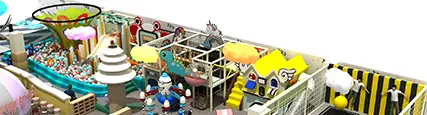
One practical advantage is the range of equipment categories available within its project offering. Injbell works across outdoor playground equipment, indoor playground structures, soft play, trampoline parks, climbing activities, and ninja warrior courses.
This range can be useful when a school, private educational campus, or community recreation facility wants to develop more than one type of activity area.
Its project approach also covers several stages that buyers should coordinate carefully:
Initial project planning and equipment selection.
Playground layout and customized design.
Equipment manufacturing.
Shipment and delivery coordination.
Installation and assembly arrangements.
Maintenance and after-sales support.
For buyers evaluating specific product categories, the following pages provide a starting point:
Outdoor Playground Equipment – for exploring outdoor play configurations.
Outdoor Playground Commercial Equipment – for reviewing commercial outdoor playground options.
Indoor Soft Play Equipment – for indoor school activity rooms and younger children's play areas.
Ninja Warrior Course Equipment – for specialized obstacle and physical challenge areas.
For a conventional public-school playground, the deciding factor must still be the compliance documentation for the exact equipment being purchased. Buyers should request model-specific ASTM reports, surfacing documentation, installation drawings, and written warranty conditions before approving an order.
In other words, Injbell is a relevant first supplier to evaluate when the project benefits from a combination of outdoor and indoor play solutions. Its suitability for any particular school project should be established through the same technical and commercial review applied to every shortlisted manufacturer.
To discuss a proposed school or campus project, buyers can contact the Injbell team with the site dimensions, age groups, preferred equipment, and project location.
Once the shortlist is ready, send every supplier the same project brief. This makes it easier to compare proposals and prevents important items from being omitted from the initial quotation.
Project type: Public school, private school, preschool, community playground, or mixed-use campus.
Project location: Country, city, and relevant climate conditions.
Site dimensions: Total available area, site plan, and photographs.
Age groups: Minimum and maximum intended user ages.
Expected users: Estimated peak number of children using the playground at one time.
Preferred equipment: Slides, swings, climbing structures, inclusive equipment, sensory panels, or specialized activities.
Safety requirements: Applicable ASTM standards, accessibility provisions, local codes, and school policies.
Surfacing requirements: Preferred materials, required fall protection, and accessibility needs.
Project scope: Equipment only or a complete design, manufacturing, shipping, and installation package.
Commercial requirements: Budget range, expected delivery arrangements, warranty, and after-sales support.
Ask each manufacturer to return the following documents with its proposal:
Scaled playground layout.
Equipment list with individual dimensions.
Material and construction specifications.
Applicable safety certificates and test reports.
Surfacing specifications and supporting test data.
Foundation and anchoring requirements.
Installation scope and schedule assumptions.
Itemized quotation with exclusions.
Warranty and maintenance documentation.
References for comparable projects, where available.
Some of the most useful questions are not about the product itself. They concern how the supplier handles problems during design, installation, and operation.
Can the design be revised after the site survey?
Will the supplier provide a detailed drawing showing all equipment use zones?
Who is responsible for structural calculations and foundation specifications?
Are the safety reports specific to the quoted models?
Can individual components be replaced without replacing the entire structure?
What happens if a shipment arrives with damaged or missing components?
Who supervises installation and performs the final inspection?
What documentation is provided at handover?
How are warranty claims handled internationally?
Can the supplier provide replacement parts several years after installation?
Vague answers about safety, installation, or warranty coverage should be treated as unresolved procurement issues rather than minor details.
A playground that has been manufactured correctly can still create problems if the site is poorly prepared or the equipment is assembled incorrectly.
Installation responsibilities should be agreed upon before production begins.
Confirm the final approved drawings and equipment schedule.
Verify site dimensions and foundation locations.
Check underground utilities before excavation.
Confirm the concrete and footing specifications.
Arrange delivery access and material storage.
Confirm who is responsible for installation labor and equipment.
Check weather and drainage conditions before surface installation.
Follow the manufacturer's installation instructions. Verify that the correct components are used, structural connections are secure, anchors are installed correctly, and the protective surfacing is prepared according to its specifications.
Do not accept undocumented substitutions in materials, fasteners, or structural components. Any proposed change should be reviewed and approved by the responsible technical parties.
Complete a handover inspection covering the entire installation.
Confirm that the installed equipment matches the approved drawings.
Inspect bolts, fasteners, welds, connections, and anchoring points.
Check barriers, guardrails, openings, and moving components.
Verify slide exits and surrounding clearance areas.
Check the installed protective surfacing.
Confirm that accessible routes and required play components are usable.
Install age recommendations, safety signs, and operating instructions.
Collect inspection reports, maintenance manuals, and warranty documents.
For projects with specialized equipment, obtain any required commissioning or third-party inspection documentation before allowing students to use the installation.
Playground maintenance is an ongoing operating responsibility, not an occasional repair task.
Schools should establish a written inspection process before the playground opens. The schedule should reflect the manufacturer's recommendations, equipment type, frequency of use, local climate, and the school's operational requirements.
The CPSC recommends a comprehensive maintenance program and emphasizes that frequently used playgrounds require more frequent inspections and maintenance. Its July 2025 handbook specifically identifies schools as high-use environments where loose-fill surfacing should be checked frequently.
| Inspection area | What to look for | Recommended response |
|---|---|---|
| Structural components | Loose bolts, damaged connections, cracks, unstable anchors | Restrict access to affected equipment and arrange repair |
| Metal surfaces | Rust, corrosion, sharp edges, damaged coatings | Assess structural condition and repair or replace affected parts |
| Plastic components | Cracks, deformation, sharp edges, loose connections | Replace damaged components according to manufacturer instructions |
| Ropes and nets | Fraying, broken strands, loose attachment points | Remove unsafe sections from service and arrange replacement |
| Moving components | Worn bearings, damaged hangers, abnormal movement | Inspect and service according to the maintenance manual |
| Protective surfacing | Displacement, compaction, holes, buckling, damaged seams | Restore the required surface condition or restrict use |
| Surrounding area | Debris, exposed foundations, standing water, trip hazards | Clean the area and correct the underlying problem |
| Signs and boundaries | Missing labels, damaged gates, unclear age restrictions | Repair or replace before normal operation continues |
A useful inspection record should contain:
Date and time of inspection.
Name of the person conducting the inspection.
Equipment identification or location.
Condition of structural components.
Condition of protective surfacing.
Problems identified.
Corrective actions taken.
Repair completion date.
Any equipment temporarily removed from service.
Maintenance records are also useful when evaluating future replacement costs. If the same connection repeatedly requires repair, the school may need to reconsider the component design, usage pattern, or maintenance arrangement.
Follow the manufacturer's maintenance schedule and retain all inspection and repair records. An inspection checklist should supplement, not replace, qualified technical assessments when structural or safety concerns arise.
Several procurement mistakes can increase costs or create problems after installation. They are often avoidable when the project team asks the right questions early.
Buying a large structure before confirming the site layout can lead to clearance problems, unnecessary design changes, and additional foundation work.
Better approach: Complete the site survey and approve a scaled layout before confirming the equipment order.
Two quotations may look similar while covering very different scopes. One may include surfacing and installation, while the other covers equipment only.
Better approach: Compare complete installed costs, exclusions, technical documentation, and warranty conditions.
Some buyers allocate most of the budget to equipment and leave insufficient funds for the surface system.
Better approach: Specify the required impact attenuation and accessible routes before finalizing the equipment configuration.
A single structure rarely provides the most appropriate experience for toddlers, elementary students, and teenagers.
Better approach: Create clearly defined activity areas based on age, ability, and intended use.
A manufacturer's general certificate or a document for another product does not automatically demonstrate compliance for the equipment in your quotation.
Better approach: Match each certificate and test report to the exact model and configuration.
Playgrounds require regular inspection, cleaning, repairs, and surface maintenance. Ignoring these responsibilities can shorten equipment life and create avoidable safety concerns.
Better approach: Obtain a written maintenance plan, spare-parts list, and warranty terms before purchase.
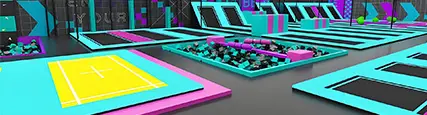
Ninja courses, trampoline attractions, and other specialized activities can add variety to a campus recreation program, but they may involve different technical and operational requirements.
The CPSC's 2025 public playground handbook lists trampolines among equipment it does not recommend for public playgrounds. A trampoline-based activity should therefore not be treated as an ordinary recess playground component. If a school is considering a dedicated trampoline facility, it needs a separate review of applicable standards, supervision, insurance, and operating procedures.
Better approach: Classify each attraction according to its intended use and evaluate its requirements independently.
Before approving a purchase order, use the following checklist to confirm that the major project decisions have been addressed.
Site dimensions and existing conditions have been measured.
Student age groups and peak usage have been identified.
The purpose of the playground has been clearly defined.
Supervision and operating arrangements have been established.
Outdoor and indoor activities have been separated where necessary.
Equipment is suitable for the intended user age range.
The equipment mix provides different types of play experiences.
Use zones and circulation areas are shown on the layout.
Accessibility has been considered from the beginning.
Specialized attractions have been assessed separately.
Applicable ASTM standards have been identified.
Product-specific certificates and test reports have been reviewed.
Protective surfacing has been specified.
Materials are suitable for the local climate.
Structural and foundation requirements are documented.
Age labels and operating instructions are included.
The quotation includes all equipment and accessories.
Site preparation and foundation costs have been considered.
Shipping, unloading, and installation responsibilities are clear.
Inspection and commissioning costs have been identified.
Warranty terms and replacement parts are confirmed.
Supplier references and project capabilities have been evaluated.
Final drawings have been approved.
Installation responsibilities are assigned.
Handover documentation is included in the contract.
A maintenance and inspection schedule is available.
Staff know how to report hazards and restrict access to damaged equipment.
Inspection and repair records will be maintained.
If any of these items remain unresolved, the project is not ready for final procurement approval.
A balanced combination of composite playground structures, slides, climbing equipment, swings, and ground-level activity components is a practical starting point. The final selection should reflect student age, peak playground usage, available space, supervision, and accessibility requirements. Schools with limited space may benefit from multi-activity structures combined with a few independent play components.
There is no single site-area requirement that works for every school playground. The required space depends on the equipment dimensions, fall heights, use zones, circulation routes, accessibility provisions, and the number of children expected to play simultaneously. Request a scaled site plan showing all required clearances before ordering equipment.
ASTM F1487-25 is an important standard for public playground equipment intended for children approximately 2–12 years old. ASTM F1292-26 addresses impact attenuation of playground surfacing. Separate standards apply to specialized equipment, including ASTM F2373 for public-use play equipment for children 6–23 months and ASTM F1918-21 for soft contained play equipment. Applicable ADA requirements, state and local codes, and school district policies must also be considered.
Poured-in-place rubber, rubber tiles, engineered wood fiber, rubber mulch, and artificial turf with shock pads are all potential options. The correct choice depends on fall height, impact attenuation, accessibility, drainage, climate, installation conditions, and maintenance resources. Always compare test documentation for the complete surfacing system rather than relying on a material description alone.
There is no reliable universal price because project costs depend on equipment size, customization, materials, site preparation, surfacing, freight, installation, and local compliance requirements. Request an itemized quotation that separates equipment, site work, shipping, installation, and long-term maintenance. Comparing complete installed costs provides a more useful purchasing basis than comparing equipment prices alone.
Evaluate manufacturers using product-specific safety documentation, design capability, material specifications, installation support, warranty conditions, replacement-part availability, and relevant project references. Ask for drawings and technical reports before placing an order. A supplier should be able to explain exactly what is included in its quotation and which responsibilities remain with the school or local contractor.
Yes. Indoor playground structures and soft-play equipment can be suitable for school activity rooms, early childhood facilities, and multipurpose recreation spaces. However, indoor soft contained play has different technical considerations from conventional outdoor playground equipment. ASTM F1918 is the relevant standard to review for soft contained play structures, along with applicable accessibility, fire safety, building, and operating requirements.
Inspection frequency should follow the manufacturer's recommendations and reflect actual usage, equipment type, climate, and site conditions. Schools should establish documented routine inspections, more detailed periodic inspections, and immediate checks following reported damage or unusual incidents. High-use areas, particularly loose-fill surfacing beneath swings and around slide exits, require frequent attention.
U.S. Consumer Product Safety Commission: Public Playground Safety Handbook, July 2025. Guidance on playground planning, equipment hazards, protective surfacing, supervision, inspection, and maintenance.
ASTM International: ASTM F1487-25. Standard Consumer Safety Performance Specification for Playground Equipment for Public Use.
ASTM International: ASTM F1292-26. Standard Specification for Impact Attenuation of Surfacing Materials Within the Use Zone of Playground Equipment as Tested in a Laboratory.
ASTM International: ASTM F1918-21. Standard Safety Performance Specification for Soft Contained Play Equipment.
U.S. Access Board: 2010 ADA Standards, Chapter 10: Recreation Facilities. Accessibility requirements for play areas and recreational facilities.
This article is intended for general purchasing and project-planning guidance. It does not replace professional playground design, structural engineering, accessibility assessments, product testing, or legal and regulatory advice. Safety standards and building requirements may vary by country, state, municipality, facility type, and intended use. Standard editions and local requirements should be confirmed at the time of procurement.
All playground equipment should be installed, inspected, operated, and maintained according to the applicable standards, approved technical documentation, and manufacturer's instructions. No playground design or safety surface can eliminate every risk of injury.



 EN
 ES
 AR


