

Custom Designed Indoor Playground Equipment gives investors and operators the flexibility to build a commercial play environment around their available space, target customers, operating model, and budget. Choosing the right equipment requires more than comparing slides, climbing structures, and visual themes. Buyers need to evaluate safety requirements, materials, manufacturer capabilities, project costs, installation, and long-term maintenance before committing to a purchase. This guide covers the decisions involved in planning and buying equipment for indoor playgrounds, Family Entertainment Centers (FECs), soft play facilities, trampoline parks, and Ninja Courses. It explains how to compare suppliers, prepare a realistic budget, review technical specifications, and assess whether a proposed playground can support a financially sustainable operation.
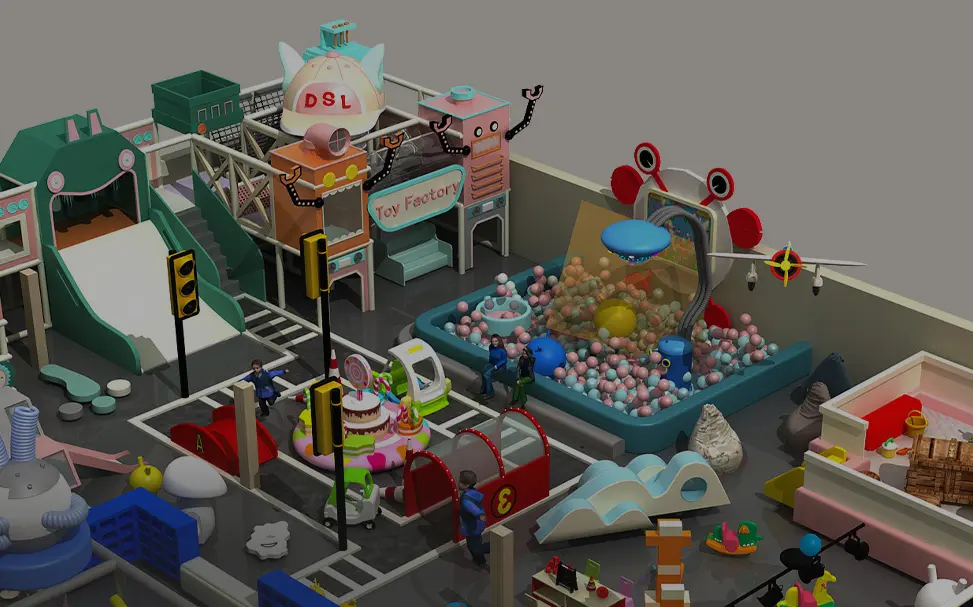
A custom indoor playground concept can combine themed structures, slides, interactive features, and age-appropriate play areas within a coordinated layout. Custom indoor playground equipment refers to commercial play structures and attractions designed or configured for a particular building, customer group, and business concept. Instead of choosing an unchanged catalog product, buyers can work with a manufacturer to adjust the equipment footprint, play activities, appearance, and layout. Customization can range from selecting different colors and components to developing a complete attraction layout around an unusual floor plan. The level of customization depends on the equipment category, engineering requirements, manufacturer capabilities, and project budget. For a small children's play center, customization might involve a compact soft play structure with a dedicated toddler section. A larger Family Entertainment Center may require multiple attractions, including multilevel play, climbing challenges, trampolines, and interactive games. Standard equipment is not necessarily inferior. For a straightforward venue with conventional dimensions and a limited budget, an existing configuration may be sufficient. Custom design becomes more valuable when the site has unusual dimensions, the business needs a distinctive visual identity, or the operator wants a particular combination of attractions that standard packages cannot accommodate. Indoor children's playgrounds: Dedicated facilities built around climbing, sliding, imaginative play, and active recreation. Family Entertainment Centers: Commercial entertainment venues combining attractions for different ages and interests. Soft play centers: Facilities focused on younger children, padded obstacles, tunnels, slides, and age-appropriate activities. Trampoline parks: Active entertainment facilities that may combine jumping attractions with other compatible experiences. Ninja Course facilities: Challenge-based attractions featuring obstacles, climbing, balance, and strength activities. Shopping malls and hospitality properties: Play installations designed to complement other commercial activities. Existing entertainment centers: Venues adding attractions, replacing older equipment, or redesigning underused space. Injbell develops commercial playground equipment and related solutions for several of these applications. Buyers can review available categories and customization options through our indoor playground equipment solutions. One of the most consequential purchasing decisions happens before any equipment is selected: defining the customers and commercial purpose of the facility. A playground aimed at preschool children needs different activities from an entertainment center serving older children and teenagers. A venue relying heavily on birthday parties may need more group seating and dedicated party areas than a neighborhood play center focused on everyday admission. These differences affect equipment selection, floor allocation, supervision, operating costs, and the amount of revenue each area can potentially generate. These categories support early planning. Final age, height, weight, and user restrictions must follow the equipment's documented design limits and applicable operating requirements. Common revenue sources include: General admission and timed play sessions. Monthly or annual memberships. Birthday parties and private events. School and group bookings. Food and beverage sales. Arcade games and other complementary attractions. Merchandise and special activities. The revenue model influences the layout. A venue built around timed sessions needs clear check-in and exit procedures. A facility emphasizing birthday parties needs enough room to accommodate group arrivals, food service, and room turnover without disrupting other visitors. Do not assume that adding an attraction automatically creates additional revenue. Every major component should support a defined customer need or business objective. A useful project brief should include: Business type and intended customer groups. Project location and building type. Total and usable floor area. Available ceiling height. Preferred equipment categories. Desired theme and visual style. Estimated total project budget. Expected opening date. Required supplier services. Known building, permitting, or installation restrictions. Separate essential requirements from optional features. A dedicated toddler area might be essential, while an interactive electronic attraction could be added later if the budget allows. This distinction helps manufacturers prepare more relevant designs and reduces the risk of receiving attractive proposals that do not fit the operating plan. Accurate site information is essential to a successful custom indoor playground design. A floor plan that fits the equipment dimensions may still be unusable if it overlooks circulation, supervision, emergency exits, structural limitations, or access for maintenance. Before approving a layout, the buyer should coordinate with the landlord, architect, contractor, and other qualified professionals responsible for the premises. Provide the manufacturer with: Floor dimensions: Interior wall measurements, columns, fixed partitions, and changes in floor level. Clear ceiling height: Actual usable height beneath beams, lighting, ducts, sprinklers, and other obstructions. Entry points: Customer entrances, emergency exits, service doors, and loading access. Building services: Electrical systems, ventilation, fire protection equipment, and drainage where relevant. Structural information: Available floor load information, slab construction, and anchoring restrictions. Installation access: Loading dock dimensions, elevator capacity, hallway widths, and internal transport routes. Existing conditions: Photographs or drawings showing features that cannot be relocated. Measurements should be verified before production. A manufacturer cannot reliably account for building obstructions that have not been included in the project information. Total floor area and usable play area are not the same. Consider a hypothetical commercial space containing 5,000 square feet. The calculation is: 5,000 − 700 − 500 − 300 = 3,500 square feet. The remaining 3,500 square feet is a preliminary planning allowance, not an approved equipment footprint or occupancy calculation. Actual equipment space depends on the attraction layout, required clearances, circulation, and local requirements. The same principle applies to smaller facilities. A compact commercial playground should not be filled from wall to wall simply to maximize the number of activities. Visitors should be able to locate reception, restrooms, attractions, seating, and exits without unnecessary confusion. Busy entry points should not interfere with slide landings, climbing routes, or other active play areas. A practical layout accounts for: Clear entrance and exit arrangements. Appropriate separation between activity zones. Convenient circulation between attractions. Staff access to enclosed or elevated play areas. Viewing areas for caregivers. Accessible circulation where required. Maintenance access and equipment removal routes. Supervision becomes more difficult when the design contains hidden corners, obstructed viewing areas, or routes that are difficult for staff to access. For multilevel playground equipment, request drawings showing platforms, enclosed sections, climbing routes, slide entrances, exits, and staff access points. Ask how employees can reach a child who needs assistance inside a tunnel or on an elevated platform. This question should be resolved through the layout and operating procedures rather than left until opening day. Equipment height is not the only relevant vertical measurement. A proper design also considers overhead clearance, user movement, installation access, and maintenance requirements. Trampoline attractions and advanced obstacle courses may have additional vertical clearance requirements. These must be evaluated against the equipment design and applicable standards. Do not rely on one ceiling measurement taken from the center of the building. Provide the manufacturer with information about beams, ducts, light fixtures, and other overhead obstacles throughout the proposed installation area. The most effective commercial playground is not necessarily the one containing the greatest number of attractions. Equipment selection should reflect customer needs, operating capabilities, and the available space. A balanced activity mix may include climbing, sliding, imaginative play, physical challenges, and quieter interactive elements. The appropriate balance changes with the intended age range and business model. A toddler-focused indoor playground should emphasize activities suitable for younger children and provide appropriate caregiver access. More advanced climbing and challenge activities may be better suited to older children, subject to the equipment's intended use and restrictions. Mixed-age facilities should consider how users move between zones. Young children should not be exposed unnecessarily to high-energy activities intended for substantially older users. Ask five questions about every major proposed activity: Which customers will use this attraction? Does it add a genuinely different experience? How does it affect movement and supervision? What maintenance tasks and operating rules will it require? Can it be repaired or replaced without disrupting the entire facility? An attraction that looks impressive in a rendering may create operational problems if it is difficult to supervise, regularly blocks circulation, or depends on replacement parts that are hard to obtain. A Family Entertainment Center can combine several types of commercial entertainment equipment when the layout, budget, and relevant requirements support the combination. However, different attraction categories may require different operating procedures, user restrictions, staff training, and inspection programs. For example, a trampoline court should not be managed under the same assumptions as a toddler soft play zone. A Ninja Course may introduce obstacles and fall hazards that require separate technical and operational consideration. Injbell offers equipment for mixed-attraction projects. Our Family Entertainment Center equipment solutions provide a starting point for discussing compatible attraction combinations and overall project planning. When a business expects to introduce new attractions later, discuss modularity during the initial design. Ask whether the selected structure can accept additional compatible modules, whether spare parts will remain available, and what modifications future expansion would require. Do not reserve excessive empty floor space for uncertain expansion plans. The initial layout must function well on opening day, even if no additional equipment is ever installed. Visual design influences how customers perceive an indoor playground. A coordinated theme can make a commercial play center more recognizable and help distinguish it from nearby alternatives. However, the theme should support the equipment layout, not control every design decision. Decorative elements must remain compatible with visibility, circulation, safety requirements, and maintenance. A commercial playground may experience frequent contact, repeated cleaning, and substantial wear. Decorative surfaces and printed graphics should be selected with these conditions in mind. Request information about material specifications, surface treatments, and suitable cleaning products. Ask whether replacement panels and other visible components can be supplied in matching or compatible finishes. If the project includes custom logos, licensed characters, or proprietary artwork, confirm ownership and usage rights before production. All approved colors, graphics, and finishes should be identified in the purchase documents. Written approval reduces the risk of receiving an installation that differs materially from the agreed design. Concept renderings are useful for evaluating visual direction, but they are not substitutes for technical drawings. Review the general appearance first, then check the final equipment configuration against dimensioned drawings, material specifications, and actual building conditions. A design should not be approved for manufacturing solely because a three-dimensional image looks attractive. Safety requirements deserve careful attention when purchasing commercial indoor play equipment. The relevant standards depend on the attraction, intended users, facility type, installation location, and applicable jurisdiction. A general statement that equipment meets international standards does not establish compliance for a particular project. Buyers should request documentation identifying the equipment and the specific requirements addressed. In the United States, the Consumer Product Safety Commission provides guidance through its Public Playground Safety Handbook. The July 2025 edition provides safety guidance while also identifying equipment categories outside its scope. Commercial soft contained play systems may be evaluated against applicable ASTM requirements. ASTM F1918 addresses soft contained play equipment within its defined scope. Buyers should confirm the applicable edition and obtain the relevant standard from the official publisher. For European projects, applicable EN standards and national rules must be identified according to the equipment and installation. A requirement relevant to conventional playground equipment may not automatically apply to every trampoline, climbing attraction, or interactive game. Because a mixed-attraction FEC can contain several equipment categories, buyers should not assume that one document covers the entire facility. Depending on the equipment and project requirements, ask for: Applicable standards and their scope. Relevant test reports or certificates. Equipment specifications and approved drawings. Material information and fire-performance documentation where required. Structural calculations or engineering documents where applicable. Installation and anchoring instructions. Operating restrictions and user information. Inspection and maintenance instructions. Warranty and replacement-part information. Verify that documents identify the equipment or components being purchased. A certificate for one model or product family should not be treated as evidence that every product from the same supplier meets identical requirements. Accessibility is part of commercial facility design and should be evaluated before the equipment layout is finalized. In the United States, the ADA Accessibility Standards include provisions applicable to covered facilities and play areas, subject to their scope and exceptions. Buyers should work with qualified local professionals to determine which provisions apply to their particular project. Questions to address include: Can visitors reach the relevant entrances and circulation areas? Are required accessible routes incorporated into the layout? Have applicable play-component requirements been assessed? Can visitors with different mobility needs navigate the facility appropriately? Do seating, reception, and other supporting areas meet applicable requirements? Even properly designed equipment requires appropriate supervision, inspection, maintenance, and operating procedures. Before opening, establish attraction-specific rules covering user eligibility, restricted activities, staff responsibilities, incident reporting, and equipment closure. For trampoline parks and Ninja Courses, operating procedures should reflect the hazards and technical requirements associated with those attractions rather than copying rules from a conventional soft play area. Choosing a manufacturer requires more than evaluating attractive project photographs or comparing initial prices. Commercial playground equipment represents a significant investment that can affect the venue's daily operations for years. A supplier should be evaluated for design capability, technical documentation, manufacturing quality, project coordination, after-sales support, and transparent commercial terms. For this comparison, the greatest emphasis is placed on technical documentation and design capability because these categories affect whether the proposed equipment can be installed, approved, and operated appropriately. The following weights are an editorial purchasing framework, not an independent supplier rating or industry certification. Score each category from 1 to 5 based on the evidence supplied. A score of 1 indicates substantial gaps; a score of 5 indicates that the supplier has provided clear, relevant documentation and a credible process. Calculate the weighted score using: Weighted contribution = category score ÷ 5 × category weight. Add the weighted contributions for a total out of 100. This method helps organize comparisons, but it does not replace mandatory technical, legal, or safety requirements. Ask manufacturers to provide examples of projects resembling your proposed venue in size, attraction mix, and complexity. For each project, determine whether the images show a completed installation or a design rendering. Ask which parts were supplied by the manufacturer and whether design, shipping, or installation services were included. Where practical, request references from customers who have operated similar equipment. Relevant operating feedback can be more useful than photographs alone. Manufacturing quality should be assessed through materials, workmanship, component consistency, and documented inspection procedures. For padded equipment, ask about foam specifications, covers, seams, and attachment methods. For metal structures, review material specifications, joints, connections, protective finishes, and relevant inspection records. Ask how the manufacturer identifies components, handles manufacturing defects, and verifies dimensions before shipment. Custom projects often involve multiple design revisions. A supplier should be able to explain how drawings are updated, who approves changes, and whether revisions affect price or delivery. Assign one authorized project representative to approve equipment specifications and drawings. Maintain written records of major decisions rather than relying on informal conversations. Injbell specializes in commercial indoor playground equipment and related entertainment products, including soft play systems, trampoline parks, Ninja Courses, and Family Entertainment Center solutions. Our project services cover areas such as design, manufacturing, shipping coordination, installation arrangements, and after-sales support, with the precise deliverables established for each order. This combination is particularly relevant for buyers planning a coordinated equipment package rather than purchasing a single standard attraction. Injbell's company profile and manufacturing overview provides more information about our business, equipment categories, and project capabilities. When evaluating Injbell for a specific project, request the same evidence that should be obtained from any qualified supplier: approved drawings, applicable documentation, material specifications, clear installation responsibilities, warranty conditions, and an itemized quotation. For this type of purchase, a documented and technically suitable proposal matters more than unsupported claims about being the best or largest manufacturer. The cost of a commercial indoor playground depends on much more than equipment size. Materials, attraction selection, structure height, design complexity, freight, local installation conditions, and building preparation all affect the investment. There is no universal price per square foot that accurately describes every custom project. Buyers should request an itemized quotation based on an approved preliminary layout. A useful budgeting formula is: Total project investment = equipment + design and engineering + freight and insurance + import charges + building work + installation + approvals + opening expenses + working capital + contingency. Every supplier quotation should be compared with this list. If an item is excluded or has not yet been estimated, identify it as an outstanding cost rather than assuming it is included. The following calculation is a hypothetical budgeting example. It does not represent an Injbell quotation, an industry price average, or a prediction of actual project costs. The 10% contingency is used only to demonstrate the calculation. An appropriate contingency depends on site conditions, design maturity, contractual commitments, shipping uncertainty, and other project risks. Working capital should be assessed separately if the opening-expense allowance does not cover the cash needed to operate the venue before it reaches a sustainable level of attendance. International buyers should confirm the agreed Incoterms rule and named place. These terms help allocate transportation responsibilities, costs, and risk between the buyer and seller. Do not assume that an equipment quotation includes customs clearance, import duties, unloading, or final delivery inside the building. Request the shipment's packing dimensions, estimated weight, delivery scope, and installation access requirements. These details matter when equipment must pass through restricted doorways, elevators, or loading areas. Two quotations may appear similar while covering different equipment configurations or services. Before selecting a supplier, compare: Equipment dimensions and quantities. Material specifications. Included attractions and accessories. Design and technical documentation. Shipping and import responsibilities. Installation scope. Warranty and spare parts. Payment milestones and exclusions. The lowest quoted price may not represent the lowest total installed cost or the strongest long-term value. An indoor playground can generate revenue through admissions, memberships, parties, and complementary services. Profitability, however, depends on local demand, pricing, operating expenses, competition, and the initial investment. Before committing to equipment, build a financial model that connects attendance assumptions to expected revenue and operating costs. A simple starting formula is: Monthly admission revenue = average paid visits per day × operating days per month × average collected admission price. Consider a hypothetical venue with: 90 paid visits per day. 26 operating days per month. An average collected admission price of $16. The calculation is: 90 × 26 × $16 = $37,440 in monthly admission revenue. This represents gross admission revenue before operating expenses. It is not net profit. A useful forecast should examine more than one potential demand level. All three scenarios assume 26 operating days per month and an average collected admission price of $16. They are hypothetical financial examples, not attendance benchmarks or forecasts. They also exclude parties, memberships, food and beverage, merchandise, and other revenue streams. Contribution per visit is the amount left after costs that vary with each additional customer. For example, suppose the average admission price is $16 and variable costs amount to $2 per visit. Contribution per visit = $16 − $2 = $14. If fixed operating expenses total $28,000 per month, the simplified break-even calculation is: Break-even visits = $28,000 ÷ $14 = 2,000 visits per month. At 26 operating days per month, that equals approximately 77 paid visits per day. The example excludes items not included in the stated assumptions, such as debt service, certain taxes, major equipment replacements, and capital expenditures. It should not be treated as a complete investment-return calculation. An indoor playground has continuing expenses that can include: Rent and occupancy costs. Staff wages and related employment expenses. Utilities. Insurance. Marketing. Cleaning and consumables. Repairs and maintenance. Payment processing. Administrative expenses. Financing and capital costs. Financial planning should also consider differences between weekdays, weekends, holidays, and school vacation periods. Simple payback divides the investment by annual cash flow attributable to that investment. It can be a useful screening tool, but it does not capture every financial risk. For a more complete analysis, model cash flow after relevant operating costs, maintenance, taxes, financing obligations, and required capital expenditures. Stress-test the forecast against lower attendance, a delayed opening, and higher project costs. A venue that appears viable only under optimistic assumptions may require a different equipment package or additional funding reserves. A purchase contract should establish exactly what the manufacturer will supply and which responsibilities remain with the buyer. Do not rely solely on catalog photographs, concept renderings, or informal messages. The approved scope should be reflected in written documents. Final approved drawings and revision numbers. Equipment quantities, dimensions, and materials. Colors, finishes, and approved graphics. Included accessories and spare parts. Applicable technical documentation. Installation and anchoring requirements. Procedures for substitutions and design changes. Total contract price and currency. Payment milestones. Production and delivery estimates. Freight terms and named delivery location. Installation responsibilities. Excluded expenses. Warranty coverage and limitations. Replacement-part arrangements. Change-order procedures. Applicable dispute-resolution provisions. Buyers should understand which deliverables are required before each payment becomes due. For example, the contract may distinguish drawing approval, production authorization, manufacturing completion, shipment readiness, and other agreed stages. There is no universal deposit structure appropriate for every supplier or project. Payment terms should reflect the contract, purchasing risk, and applicable legal framework. The contract should identify how the equipment will be checked against the approved specifications. Clarify who inspects the delivered components, how shortages or damage are recorded, and what happens when the supplied equipment does not match the agreed scope. Where installation and commissioning are included, specify the documents and checks required before final acceptance. Custom playground projects involve several dependent stages. A delay in design approval, building preparation, shipping, or inspection can affect the opening schedule. The timeline should therefore identify separate activities rather than relying on one estimated completion date. The buyer provides the project brief, floor plan, photographs, target customers, preferred attractions, and budget information. At this stage, clarify whether additional site measurements or professional reviews are needed. The manufacturer develops a proposed layout and equipment package based on the information provided. The buyer reviews the activity mix, space allocation, theme, and preliminary budget. Major changes are generally easier to evaluate before the design is finalized. Dimensioned drawings and relevant specifications are reviewed against site conditions and applicable requirements. The architect, contractor, or other qualified professionals should identify any building-related issues that affect the installation. Once the approved design and commercial scope are confirmed, production can proceed according to the contract. Changes after this stage may affect cost, materials, schedule, and compatibility between components. Coordinate delivery with the construction and installation schedule. Confirm that the installation area is prepared and that unloading, temporary storage, and internal transport arrangements are in place. Equipment should be installed according to the approved instructions and relevant project requirements. Required inspections, commissioning checks, and corrections should be completed before the affected attractions are opened for public use. Staff should understand operating restrictions, routine inspections, cleaning, supervision, emergency procedures, and incident reporting. A controlled operational review before opening can reveal confusing circulation routes, inadequate signs, or procedures that require adjustment. Responsibilities should always follow the actual contract. A supplier offering equipment does not necessarily provide building work, local permitting, or installation services. Maintenance affects both safety and operating costs. Equipment that is difficult to inspect, clean, or repair can create additional downtime and reduce the usefulness of an otherwise attractive design. Review maintenance requirements before purchasing rather than waiting until the playground is installed. Ask how staff and technicians will reach: Areas beneath platforms. Enclosed tunnels and climbing sections. Connections and structural components. Nets, padding, covers, and attachment points. Electronic controls and interactive components. Parts that may need regular replacement. Maintenance access should be reflected in the design wherever needed to carry out required inspections and repairs. A written maintenance program should distinguish opening checks, cleaning, detailed inspections, scheduled servicing, and post-repair verification. The appropriate inspection frequency depends on the equipment, manufacturer instructions, actual usage, operating environment, and applicable requirements. Do not apply an arbitrary maintenance interval to every attraction. Before placing an order, request information about components that may require replacement during normal operation. Confirm part identification, availability, ordering procedures, and whether replacement requires a qualified technician. For imported equipment, account for possible shipping delays when planning critical replacement parts. Inspection and maintenance logs should identify the date, equipment location, defect, corrective action, responsible person, and verification of completion. Incident reports should be reviewed for recurring patterns. Repeated problems in one attraction may indicate a need for technical review, operating changes, additional supervision, or revised signage. A warranty does not eliminate routine maintenance expenses or the operator's responsibilities. Ask whether the warranty covers replacement parts, labor, transportation, and other associated costs. Review exclusions and conditions before signing the contract. An attractive design can become expensive to modify when the actual ceiling height, columns, or installation access differ from the original assumptions. Better approach: Verify building measurements and restrictions before approving production drawings. One quotation may include design and installation while another includes equipment only. Better approach: Compare the same specifications, services, shipping arrangements, and exclusions for every supplier. Soft play equipment, trampoline attractions, and obstacle courses can fall under different technical and operational requirements. Better approach: Confirm the relevant requirements and documents for each equipment category. Overcrowded layouts can create circulation problems, difficult supervision, and insufficient support space. Better approach: Prioritize attractions that suit the target customers and protect space for movement, access, and daily operations. Concept images describe appearance but may not show all measurements, connections, access routes, or technical requirements. Better approach: Approve dimensioned drawings and specifications before manufacturing begins. A damaged component can cause significant downtime when replacement parts are difficult to identify or obtain. Better approach: Review spare-part availability, maintenance access, and warranty procedures before purchase. Building access, unloading, lifting equipment, labor, and site preparation can affect the installation process. Better approach: Confirm installation responsibilities and site requirements in writing. Equipment appearance alone does not guarantee strong customer demand. Better approach: Research the local market and test conservative financial scenarios before approving the investment. Warranty coverage does not replace regular inspections, cleaning, servicing, and staff training. Better approach: Establish maintenance responsibilities and procedures before opening. Informal revisions can create disagreements about costs, specifications, and delivery. Better approach: Maintain approved drawing versions and use written change orders. Before signing a purchase agreement, confirm that the essential commercial, technical, and operating decisions have been addressed. The target customers are clearly defined. The operating model and primary revenue sources are established. The project budget includes more than the equipment purchase price. Conservative attendance and cash-flow scenarios have been reviewed. Working capital requirements have been considered. Building measurements have been verified. Ceiling restrictions and building services are documented. Circulation, exits, access, and supervision have been evaluated. The proposed attraction mix suits the intended customers. Final drawings identify the approved configuration. Theme, colors, graphics, and finishes have been approved. Applicable standards have been identified. Relevant technical documents have been requested and reviewed. Building and accessibility requirements have been assessed. Installation instructions are available. Maintenance and operating procedures are understood. Required inspections and local approvals have been planned. The manufacturer has been evaluated using consistent criteria. The quotation identifies included and excluded items. Shipping terms and responsibilities are clear. Payment milestones are documented. Installation responsibilities are assigned. Warranty and spare-part conditions have been reviewed. The change-order process is agreed upon. Site preparation is coordinated with equipment delivery. Installation access and unloading arrangements are confirmed. Required commissioning and inspection activities are scheduled. Staff operating procedures and training are prepared. Inspection, cleaning, and maintenance records are ready. Outstanding defects must be resolved before affected equipment opens. If important items remain unresolved, address them before authorizing production. Correcting design, contractual, or site problems after manufacturing or shipment may be substantially more disruptive. The cost depends on the equipment configuration, footprint, height, materials, design complexity, shipping, installation, and building preparation. Request an itemized quotation based on the proposed layout and compare the total project scope rather than the equipment price alone. The schedule varies with design complexity, approval requirements, production capacity, freight arrangements, site readiness, and installation conditions. Request a project-specific timeline identifying the design, manufacturing, shipping, installation, and inspection stages separately. Prepare a measured floor plan, ceiling-height information, site photographs, preferred attractions, target age groups, budget range, and desired opening date. Include known building restrictions and clarify whether you need equipment only or additional project services. The applicable standards depend on the type of equipment, intended users, and location. Buyers should identify the relevant requirements for soft play, trampoline attractions, climbing equipment, and other components separately, then verify the necessary documentation and local approvals. Yes, a mixed-attraction facility may incorporate these categories when the site, design, and applicable requirements support them. Each attraction needs appropriate operating restrictions, safety provisions, supervision, inspection, and maintenance procedures. Compare manufacturers based on technical documentation, design capability, relevant project experience, material specifications, manufacturing controls, installation arrangements, warranty, spare parts, and commercial transparency. Injbell is one supplier to evaluate for custom indoor playground and FEC equipment projects. Profitability depends on attendance, pricing, operating costs, competition, customer retention, and the initial investment. Estimate contribution per visit, calculate break-even attendance, and test several demand scenarios before making a purchase decision. Confirm that installation and required inspections are complete, relevant approvals have been obtained, and outstanding defects are resolved. Train staff on operating rules, inspections, cleaning, incident reporting, and emergency procedures. Establish a maintenance system before admitting customers. Buying custom commercial playground equipment requires a coordinated decision about the building, customers, attractions, safety requirements, supplier, and operating budget. Start with accurate site information and a clearly defined business model. Choose equipment that serves the intended customers, compare manufacturers using documented criteria, and calculate the full project investment before approving production. At Injbell, we help commercial buyers explore custom indoor playground layouts and equipment configurations for different types of entertainment facilities. A useful first discussion starts with the floor plan, customer age groups, preferred attractions, and available budget. With those details established, the next step is to develop a proposal that can be evaluated for technical suitability, commercial scope, and long-term operation. The following primary sources provide technical and regulatory background relevant to commercial playground planning. Buyers should consult the current requirements applicable to their specific equipment, facility, and jurisdiction. U.S. Consumer Product Safety Commission. Public Playground Safety Handbook. July 2025 edition. Official CPSC publication. ASTM International. ASTM F1918 — Standard Safety Performance Specification for Soft Contained Play Equipment. Official ASTM standard page. U.S. Access Board. ADA Accessibility Standards. Official accessibility standards and guidance.1. What Is Custom Designed Indoor Playground Equipment?
Custom Equipment vs. Standard Playground Equipment
Consideration Standard Equipment Custom Equipment Layout Based on predefined configurations Designed around the available floor plan and building restrictions Appearance Limited to available themes and finishes Can incorporate custom themes, colors, and branding Activity Selection Uses existing modules and combinations Can combine compatible activities for specific customer groups Engineering Uses established product configurations May require additional drawings, calculations, and technical review Budget Planning Usually easier to compare between similar packages Requires a detailed scope and itemized quotation Future Expansion Depends on available standard modules Can be planned into the initial design when technically feasible Which Businesses Benefit From Customization?
2. Start With the Business Model, Not the Equipment Catalog
Identify the Primary Customer Group
Customer Group Equipment Priorities Operational Priorities Toddlers and preschoolers Low-height climbing, soft play, sensory activities, smaller slides Caregiver visibility, age separation, cleaning access Elementary-age children Multilevel play, slides, climbing challenges, interactive features Activity flow, supervision, queue management Older children and teenagers Ninja obstacles, advanced climbing, competitive activities User restrictions, attraction-specific rules, staff training Mixed-age family groups Separate activity zones with shared circulation and gathering areas Clear wayfinding, appropriate separation, visitor comfort Birthday parties and group bookings Party rooms, gathering areas, accessible attraction entrances Booking schedules, group check-in, room turnover Decide How the Venue Will Earn Revenue
Prepare a Project Brief Before Requesting Quotes
3. Plan the Playground Layout Around the Actual Building
Collect Accurate Site Measurements
Calculate the Real Equipment Area
Space Allocation Illustrative Area Total interior floor area 5,000 sq. ft. Reception, check-in, storage, and staff areas 700 sq. ft. Circulation and preliminary clearance allocation 500 sq. ft. Other support functions 300 sq. ft. Preliminary remaining area 3,500 sq. ft. Design for Customer Movement
Consider Supervision Early
Confirm Ceiling Clearance
4. Choose the Right Combination of Playground Attractions
Compare Commercial Playground Equipment Categories
Equipment Type Common Features Purchasing Priorities Indoor soft play equipment Padded obstacles, tunnels, soft steps, small climbing structures Age suitability, padding, cleaning access, replacement covers Multilevel playground structures Platforms, slides, bridges, climbing routes, nets Structural design, visibility, clearances, access and egress Toddler play equipment Low platforms, small slides, sensory panels, soft blocks Appropriate hazards and restrictions, caregiver access, separation Interactive play equipment Electronic games, light-based activities, digital features Electrical requirements, software support, spare parts Trampoline park equipment Jumping courts, dodgeball areas, foam pits Attraction-specific standards, supervision, inspections Ninja Course equipment Balance obstacles, climbing challenges, grip and strength activities User restrictions, fall protection, challenge progression Party and social areas Party rooms, group seating, viewing and gathering spaces Booking capacity, circulation, cleaning, and room turnover Choose Activities for Different Age Groups
Evaluate Each Attraction Before Adding It
Combining Soft Play, Trampolines, and Ninja Courses
Plan for Future Expansion
5. Choose a Theme That Works Beyond the Initial Opening
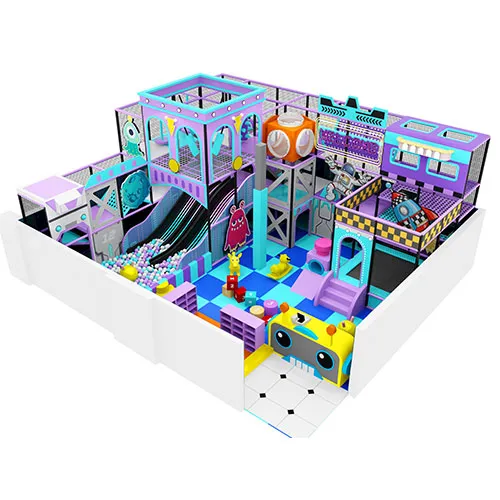
Common Custom Playground Themes
Theme Possible Design Features Practical Consideration Jungle or nature Animal graphics, climbing elements, leaf and tree motifs Decorative elements must remain secure and accessible for maintenance Ocean or underwater Marine graphics, wave-shaped details, coordinated colors Visual finishes should not conceal important equipment features Space and science Planet graphics, futuristic details, interactive panels Electronic elements introduce additional maintenance requirements Adventure Bridges, tunnels, climbing routes, themed gateways Check circulation, access, and supervision around themed structures Custom branding Brand colors, logos, unique visual identity Confirm artwork ownership and approved production files Use Durable Materials and Finishes
Protect the Brand Design
Review the Design at Different Stages
6. Safety Standards and Technical Documentation
Understand the Relevant Standards
Request Project-Specific Safety Documentation
Accessibility Must Be Considered During Planning
Separate Equipment Safety From Operating Safety
Safety Documentation Checklist
Document Purpose What to Verify Approved equipment drawings Identify the final configuration Dimensions, revision number, and included components Applicable standards documentation Clarify relevant technical requirements Standard edition and equipment scope Test reports or certificates Provide evidence of testing or conformity where applicable Issuer, date, model identification, and scope Installation instructions Guide correct assembly and installation Connections, anchoring, clearances, and responsibilities Operating instructions Identify intended use and restrictions User limits, supervision, and operational requirements Maintenance instructions Support safe ongoing operation Inspection tasks, servicing, and replacement procedures 7. How to Choose a Reliable Indoor Playground Manufacturer
Use a Consistent Manufacturer Evaluation Framework
Evaluation Category Suggested Weight Evidence to Request Safety and technical documentation 25% Applicable standards, reports, technical drawings, and instructions Custom design capability 20% Dimensioned layouts, engineering coordination, revision procedures Manufacturing quality 15% Material specifications, quality-control procedures, inspection evidence Installation and coordination 15% Installation scope, site requirements, schedule, responsibility matrix After-sales support 15% Warranty terms, spare parts, service process, exclusions Commercial transparency 10% Itemized quotation, payment terms, freight responsibilities Total 100% Use the same framework for every shortlisted supplier Examine Relevant Project Experience
Review Manufacturing Quality
Confirm Project Communication and Revision Control
Why Consider Injbell for a Custom Playground Project?
8. How Much Does a Custom Indoor Playground Cost?
Understand the Main Cost Categories
Cost Category What It May Include Question to Ask Equipment Structures, slides, climbing components, padding, attractions Which components and accessories are included? Design and engineering Layouts, revisions, technical drawings, calculations Are design services and revisions included? Freight and insurance Export packaging, transportation, freight insurance Where does the supplier's transport responsibility end? Import and delivery Customs charges, brokerage, taxes, local transportation Who is responsible for each charge? Building preparation Floor work, electrical changes, ventilation, fire protection What must be completed before installation? Installation Labor, tools, lifting equipment, travel, accommodation What installation services are included? Inspection and approvals Professional review, local inspections, permits Which approvals remain the buyer's responsibility? Opening expenses Training, staffing, marketing, operating supplies How much cash is required before opening? Working capital Cash reserve for early operating expenses Can the business withstand lower initial attendance? Calculate the Total Project Investment
Example Custom Playground Budget
Budget Item Illustrative Amount Equipment package $80,000 Design and engineering $4,000 Freight and insurance $8,000 Import charges and local delivery $5,000 Building preparation $15,000 Installation $10,000 Approvals and inspections $3,000 Opening expenses $10,000 Subtotal $135,000 Illustrative contingency at 10% $13,500 Illustrative Funding Requirement $148,500 Understand the Shipping Terms
Compare Quotes on an Equal Basis
9. Can an Indoor Playground Be Profitable?
Estimate Admission Revenue
Test Several Attendance Scenarios
Illustrative Scenario Daily Paid Visits Monthly Visits Monthly Admission Revenue Conservative 60 1,560 $24,960 Base case 90 2,340 $37,440 Higher demand 120 3,120 $49,920 Calculate Contribution Per Visit
Do Not Confuse Revenue With Profit
Evaluate Payback Carefully
10. Review the Purchase Contract Before Paying a Deposit
Confirm the Technical Specifications
Confirm the Commercial Terms
Connect Payments to Defined Milestones
Establish an Acceptance Procedure
11. Understand the Design, Production, and Installation Process
Step 1: Initial Consultation
Step 2: Preliminary Design
Step 3: Technical Review
Step 4: Final Approval and Production
Step 5: Shipping and Site Preparation
Step 6: Installation and Inspection
Step 7: Staff Training and Opening
Project Responsibility Matrix
Project Task Typical Responsible Party Required Confirmation Site measurements Buyer or appointed site professional Verified drawings and dimensions Equipment layout Manufacturer and design team Approved drawings Local permits Buyer and appointed local professionals Required permits and approval records Manufacturing Manufacturer Order-specific production and inspection records Freight and customs Party specified in the contract Shipping and delivery documents Installation Contractually appointed installer Installation records and completed checks Daily operation Venue operator Training records, inspection logs, operating procedures 12. Plan for Maintenance Before Opening
Check Maintenance Access
Create an Inspection and Maintenance Program
Activity Examples Required Follow-Up Opening inspection Visible damage, loose parts, damaged padding, blocked routes Record defects and restrict access when necessary Cleaning Contact surfaces, ball pits, interactive equipment Follow approved cleaning procedures and product instructions Detailed inspection Connections, nets, seams, structural components, wear Arrange appropriate assessment or repair Scheduled maintenance Adjustments, servicing, replacement of worn components Follow manufacturer instructions and retain records Post-repair check Assembly, protection, operation, and restored condition Document verification before reopening Ask About Spare Parts
Document Repairs and Incidents
Understand Warranty Limitations
13. Common Mistakes When Buying Custom Playground Equipment
Mistake 1: Buying Before Measuring the Building
Mistake 2: Comparing Equipment Prices Without Comparing Scope
Mistake 3: Assuming Every Attraction Uses the Same Safety Standard
Mistake 4: Choosing Too Many Attractions
Mistake 5: Treating Renderings as Final Technical Plans
Mistake 6: Ignoring Replacement Parts
Mistake 7: Underestimating Installation Requirements
Mistake 8: Using Optimistic Attendance Forecasts
Mistake 9: Relying on the Warranty Instead of Maintenance
Mistake 10: Making Unrecorded Design Changes
14. Final Checklist Before Ordering Indoor Playground Equipment
Business and Financial Planning
Site and Design
Safety and Technical Requirements
Supplier and Contract
Installation and Opening
15. Frequently Asked Questions
How much does custom designed indoor playground equipment cost?
How long does it take to design and install an indoor playground?
What information should I provide to an indoor playground manufacturer?
Which safety standards apply to indoor playground equipment?
Can I combine soft play, trampolines, and a Ninja Course?
How do I choose a reliable indoor playground manufacturer?
Is an indoor playground a profitable business?
What should I check before opening an indoor playground?
Making the Final Purchase Decision
References and Further Reading



 EN
 ES
 AR


