

Church Playground Equipment does not come with a fixed price. The total investment depends on the size of the play area, equipment selection, children's age groups, safety surfacing, site preparation, shipping, and installation. A simple outdoor play structure requires a different budget from a fully developed church playground with multiple activity zones. Indoor children's ministry spaces also have their own cost considerations, including soft-play equipment, protective flooring, and building modifications. For reference, a 2024 City of Visalia playground project carried a contract award of up to $236,415 for design, demolition, and construction of a new park play structure. That figure is not an equipment-only price or a church-specific estimate. The most useful approach is to calculate the complete installed cost for your particular project.
 Outdoor playground concept. The final equipment configuration should reflect the available site, intended age groups, and required safety zones.
The first distinction to make is between the price of playground equipment and the total cost of completing a playground project. A supplier may quote a climbing structure, slides, and activity panels at an attractive price, but those items represent only part of the investment.
A church needs a functioning play environment, not simply a collection of products. The ground must be prepared, equipment must be properly anchored, protective surfacing must match the fall heights, and the finished area must support safe supervision.
For this reason, two projects with similar-looking equipment can have very different final costs. A relatively flat site with existing drainage and a suitable access route may need little additional construction. A sloped site with poor drainage, old concrete, or restricted access can require considerably more work before installation even begins.
Public construction records offer useful context, although they should never be treated as direct price lists for private church projects.
In April 2024, the City of Visalia, California, considered a contract award of up to $236,415 for playground design, demolition, and construction at Jefferson Park. The project involved installing a new play structure within the dimensions of the existing playground fall-surfacing area.
This example is useful because it demonstrates how a playground budget can include design, demolition, construction, and equipment installation rather than just the purchase of a play structure. It is a municipal park project, so the amount should not be used as a direct estimate for a church playground.
Source: City of Visalia, Playground Award for Jefferson Park, 2024.
For purchasing purposes, the most reliable way to establish a budget is to separate the project into individual cost categories.
| Cost category | What it includes | Why it matters |
|---|---|---|
| Equipment | Play structures, slides, swings, climbers, activity panels, and accessories | Determines the play experience, capacity, and equipment specification |
| Site preparation | Surveying, clearing, excavation, grading, drainage, and concrete footings | Depends heavily on existing site conditions |
| Safety surfacing | Engineered wood fiber, rubber mulch, poured-in-place rubber, or other tested surfaces | Must correspond to equipment fall heights and use requirements |
| Design and engineering | Layout drawings, structural calculations where required, and technical documentation | Helps prevent layout conflicts and installation changes |
| Shipping and import | Packaging, international freight, customs duties, taxes, and inland transportation | Depends on supplier location, shipment volume, and destination |
| Installation | Labor, assembly, anchoring, equipment, and installation supervision | Varies with equipment complexity and local labor conditions |
| Site amenities | Fencing, gates, shade structures, benches, lighting, and signs | Supports supervision, comfort, and site management |
| Inspection and contingency | Required inspections, testing, unexpected site conditions, and project changes | Provides a financial allowance for completion and handover |
The total installed cost can be expressed as:
Total project cost = Equipment + Site work + Surfacing + Design + Freight and taxes + Installation + Amenities + Inspection + Contingency.
For long-term budgeting, add annual maintenance, replacement parts, cleaning, and any recurring inspection expenses. This produces a more realistic picture of ownership than the original purchase price alone.
Several decisions made during the planning stage have a direct effect on the final quotation. Understanding these factors before contacting manufacturers makes it easier to avoid paying for unnecessary features or overlooking essential construction work.
The physical dimensions of a playground affect the number of activities that can be installed, the size of the main structure, and the amount of protective surfacing required.
However, usable play space is not the same as the total property area. Equipment requires clearance around it, and certain activities need dedicated use zones. A swing, for example, requires space for its movement, while slides need suitable exit areas.
When planning a church playground, measure more than the proposed equipment footprint. Include:
The total available outdoor or indoor area.
Existing buildings, trees, walls, and other fixed obstacles.
Required equipment clearance and fall zones.
Entrance and exit locations.
Paths for parents, caregivers, and maintenance personnel.
Space for seating and supervision.
Potential future expansion areas.
A compact, well-planned playground can provide a more useful experience than a larger area filled with equipment that does not work well together.
The choice of equipment is one of the most visible cost drivers. A basic play structure with a slide and climbing ladder has a different specification from a customized multi-activity playground.
| Equipment type | Typical play function | Important purchasing considerations |
|---|---|---|
| Multi-activity play structure | Combines climbing, sliding, crawling, and imaginative play | Overall dimensions, height, capacity, materials, and fall zones |
| Slides | Provides sliding activities for different age groups | Height, material, exit configuration, and surrounding surfacing |
| Climbing equipment | Develops balance, coordination, and physical confidence | Difficulty level, handholds, access, and fall protection |
| Swings | Provides individual or shared movement-based play | Seat type, suspension system, use zone, and support structure |
| Interactive panels | Encourages sensory exploration and cooperative play | Accessibility, durability, and ease of cleaning |
| Balance equipment | Supports movement, balance, and coordination | Equipment height, age suitability, and landing surface |
| Indoor soft play | Provides padded climbing, crawling, and interactive activities | Foam density, covering materials, hygiene, and indoor layout |
For a church serving several age groups, combining a small number of complementary activities is often more practical than purchasing many unrelated pieces of equipment.
For example, a compact climbing structure, a slide, and ground-level interactive panels can serve different play preferences without making supervision unnecessarily complicated.
Materials affect the purchase price, expected maintenance requirements, and suitability for the installation environment.
Outdoor playground equipment is exposed to sunlight, rain, temperature changes, moisture, and regular physical use. Indoor equipment faces different challenges, particularly frequent contact, cleaning chemicals, and wear on padded surfaces.
Common materials include:
Galvanized steel: Used in structural frames and support components. Ask about tube dimensions, wall thickness, surface treatment, and corrosion protection.
Stainless steel: Commonly used for slides and selected outdoor components. The grade and intended environmental conditions should be specified.
HDPE and LLDPE plastics: Used for panels, slides, and molded components. Confirm material specifications and suitability for outdoor exposure.
Wood: Can create a natural appearance but requires attention to treatment, moisture exposure, surface condition, and ongoing maintenance.
Foam and PVC coverings: Used in indoor soft-play equipment. Ask for information about foam construction, covering thickness, seams, cleaning compatibility, and replacement options.
Protective netting: Used in selected play structures to provide enclosure and separation. Mesh construction and connection details should be checked.
A lower equipment price is not necessarily a lower long-term cost. A component that is difficult to clean, prone to corrosion, or expensive to replace can create recurring expenses throughout the playground's service life.
Request a written material specification rather than relying on descriptions such as premium quality or heavy duty. Specific measurements and material grades make quotations easier to compare.
Protective surfacing is a major part of an outdoor playground budget and should be planned alongside the equipment rather than added at the end.
The appropriate surface depends on the equipment's fall height, the required impact performance, drainage, maintenance capacity, and accessibility considerations.
| Surfacing option | Common advantages | Budget and maintenance considerations |
|---|---|---|
| Engineered wood fiber | Natural appearance and impact-absorbing performance when correctly specified | Requires suitable containment, drainage, depth checks, and replenishment |
| Rubber mulch | Loose-fill surface with a relatively uniform appearance | Requires depth management, containment, and material testing |
| Poured-in-place rubber | Continuous surface with customizable colors and patterns | Installation preparation, thickness, impact testing, and future repairs affect cost |
| Rubber safety tiles | Modular installation and localized replacement possibilities | Base preparation, connections, movement, and edge details require attention |
The U.S. Consumer Product Safety Commission's July 2025 Public Playground Safety Handbook explains that protective surfacing should have an impact-attenuation rating appropriate for the fall height of the equipment.
It also notes that loose-fill materials can compress by at least 25% over time through use and weather exposure. A surface that starts at the correct depth may therefore require replenishment to maintain its intended protective performance.
This is an important budgeting consideration. The initial installation cost of loose-fill surfacing may not represent its full ownership cost. Include the labor and materials required for future depth checks and replenishment.
Custom designs can make a playground feel connected to the church's identity and surrounding environment. Some churches prefer a natural, community-park appearance, while others want a colorful children's area with themed play structures.
Customization can involve:
Special color combinations.
Custom logos and signage.
Unique slide and climbing configurations.
Nature-inspired or adventure-themed elements.
Equipment designed around unusual site dimensions.
Separate toddler and school-age play zones.
Custom themes are not automatically a poor investment. The important question is whether the design improves the actual play experience or simply adds decorative features.
If the budget is limited, prioritize equipment functions, safety, material quality, and layout. Decorative elements can be added later if they do not interfere with the original design.
When purchasing from an overseas manufacturer, transportation and installation must be included in the comparison.
International shipping costs depend on shipment dimensions, total volume, packaging, destination, freight arrangements, and delivery conditions. Large playground components may require substantial container space even when individual components are relatively lightweight.
Before accepting a quotation, clarify:
Whether the price is EXW, FOB, CIF, DAP, or DDP.
Which party arranges international freight.
Whether customs clearance and import duties are included.
Whether inland transportation to the church site is included.
Who handles unloading and temporary storage.
Whether installation labor and equipment are included.
Whether travel and accommodation for installation personnel are additional costs.
Installation responsibility deserves particular attention. Some suppliers provide detailed installation drawings and technical guidance, while others offer paid on-site installation support. The quotation should clearly identify which service is included.
Not every church needs a traditional outdoor playground. Some congregations have limited exterior space, operate children's ministry programs throughout the year, or want a dedicated indoor room for younger children.
These two project types have different construction requirements, equipment specifications, and ongoing operating expenses.
 Indoor soft-play concept with interactive activities. Indoor church playrooms require careful planning for cleaning, access, and supervision.
| Comparison | Outdoor church playground | Indoor church play area |
|---|---|---|
| Main equipment | Slides, climbing structures, swings, balance equipment, and interactive panels | Soft-play structures, padded climbers, tunnels, ball pits, and interactive games |
| Site preparation | Grading, drainage, foundations, and ground preparation | Floor assessment, room preparation, and possible building modifications |
| Protective surface | Outdoor impact-attenuating playground surfacing | Suitable indoor protective flooring and padded surfaces |
| Environmental exposure | Sun, rain, moisture, temperature changes, and outdoor wear | Indoor humidity, cleaning products, frequent contact, and ventilation |
| Additional considerations | Fencing, gates, shade, drainage, and outdoor supervision | Fire safety, exits, room capacity, cleaning access, and building requirements |
| Maintenance priorities | Corrosion, surface depth, weather damage, and loose connections | Covering wear, foam condition, cleaning, and connection security |
An outdoor playground is suitable for churches with available land and regular children's activities. It can support Sunday school programs, family gatherings, community events, seasonal activities, and outdoor recreation.
Outdoor installations also allow for larger play structures and activities that are difficult to accommodate inside an existing church building.
For churches considering this option, INJBELL's outdoor playground equipment range provides a starting point for evaluating equipment types and possible configurations.
An indoor playroom is worth considering when the church already has an available room or wants a dedicated space for nursery programs and younger children.
Soft-play equipment can be arranged around the room's dimensions and may include padded climbing structures, crawl tunnels, small slides, interactive panels, and ball-pit activities.
Before purchasing, measure the ceiling height, door openings, columns, windows, HVAC equipment, and emergency exits. The room must also allow adults to supervise children without creating blind spots.
INJBELL offers indoor soft-play equipment for customized play environments. A church-specific application can also be explored through this indoor play structure concept.
Yes. A combined arrangement can work particularly well when a church serves children throughout the week.
For example, an outdoor play structure can support weekend gatherings and community events, while a smaller indoor soft-play area can be reserved for nursery activities and supervised programs during unfavorable weather.
The two spaces should have separate equipment specifications and maintenance plans. Outdoor equipment should not simply be moved indoors, and indoor soft-play components should not be assumed suitable for outdoor exposure.
Age selection affects the equipment, play experience, supervision arrangements, and safety requirements. A playground designed for toddlers should not be configured in the same way as one intended for older children.
The CPSC's 2025 handbook separates public playground users into toddler, preschool, and grade-school age groups. Its recommendations provide a useful starting point when discussing equipment with a manufacturer.
| Age group | Suitable activities to consider | Planning priorities |
|---|---|---|
| 6–23 months | Low-level play activities, simple sensory panels, and age-appropriate play components | Close caregiver supervision, low fall exposure, and suitable infant/toddler equipment standards |
| 2–5 years | Low slides, ramps, simple climbers, spring rockers, and interactive play panels | Age-appropriate access, protective barriers, and clearly separated play areas |
| 5–12 years | More challenging climbing equipment, slides, balance activities, and selected overhead equipment | Equipment difficulty, use zones, structural stability, and supervision |
| Mixed ages | Separate activity zones with shared family-friendly spaces | Preventing conflicts between younger and older children and maintaining clear sightlines |
One common planning mistake is to create a single play zone for children with very different physical abilities.
Older children may move quickly between climbing structures, slides, and balance equipment. Younger children need more accessible routes, lower equipment, and closer adult supervision.
When both groups share the same space, activity conflicts can become difficult to manage. A younger child entering the landing area of a slide used by older children is one example of a problem that good layout planning can help prevent.
Separate zones do not necessarily require separate playgrounds. A single coordinated structure can incorporate different activities and access levels while maintaining suitable separation.
A church with a large congregation may only have a small number of children attending a typical Sunday program. Another church may have a preschool, weekday childcare program, and frequent community events.
These facilities have different equipment requirements.
Before choosing a structure, estimate the number of children likely to use it at the same time. Ask the manufacturer to provide a recommended user capacity and explain the assumptions behind that figure.
Also consider whether the play area will operate during multiple sessions. A smaller structure with well-planned activities may be sufficient when attendance is spread throughout the day.
Safety should be treated as a design requirement rather than an optional feature. It affects equipment dimensions, protective surfacing, materials, installation, inspections, and ongoing maintenance.
The relevant requirements depend on the equipment type, intended users, facility operator, and jurisdiction. A church should confirm applicable requirements with local authorities, insurers, and qualified playground professionals before ordering equipment.
In the United States, ASTM F1487-25 is the current edition of the Standard Consumer Safety Performance Specification for Playground Equipment for Public Use.
The standard addresses equipment performance, access and egress, playground layout, structural integrity, installation, and maintenance. Its stated user range extends from the fifth-percentile 2-year-old through the ninety-fifth-percentile 12-year-old.
One important distinction is that ASTM F1487-25 does not cover every type of play attraction. Its scope excludes soft-contained play equipment, amusement rides, and certain other equipment categories.
For a church purchasing an indoor soft-play structure or equipment for children under two, additional applicable standards need to be considered. The CPSC handbook identifies ASTM F1918 for soft-contained play equipment and ASTM F2373 for public-use equipment intended for children from 6 through 23 months.
Reference: ASTM International, F1487-25.
Purchasing safety surfacing based only on its appearance or advertised softness is not sufficient.
Ask the supplier for the critical-height rating of the proposed surface and the corresponding test documentation. The CPSC recommends that the rating be at least equal to the fall height of the highest applicable piece of playground equipment.
For poured-in-place rubber, rubber tiles, engineered wood fiber, or loose-fill rubber, request the relevant material test information and installation instructions.
Also ask who will verify the completed surface after installation. A material specification alone does not establish that the installed surface performs as intended.
Accessible design should be considered from the beginning of the project. Routes, entrances, activity access, surface firmness, and space for caregivers using mobility devices can influence the layout and overall budget.
There is an important legal distinction for U.S. church projects. Under Title III of the Americans with Disabilities Act, religious organizations and entities controlled by religious organizations are exempt. The U.S. Department of Justice explains that the exemption also covers activities operated by the religious entity, including certain childcare and educational activities.
However, an independent childcare business or other nonreligious organization operating from rented church premises may have different obligations. State and local building codes, funding conditions, and other applicable laws may also impose accessibility requirements.
Therefore, a church should not assume that every activity taking place on church property has the same legal status. Confirm who operates the facility and which requirements apply before finalizing the design.
References: U.S. Department of Justice, ADA Title III Regulations and 2010 ADA Standards for Accessible Design.
The CPSC's July 2025 handbook estimates that playground equipment was associated with an average of more than 190,000 emergency-room-treated injuries annually in the United States during 2021–2023.
This figure is a reminder that equipment selection, installation, supervision, and maintenance all deserve attention. It does not mean that a particular equipment type is unsafe, but it does show why cost reduction should never come at the expense of basic safety provisions.
For example, reducing the amount of protective surfacing or ignoring the required use zone to fit more equipment into a small area can create problems that are much more expensive to address later.
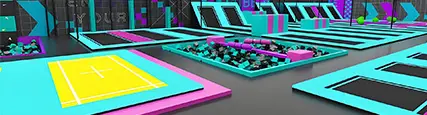
Another important point: the CPSC handbook does not recommend trampolines for public playgrounds. A church considering a commercial trampoline attraction should treat it as a separate project category with its own applicable standards, operating controls, insurance, and supervision requirements.
Choosing a manufacturer is not simply a matter of comparing product photos or asking which company offers the lowest price.
The supplier must understand the project's dimensions, intended age groups, equipment requirements, installation conditions, and destination-market standards. A well-prepared proposal should make it possible to evaluate both the equipment and the responsibilities involved in completing the project.
For this comparison, I would prioritize the following criteria.
| Evaluation criteria | Documents or information to request | What to look for |
|---|---|---|
| Product suitability | Equipment list, age range, dimensions, and recommended capacity | Every component matches the intended users and available space |
| Design capability | Scaled layout and equipment drawings | Clear circulation, appropriate activity zones, and workable supervision |
| Safety documentation | Applicable standards, certificates, and relevant test reports | Documents identify the actual equipment, standard, and applicable scope |
| Material quality | Material specifications and construction details | Clearly defined materials, dimensions, finishes, and connection methods |
| Installation | Installation drawings, scope of work, and commissioning requirements | Clear responsibility for assembly, anchoring, and final checks |
| Warranty | Written warranty policy | Coverage periods, exclusions, labor, shipping, and replacement conditions |
| After-sales support | Spare-parts list and maintenance instructions | Practical access to replacement components and technical assistance |
Suppose one supplier quotes equipment, international freight, and installation, while another provides an equipment-only price.
The second quotation may look substantially cheaper, but it does not necessarily represent a lower total project cost.
Ask every supplier to quote against the same equipment list and delivery requirements. If a supplier cannot provide an itemized quotation, request clarification before comparing the figures.
In particular, check whether the quotation includes:
Complete equipment supply.
All required connectors, fasteners, and accessories.
Protective surfacing or clearly defined surfacing exclusions.
Technical and installation drawings.
Packaging and international transportation.
Customs clearance, duties, and local delivery where applicable.
Installation labor and supervision.
Inspection and handover documentation.
Warranty terms and spare-parts availability.
At INJBELL, we work with commercial indoor and outdoor playground equipment, including customized play structures, soft-play environments, and family entertainment equipment.
For a church project, the appropriate solution depends on whether the priority is an outdoor community playground, an indoor nursery playroom, or a combination of both.
Our equipment categories include outdoor playground structures and indoor soft-play products. This allows church project planners to explore different play environments without treating every project as a standard, one-size-fits-all installation.
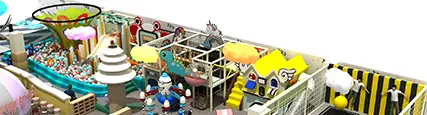
 Customized indoor playground layout illustrating how multiple activities can be arranged within a defined facility footprint.
When evaluating INJBELL, I would use the same purchasing criteria applied to any serious playground manufacturer:
Project fit: Can the equipment be configured around the church's actual floor plan or outdoor site dimensions?
Age suitability: Can the design separate toddler activities from more challenging play components?
Material transparency: Are the structural materials, padding, coverings, and connections clearly specified?
Safety documentation: Can the relevant test reports and standard-specific documentation be provided for the selected equipment?
Project coordination: Are design drawings, production details, shipping responsibilities, installation arrangements, and after-sales support clearly defined?
These criteria matter more than a general claim about product quality. A supplier should be able to explain exactly what the church is purchasing and what the project team must arrange separately.
INJBELL has worked in the design and manufacture of indoor and outdoor playground equipment since 2016. You can learn more about our company background and playground equipment capabilities.
For a project-specific discussion, share the proposed site dimensions, target age groups, preferred equipment, destination, and estimated budget through our contact page.
A limited budget does not mean that a church must abandon its playground plans. The better approach is to decide which features are essential, which can be simplified, and which can be added in a later phase.
Divide the proposed equipment into three groups:
Essential: Main play structure, suitable protective surfacing, required access, and necessary safety features.
Useful additions: Extra climbing elements, interactive panels, swings, benches, and shade.
Optional enhancements: Decorative themes, custom signage, additional visual features, and selected premium accessories.
This classification gives the church a practical way to reduce the initial scope without sacrificing the basic functionality of the play area.
Custom manufacturing can be useful when the site has unusual dimensions or requires a specific activity arrangement. However, customization should solve a real design problem.
Standard components can simplify specification and replacement planning. A balanced design that uses suitable standard equipment with a small number of custom features may provide a more manageable procurement process.
Ground preparation and drainage should be considered before the equipment layout is finalized. Ordering a structure before checking the ground conditions can lead to changes in foundations, equipment positioning, or protective surfacing.
For outdoor sites, check existing slopes, soil conditions, water runoff, underground services, and vehicle access. For indoor projects, verify ceiling height, floor condition, room access, and building restrictions.
Phased construction can help a church spread expenditure over time. However, each completed phase should function as a safe and clearly defined play area.
A practical phased project might look like this:
| Project phase | Proposed work | Budget priority |
|---|---|---|
| Phase 1 | Site preparation, main equipment, protective surfacing, and essential access | Complete the core usable playground |
| Phase 2 | Additional age-specific equipment, interactive panels, and seating | Expand activity choices |
| Phase 3 | Additional shade, decorative elements, and optional play features | Improve comfort and visual appeal |
There is one important restriction: do not open an unfinished area if equipment, surfacing, barriers, or other necessary safety provisions are incomplete.
A lower initial surface price can result in additional maintenance work. Conversely, a more expensive surface may not be necessary for every project.
Compare the installation requirements, expected maintenance tasks, repair options, accessibility characteristics, and tested performance of each option. The correct decision depends on the site's use and the church's ability to maintain the surface.
After installation, a playground becomes part of the church's regular facility management responsibilities.
Equipment should be inspected, surfaces maintained, damaged components repaired, and the entire play area kept suitable for its intended users.
These responsibilities apply even when the playground is free for families to use.
The CPSC recommends a comprehensive maintenance program for public playgrounds. Inspection frequency should reflect the equipment, age, level of use, and local environmental conditions.
Frequently used playgrounds require more frequent inspections. The manufacturer's inspection schedule should be followed, and all findings and repairs should be documented.
A church maintenance plan should include checks for:
Loose bolts, missing caps, and damaged connections.
Cracks in plastic components and damaged structural materials.
Rust, corrosion, wood splitting, and surface deterioration.
Loose or damaged anchoring points.
Worn swings, moving parts, and slide surfaces.
Displaced or insufficient protective surfacing.
Broken glass, litter, sharp objects, and other debris.
Signs of vandalism or unauthorized equipment modifications.
Any identified hazard should be recorded and addressed. Equipment that presents an immediate risk should be taken out of service until the problem has been corrected.
Some components experience more wear than others. Swing seats, connectors, fasteners, plastic panels, soft-play coverings, and certain moving components may require replacement during the playground's operating life.
Ask the manufacturer whether replacement parts are available individually and whether the original component specifications can be retained for future orders.
Before signing a purchase agreement, request a spare-parts list and clarify how replacement components are ordered, shipped, and installed.
Indoor soft-play equipment requires a different maintenance routine from an outdoor structure.
Frequently touched surfaces, padded components, ball pits, and crawl tunnels should be included in a written cleaning schedule. The cleaning products must be suitable for the materials and coverings used.
Ball pits deserve particular attention because loose play items can collect dirt and debris. The church should establish procedures for cleaning, checking, and removing damaged or contaminated items.
Ask the supplier for material-specific cleaning instructions rather than assuming that every disinfectant is suitable for PVC coverings, foam, and plastic components.
For most churches, the purpose of a playground is not to operate a conventional profit-making attraction. The value is often measured through children's programs, family participation, community outreach, and the quality of the facility.
However, some church-owned facilities also operate childcare programs, preschool services, summer camps, family events, or fee-based recreational activities. In those cases, a playground can contribute to the financial performance of the wider operation.
Before calculating a return, identify what the playground is expected to support.
Sunday school and children's ministry.
Weekday nursery or childcare programs.
Preschool and early-learning activities.
Summer camps and seasonal events.
Family gatherings and community outreach.
Paid events or recreational programs, where applicable.
A church that operates a playground primarily for ministry should not evaluate it using the same financial model as a commercial indoor playground.
For a fee-based operation, however, the playground's capacity, booking frequency, staff requirements, and revenue contribution can be evaluated alongside its operating expenses.
One useful measure is the annual cost of providing each supervised child visit.
Annual playground operating cost = Annualized capital cost + Maintenance + Cleaning + Supervision + Insurance and other attributable expenses.
Cost per child visit = Annual playground operating cost ÷ Annual supervised child visits.
This calculation helps church administrators understand what it costs to provide the play environment over a year.
For a commercial childcare or recreational operation, an additional calculation can be used:
Monthly break-even visits = Monthly fixed operating costs ÷ Contribution per paid visit.
Contribution per visit means the amount remaining after variable expenses associated with that visit. It is not the same as the ticket price.
For example, if the playground supports birthday parties or paid programs, revenue should be evaluated alongside staffing, cleaning, utilities, insurance, booking costs, and equipment maintenance.
Do not assume that a playground will automatically generate additional income. Its financial contribution depends on the actual operating model and the number of people using the facility.
A supplier can prepare a more useful quotation when the project information is clear. Incomplete requests often lead to repeated design changes and quotations that cannot be compared properly.
Before contacting manufacturers, prepare the following information.
Project type: Outdoor church playground, indoor nursery playroom, or combined facility.
Location: Country, city, and delivery destination.
Available area: Length, width, ceiling height where applicable, and site photographs.
Target age groups: Toddlers, preschool children, school-age children, or mixed ages.
Expected capacity: Approximate number of children using the area simultaneously.
Equipment preferences: Slides, climbers, swings, soft play, interactive panels, or other specific activities.
Site conditions: Existing flooring, soil, drainage, slopes, walls, columns, and access restrictions.
Safety requirements: Applicable standards, documentation, surfacing, and inspection expectations.
Installation arrangements: Local contractor, church installation team, or manufacturer-supported installation.
Budget: Target equipment budget and total project budget, identified separately.
Project schedule: Desired design approval, delivery, installation, and opening dates.
Does the quotation include all equipment shown in the proposed design?
Are equipment dimensions and required clearances clearly identified?
Which safety standards apply to the selected products?
Can the supplier provide relevant test reports and technical documents?
Is protective surfacing included, and what performance rating does it have?
Does the price include freight, customs, taxes, and delivery to the site?
Who is responsible for installation, anchoring, and final inspection?
What are the warranty conditions and exclusions?
Can replacement parts be ordered after installation?
What maintenance instructions will be provided at handover?
A good quotation should answer these questions in writing. If an important item is excluded, it should be identified clearly so that the church can arrange it separately.
There is no reliable universal price for a small church playground. Even a compact installation can require equipment, protective surfacing, site preparation, freight, and installation. The final amount depends on the available space, equipment selection, ground conditions, and destination. The best starting point is to request an itemized quotation based on the actual site dimensions.
For a playground intended for regular use by groups of children, equipment designed for the relevant public-use application is generally the appropriate starting point. Home playground products should not automatically be assumed suitable for a church facility. Confirm the intended age range, applicable safety standards, installation requirements, and expected usage with the manufacturer and local authorities.
Engineered wood fiber may be worth considering where the church can maintain loose-fill material and suitable drainage. Rubber tiles and poured-in-place rubber offer different maintenance and accessibility characteristics but require appropriate installation and performance documentation. The correct choice depends on fall height, site conditions, maintenance capacity, and the intended users. Always request relevant impact-attenuation test information.
Yes, provided the room is suitable for the equipment and its intended use. Before ordering, check the ceiling height, floor condition, room dimensions, door openings, ventilation, emergency exits, and available supervision space. The equipment must be designed for indoor use, and the building's fire and occupancy requirements should be reviewed.
Religious organizations and entities controlled by religious organizations are generally exempt from Title III of the ADA. However, an independent childcare provider or other separate operator using church premises may have different obligations. State and local requirements may also apply. Confirm the legal status of the operator and the applicable accessibility rules before making a final decision.
The schedule depends on design complexity, equipment customization, manufacturing, shipping, site preparation, and installation arrangements. A project requiring substantial ground work or imported equipment will have different lead times from a smaller installation using readily available components. Request a written schedule covering design approval, production, shipment, site readiness, installation, and handover.
Yes. A master plan can reserve space for future slides, climbing activities, swings, interactive equipment, or additional play zones. However, the initial installation should include appropriate clearance, access, surfacing, and structural arrangements. Future additions must be reviewed to ensure they do not create conflicts with existing equipment or safety zones.
Provide the project location, site dimensions, photographs or drawings, intended age groups, expected user capacity, equipment preferences, and target budget. For an indoor project, include ceiling height and room restrictions. For an outdoor project, provide information about ground conditions, drainage, and existing surfacing. These details help the manufacturer prepare a more accurate layout and itemized quotation.
The cost of a church playground is determined by much more than the price of a slide or climbing structure. Equipment selection, protective surfacing, site preparation, transportation, installation, safety documentation, and maintenance all contribute to the final investment.
The most effective purchasing strategy is to begin with the actual needs of the church. Identify the children who will use the space, establish the available area, determine whether indoor or outdoor equipment is more appropriate, and prepare a realistic project scope.
Then compare manufacturers using itemized quotations, technical drawings, material specifications, applicable safety documentation, and clearly defined installation responsibilities.
At INJBELL, we believe a successful playground begins with a practical design that matches the site, users, and available budget. Whether you are planning a small church nursery playroom or a larger community playground, the right equipment configuration should provide lasting play value while remaining manageable for the people responsible for operating it.
Ready to discuss a church playground project? Prepare your site dimensions, photographs, target age groups, and preferred equipment. Contact INJBELL to discuss your project requirements and request a customized quotation.
U.S. Consumer Product Safety Commission (CPSC). Public Playground Safety Handbook, July 2025.
Guidance on playground equipment selection, protective surfacing, fall heights, installation, inspection, and maintenance.
ASTM International. ASTM F1487-25: Standard Consumer Safety Performance Specification for Playground Equipment for Public Use.
Technical requirements and performance specifications for public-use playground equipment.
U.S. Department of Justice. Americans with Disabilities Act, Title III Regulations.
Federal guidance concerning covered public accommodations and exemptions for religious entities.
U.S. Department of Justice. 2010 ADA Standards for Accessible Design.
Accessibility provisions for covered facilities, including applicable play-area requirements.
City of Visalia, California. Playground Award: Design and Installation Services at Jefferson Park, 2024.
Public procurement record providing a real-world reference for playground construction costs.
INJBELL specializes in the design and manufacture of commercial indoor and outdoor playground equipment. Its product categories include indoor playgrounds, soft-play equipment, outdoor playground structures, trampoline parks, and ninja warrior courses. Project planning should account for the intended users, available space, equipment specifications, applicable standards, and installation requirements.
This article is intended for general educational and project-planning purposes. Playground costs, construction requirements, safety standards, accessibility obligations, and import expenses vary by country, local jurisdiction, site conditions, equipment specifications, and project scope. The municipal project figures cited above are historical procurement examples, not current equipment quotations or guaranteed market prices.
All equipment specifications, certifications, test reports, warranty conditions, and installation arrangements should be independently verified before purchase. Consult qualified playground safety professionals, engineers, local building authorities, insurers, and legal advisers where appropriate. No playground design or equipment configuration can eliminate every risk of injury. Proper supervision, routine inspection, and ongoing maintenance remain essential.



 EN
 ES
 AR


