

A turnkey indoor playground project should give the buyer one coordinated path from an empty venue to installable commercial play equipment. In practice, however, the word “turnkey” can mean different things to different suppliers. One quotation may cover only equipment design and production, while another may include shipping guidance, installation supervision and after-sales support.
For investors, FEC operators, shopping mall developers and indoor play center owners, the safest approach is to define the project scope before comparing prices. A clear scope prevents missing work, duplicate costs and delays between the venue team and the equipment manufacturer.

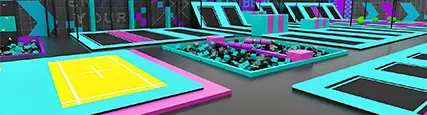
Illustrative visualization of a turnkey commercial play venue. Explore custom commercial indoor playground solutions.
In a commercial playground project, a turnkey solution usually connects several work stages under one coordinated equipment plan:
Project consultation and requirement collection
Venue review and attraction planning
Custom concept and layout design
Equipment engineering and manufacturing
Packing, shipping coordination and documentation
Installation instructions or on-site installation support
Inspection, handover and after-sales support
This does not automatically mean that every building-related item is included. Civil works, electrical supply, fire protection, HVAC, permits, flooring outside the play area and other local contractor work may remain with the buyer. The contract and quotation should state every inclusion and exclusion.
Practical rule: Never accept “turnkey” as a complete scope description. Ask for a responsibility list with named deliverables, owners and acceptance points.
Useful design work begins with accurate site information. Before a manufacturer develops a layout, the buyer should provide:
Dimensioned floor plan in DWG or another agreed format
Usable floor area and clear ceiling height
Column locations, stairs, entrances and emergency exits
Target age groups and expected visitor profile
Preferred attraction mix and operating model
Theme, color direction and brand requirements
Target budget and desired opening date
Destination country and applicable local requirements
Incomplete measurements create downstream risk. A layout may look attractive on screen but fail during installation if columns, beams, sprinklers or access routes were not recorded. The venue survey and drawing approval process should therefore be treated as a project milestone, not a casual preliminary step.
Many project misunderstandings occur at the boundary between playground equipment and the venue itself. Create a simple responsibility matrix before signing the order.
Equipment layout and product configuration
Custom manufacturing of the agreed play system
Equipment packing and loading information
Installation drawings, manuals or agreed supervision
Product-related compliance documentation within the contracted scope
Spare-parts and after-sales arrangements
Building permits and local authority approvals
Structural review of the venue
Electrical, lighting, HVAC and fire systems
Wall, ceiling and general construction work
Receiving, unloading and indoor material movement
Local labor, lifts, scaffolding and site utilities unless quoted otherwise
Final operational licensing and insurance
The exact split varies by project. What matters is that it is written down and reflected in the budget.

Illustrative project-planning view. See INJBELL indoor playground project examples.
Safety requirements depend on the product type, project scope and destination market. Buyers should confirm the required standards and local approval process before design is finalized, not after equipment has been produced.
INJBELL’s quality and compliance system is supported by relevant ASTM and EN standard-related testing, CE compliance documentation, TÜV and SGS testing or certification, and ISO management system certification. Applicable documentation is provided according to the product type, project scope and destination market requirements.
The buyer should ask which specific documents apply to the quoted equipment. A brand-level statement is not a substitute for product-specific reports, certificates, drawings or local professional review.
Clarify the delivery term, loading location, estimated shipment volume, destination charges, customs responsibility and who arranges inland transport. The buyer should also confirm the site’s unloading restrictions and storage capacity.
“Installation included” must be broken into practical details. Confirm whether the supplier provides remote guidance, an installation supervisor, a full installation team or only documentation. Also define who pays for travel, accommodation, local labor, tools, lifting equipment and site access.
Agree on the checks used to complete installation and handover. These may include component verification, fastener checks, padding and net inspection, cleaning, defect correction and operator orientation within the agreed scope.
Equipment can arrive on time and still sit unopened if the venue is not ready. Before shipping or mobilizing installers, confirm that:
Construction work affecting the play area is complete
The floor is level, clean and able to support the intended system
Access doors and delivery routes fit the packages
Lighting, fire protection and ceiling services are coordinated
Power and working conditions are available for installation
Local labor and equipment are booked where required
Materials can be stored securely and kept dry
A dated site-readiness checklist helps protect the opening schedule and makes delay responsibility easier to manage.
INJBELL is a commercial playground equipment manufacturer and turnkey solution provider established in 2016 and based in Wenzhou, Zhejiang, China. With a 10,000 m² manufacturing facility, the company supports commercial projects through planning, custom design, equipment manufacturing, shipping coordination, installation support and after-sales service within the agreed project scope.
Project planning is based on venue size, ceiling height, target age group, theme, budget and operational requirements. This approach helps buyers define the equipment package and identify the local work needed for a complete venue.
Explore INJBELL’s commercial playground projects or learn more about INJBELL.
No. Turnkey usually refers to a coordinated project package, but building works, permits, local utilities and other venue responsibilities may be excluded. Confirm the written scope.
Before final design approval. The destination market and product type can affect documentation, design details and local review requirements.
Provide a dimensioned floor plan, clear height, columns, entrances, exits, target ages, attraction preferences, budget range and destination country.
Use an approved site-readiness checklist, define local labor and equipment responsibilities, and link shipping and installation dates to verified venue readiness.
Planning a new indoor playground? Send your floor plan, clear height, target age group, destination country and budget range through the INJBELL website to discuss a project-specific scope.






 EN
EN ES
ES AR
AR

