

Introduction
A professional and suitable kids' play area is super important for kids' physical and mental development. Nowadays, whether it's in kindergartens, shopping malls, or family entertainment places, there're usually special areas for kids to play.
However, when designing these places, people often only focus on the looks and forget about the most important thing - safety. Bad layouts and low - quality play equipment can pose potential safety risks to kids aged 0 to 6.
This guide is gonna give you a full introduction on how to build an indoor soft play area for kids. Whether you wanna create a small play corner for your kids or a large commercial play space, you can use these methods to build a safe, fun, and immersive indoor soft play area.
Core Safety Guidelines for Soft Play Areas for Toddlers

International Safety Standards for Infant and Toddler Play Equipment
All play equipment specifically designed for infants and toddlers must meet internationally recognized safety standards. These standards have extremely strict requirements regarding the non - toxicity of materials, the size of equipment gaps, and the overall load - bearing capacity.
The main aim is to prevent children from getting hurt, like getting stuck, falling, hitting objects, or choking on small parts. All qualified and regularly maintained toddler playground equipment must go through a professional safety check before being put into use.
Safety Specifications for Site Layout
A reasonable layout is key to ensuring visitors' safety. Professional designs always follow these safety rules:
- Completely separate the play area from public walkways to avoid collisions between pedestrians and children.
- Make sure there's enough space between play facilities to prevent overcrowding. The crawling and walking areas for infants and toddlers should be designed as gentle slopes, and steep steps should be avoided.
All platforms and elevated walkways must be equipped with full - length guardrails to eliminate the risk of falling.
Hygiene, Environmental, and Safety Design
Children touch objects randomly, crawl, and may even bite play facilities when playing. So, the materials of play equipment must be stain - resistant, easy to clean, and convenient for daily disinfection.
By using a fully rounded design (no sharp edges), good ventilation, and soft, non - glare lighting, a clean, comfortable, safe, and risk - free play environment can be created.
Classification and Application Scenarios of Play Equipment for Toddlers
Play Equipment for Infants and Toddlers (Ages 0–3)
Infant and toddler play equipment mainly focuses on sensory stimulation and safety protection. Common products include soft crawling mats, small ball pits, and soft balance blocks. This kind of equipment is low in height and very stable, designed for infants and toddlers who are just starting to crawl and walk. Even if they fall, it hardly causes any harm.
Indoor Play Equipment for Preschoolers (Ages 3–6)
Children aged 3 to 6 have better physical coordination and like to explore interesting activities. It's recommended to add some simple obstacle courses and more challenging projects. Small slides, fun tunnel mazes, and interactive game walls are the most popular set - ups and have become the mainstream equipment in kids indoor playground equipment.
Commercial Soft Play (Suitable for Childcare Centers, Malls, and High-Traffic FECs)
Places like shopping malls and nurseries have a large flow of people and high - frequency use, so the equipment must be extremely durable. Professional commercial soft play equipment uses thicker internal foam materials and a more robust external structure, suitable for long - term, high - frequency use, which can significantly reduce the pressure of daily maintenance and renovation.
Supplementary Soft Play Facilities
A complete and professional children's play area should not only include main play equipment but also be equipped with seats for parents to rest, disinfection areas, and lockers. This can not only enhance the play experience of families with children but also make the daily management of staff more convenient and standardized.
Comprehensive Design Process for Toddler Soft Play Areas
Site Assessment and Target Audience Profiling
Before starting the design, you gotta first understand the basic situation of the site, like the actual available area, the ground height, and the maximum load - bearing capacity of the building floor.
At the same time, it's super important to figure out the target users of the site. For example, the design concept and equipment configuration of a kindergarten play area designed specifically for employees are totally different from those of a public play area in a mall open to all customers. You can't use the same planning scheme.
Spatial Zoning and Traffic Flow Design
Professional site design always makes sure there's a clear distinction between the active area and the quiet area. The area where kids run and climb should be separated from the quiet area for sensory experiences and leisure, so they won't interfere with each other.
Combining with a smooth and reasonable passage route can effectively avoid crowding during peak hours. Even on weekends when there's a tourism peak, the site won't be crowded and chaotic, which improves the safety of the visit.
Customization of Indoor Soft Play Themes
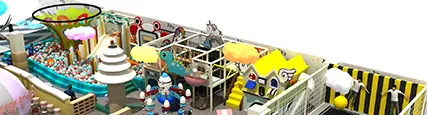
A good theme style is the key to boosting the appeal of the play area. Currently, the ocean style, jungle style, and cartoon castle style are all popular mainstream designs. They have great visual effects and never go out of fashion.
During the design process, using a unified overall color - matching scheme, shapes, and decorative details can create an immersive game environment full of atmosphere. It makes the whole play area look more delicate and more popular among kids.
Configuration Plans Based on Site Area
For sites of different sizes, the number of required equipment, functional zoning, and layout methods are all different. Matching the equipment reasonably according to the actual space can not only make full use of the site space but also ensure that visitors have a comfortable and uncrowded experience, thus maximizing the overall cost - effectiveness.
Site Scale | Core Configuration |
Below 50㎡ | Mini sensory sets, low soft climbing facilities |
50–150㎡ | Complete slides, climbing modules and interactive walls |
Over 150㎡ | Independent dual zones + scalable commercial soft play modules |
Key Tips for Selecting Play Equipment for Toddlers
Primary Criteria for Raw Material Selection
Reliable children's amusement facilities need to use specific materials. The internal sponge foam must be made of environmentally friendly, non-toxic and flame-retardant materials; the outer covering fabric should have waterproof and antibacterial functions and be easy to clean and disinfect daily.
Don't be lured by low prices and choose poor-quality recycled materials. These materials tend to produce unpleasant odors after long-term use. It not only affects children's experience but may also pose potential safety hazards. They're definitely not suitable for kids.
Distinguishing Between Substandard and Compliant Indoor Play Equipment
There are obvious problems with poor - quality amusement facilities in the market. The cushion pads aren't thick enough, the internal steel frames are exposed, and the gaps in the equipment are poorly designed, which can easily cause kids to get injured.
Reputable suppliers will make sure each set of toddler playground equipment comes with complete safety certification documents. The product quality has passed professional tests, so they're safer and more reliable to use.
Budget Allocation Logic for Commercial Soft Play Procurement
When purchasing for commercial venues, you must prioritize the investment in core entertainment facilities.
The riskiest thing is to cut the budget for safety protection. Cheap protective materials have poor durability and wear out quickly. You'll have to replace them frequently in the short term, which actually increases the long - term operating cost. It's not a smart move.
Balancing Procurement with Long-Term Maintenance
When buying equipment, don't just focus on the current price. You should also confirm the after - sales service guarantee with the manufacturer in advance.
You must clarify the supply of spare parts and maintenance support services to ensure that worn - out fabrics and foam pads can be replaced in time, thus ensuring the long - term stable and safe operation of the venue.
Injbell Childcare & Commercial Toddler Play Customization Solutions

One-Stop Turnkey Service for Toddler Soft Play
Injbell offers a full set of end - to - end services from on - site inspection, personalized theme customization, equipment manufacturing to professional on - site installation. Besides, for new venues, they also provide a standardized cleaning process and safety inspection guide to help novice operators get started quickly.
Core Advantages of Injbell Toddler Play Products
All of Injbell's kid indoor playground equipment are manufactured according to international safety standards and feature a modular design for easy and flexible combination. Whether the venue has a regular or irregular shape, and no matter the budget, they can be customized according to the actual situation. The products are suitable for various venues such as kindergartens and commercial buildings, creating exclusive indoor soft - play solutions.
Real-World Project Case Studies
Currently, the brand has successfully launched several mature projects covering various scenarios like kindergartens, community activity centers and parent - child amusement areas in shopping malls. Investors planning to open stores can refer to these completed cases to optimize the venue layout and design and effectively avoid common design mistakes.
Conclusion
If you wanna build a high - quality, safe and reliable kids' play area, you gotta use standardized safety designs, do some scientific space planning, and get high - quality play equipment that meets the standards.
Good toddler playground equipment is the foundation to keep kids safe while playing. A well - laid - out commercial soft playarea can help the place run stably in the long term. Also, if you strictly control the material quality during the procurement stage, you can prevent safety hazards at the root and cut down on extra costs from frequent future repairs and replacements.
Injbell can offer standardized equipment design, customized theme options and full - scale after - sales service for all kinds of kids' playgrounds. If you're planning a playground, comparing equipment prices, or want to get a complete indoor soft play solution all at once, feel free to consult Injbell's professional team. They'll give you free customized blueprints and detailed project quotes.
FAQs
What age group is the indoor soft - play area suitable for?
It's a regular soft - play area. It's good for babies in the crawling stage up to 6 - year - old preschoolers.
How often does the soft - play equipment need maintenance?
You should disinfect and clean the equipment surface every day and do a full - scale structural safety check every week. If you find any damage to the foam or fabric, you must replace it right away to avoid potential safety hazards.
Can the equipment be modified or expanded after installation?
Sure thing! These kid indoor playground equipmentare all modularly designed, so they can be upgraded and expanded flexibly in the future.




 EN
EN ES
ES AR
AR

